Cannabis Financial Planning Explained: Key U.S. Requirements

2026 update: what rescheduling changed for 280E (reviewed October 2026)
Effective April 22, 2026, a DOJ/DEA final order moved marijuana covered by a qualifying state medical license (and FDA-approved marijuana drugs) to Schedule III. Section 280E only applies to Schedule I and II substances, so state-licensed medical cannabis activity is generally no longer subject to 280E going forward. Adult-use cannabis remains in Schedule I and fully subject to 280E. The DEA proceeding to reschedule all marijuana was temporarily stayed in October 2026, and Treasury/IRS guidance on transition years and mixed medical/adult-use businesses is still pending.
This article was written before the order took effect. Check where your business stands in about a minute.
Most American cannabis businesses face a staggering tax burden, with some paying up to 90 percent of their gross income due to unique federal regulations. The stakes are high in this evolving sector as financial planning becomes far more complicated than for conventional industries. This guide breaks down what makes cannabis financial planning so distinctive for American enterprises and explains practical strategies for overcoming the challenges of complex tax codes and ever-changing regulations.
Key Takeaways
| Point | Details |
|---|---|
| Complex Financial Planning | Cannabis financial planning requires strategies that consider unique regulations, tax implications, and operational challenges that differ from traditional businesses. |
| Section 280E Compliance | Understanding and navigating Section 280E is crucial as it prevents cannabis businesses from deducting standard expenses, leading to higher tax liabilities. |
| Proactive Risk Management | Implementing comprehensive risk mitigation strategies is essential for addressing operational and financial vulnerabilities in the cannabis industry. |
| Flexible Financial Strategies | Developing adaptable budgeting and cash flow models is necessary to manage regulatory changes and market volatility effectively. |
Defining Cannabis Financial Planning in the U.S.
Cannabis financial planning represents a specialized and complex approach to managing monetary resources within the unique regulatory landscape of the United States cannabis industry. At its core, this discipline involves strategic financial management tailored specifically to the challenging legal and operational environment faced by cannabis businesses. Financial planning in this sector goes far beyond traditional business accounting, requiring deep understanding of federal and state regulations, tax implications, and industry-specific financial challenges.
Professionalizing financial planning is critical for cannabis enterprises seeking to attract investment and navigate intricate regulatory requirements. Financial reporting strategies must account for unique constraints like Section 280E of the Internal Revenue Code, which significantly impacts how cannabis businesses track and report expenses. Firms must develop robust financial frameworks that can withstand intense scrutiny from regulatory agencies while maintaining accurate, transparent record-keeping.
The strategic components of cannabis financial planning typically include comprehensive budgeting, cash flow management, tax compliance, risk assessment, and capital allocation. Cannabis businesses must create financial models that can adapt to rapidly changing legal environments, unpredictable market conditions, and stringent banking restrictions. Tax compliance mechanisms become especially crucial, as miscalculations can result in significant financial penalties or potential legal challenges. Successful financial planning in this industry requires a proactive approach that anticipates regulatory shifts and develops flexible financial strategies capable of supporting sustainable business growth.
Key elements of effective cannabis financial planning include:
- Detailed expense tracking aligned with IRS guidelines
- Advanced cash management strategies
- Comprehensive risk mitigation approaches
- Specialized tax planning techniques
- Strategic capital investment frameworks
Ultimately, cannabis financial planning demands a sophisticated, forward-thinking approach that combines deep industry knowledge, regulatory expertise, and adaptive financial management techniques.
Unique Tax Codes and Compliance Mandates
The cannabis industry faces unprecedented tax challenges due to complex federal regulations that dramatically impact financial planning and operational strategies. Section 280E of the Internal Revenue Code represents the most significant tax hurdle for cannabis businesses, creating extraordinary financial constraints that differ fundamentally from standard business taxation approaches. Tax compliance mechanisms become critically important in navigating these intricate regulatory requirements.

Federal tax law under Section 280E specifically prohibits cannabis businesses from deducting ordinary business expenses, which essentially means companies can only deduct costs directly related to product production and sales. This restriction creates a punitive tax structure where businesses might pay effective tax rates as high as 70-90% of their gross income, compared to typical corporate tax rates around 21%. The implications are profound: cannabis enterprises must develop sophisticated accounting strategies that meticulously document and categorize expenses to minimize tax liability.
The unique tax landscape requires cannabis businesses to implement advanced financial planning techniques that go beyond traditional accounting practices. Strategies might include creating separate legal entities, carefully structuring corporate expenses, and maintaining impeccable documentation to demonstrate compliance. Some businesses utilize cost allocation methods that separate plant-touching and non-plant-touching operations to maximize potential deductions. Cannabis tax liability calculations demand an extraordinary level of precision and strategic financial management.
Key compliance considerations for cannabis businesses include:
- Comprehensive expense tracking aligned with IRS guidelines
- Detailed documentation of cost of goods sold (COGS)
- Strategic corporate structuring to optimize tax positions
- Rigorous accounting practices that withstand potential audits
- Proactive consultation with tax professionals specializing in cannabis regulations
Ultimately, successful navigation of these unique tax codes requires a multifaceted approach combining deep regulatory knowledge, strategic financial planning, and an unwavering commitment to meticulous compliance.
Strategic Budgeting and Cash Flow Management
Cannabis businesses confront unique financial challenges that demand sophisticated budgeting strategies and meticulous cash flow management. Comprehensive business budgeting requires navigating complex regulatory environments, limited banking access, and volatile market conditions that distinguish cannabis enterprises from traditional industries. Strategic financial planning becomes critical for survival and growth in this highly regulated sector.
Investing in robust business intelligence represents a crucial approach to financial management. Sophisticated cannabis firms recognize that advanced financial tracking can prevent costly regulatory penalties and create competitive advantages. The cash flow landscape requires extraordinary attention, with businesses needing to develop alternative financial mechanisms due to federal banking restrictions. Some organizations implement multi-entity structures, separate operational accounts, and develop granular expense tracking systems to maintain financial flexibility and compliance.
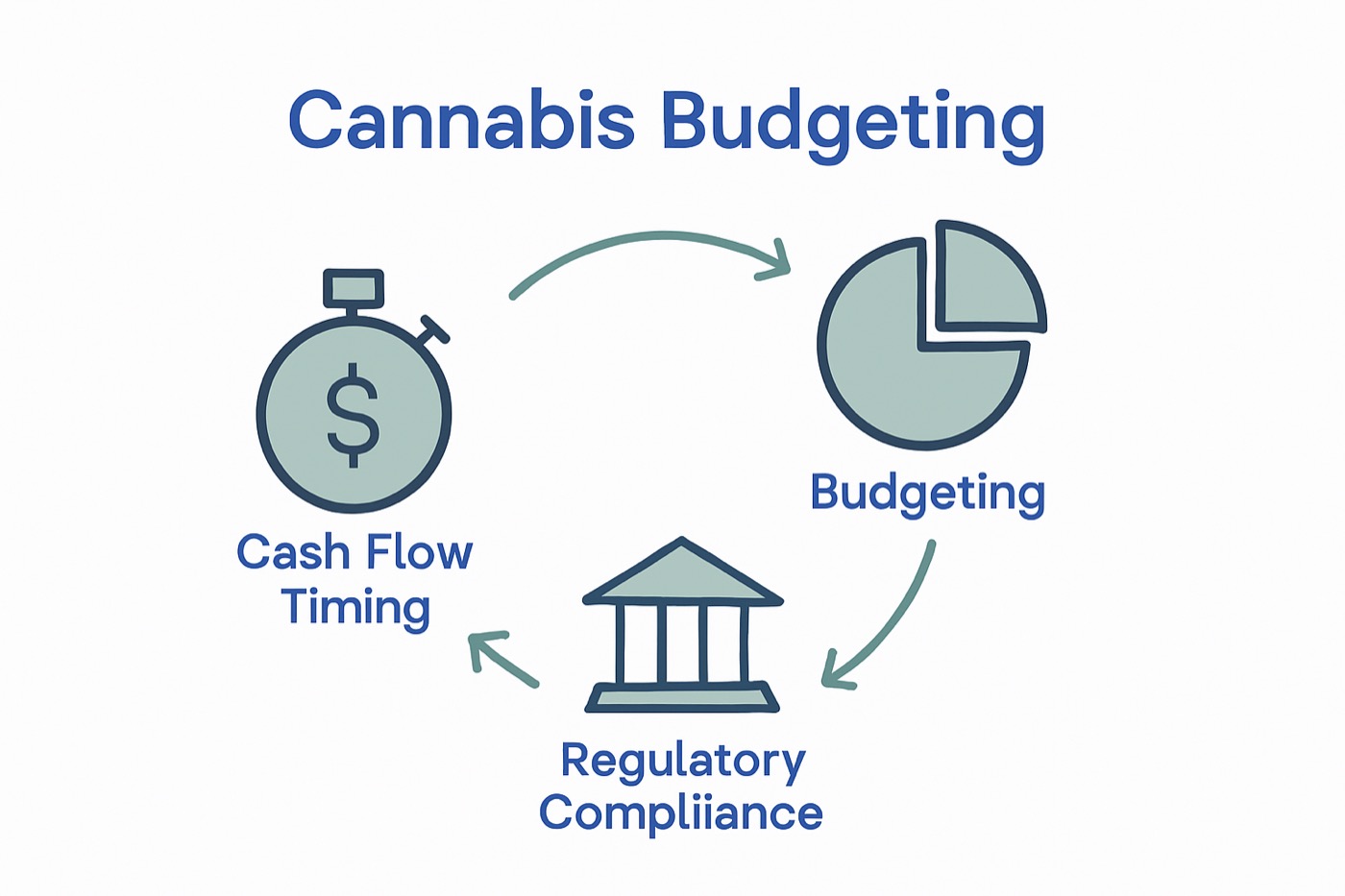
Effective cash flow management in the cannabis industry demands proactive financial strategies that anticipate potential regulatory shifts and market volatility. Successful businesses develop flexible budgeting frameworks that can rapidly adapt to changing legal environments. Dispensary financial management techniques often involve creating multiple revenue streams, maintaining significant cash reserves, and developing contingency plans that account for potential regulatory disruptions.
Key strategic budgeting considerations include:
- Maintaining minimum 6-month cash reserves
- Developing flexible financial projection models
- Creating separate operational and strategic budgets
- Implementing rigorous expense tracking mechanisms
- Establishing multiple banking relationships
- Developing rapid financial adaptation strategies
Ultimately, strategic budgeting in the cannabis industry requires a combination of financial discipline, regulatory awareness, and innovative financial management techniques that can withstand complex operational challenges.
Navigating IRC 471 and Section 280E
The cannabis industry confronts extraordinarily complex tax regulations embodied in Internal Revenue Code (IRC) Sections 280E and 471, which fundamentally reshape financial planning and operational strategies for businesses. Understanding IRC 471 becomes critical for cannabis enterprises seeking to minimize tax liability and maintain regulatory compliance in an increasingly scrutinized market.
Section 280E presents a particularly challenging regulatory framework that prohibits cannabis businesses from deducting standard operating expenses, effectively increasing their effective tax rates dramatically. The IRS clarifies that while Section 471© provides some inventory accounting provisions, it does not eliminate the fundamental limitations imposed by 280E. Sophisticated cannabis businesses must develop nuanced accounting strategies that meticulously document cost of goods sold (COGS) and separate plant-touching and non-plant-touching operations to optimize their financial positioning.
Recent legal trends indicate that cannabis companies are increasingly challenging the broad application of Section 280E, seeking more nuanced interpretations of tax regulations. Tax planning strategies for dispensaries have evolved to include complex corporate structuring, granular expense allocation, and innovative accounting approaches designed to navigate these restrictive tax codes. Successful businesses invest significant resources in developing comprehensive financial frameworks that can withstand intense IRS scrutiny.
Key strategies for navigating IRC 471 and Section 280E include:
- Maintaining meticulous documentation of COGS
- Separating plant-touching and ancillary business operations
- Developing robust accounting systems
- Creating multiple legal entities
- Consulting with cannabis-specialized tax professionals
- Implementing proactive tax planning approaches
Navigating these complex tax regulations requires a combination of legal expertise, financial sophistication, and strategic planning that goes far beyond traditional business accounting practices.
Common Pitfalls and Risk Mitigation Strategies
Cannabis businesses face extraordinarily complex financial risks that demand sophisticated risk management approaches far beyond traditional industry standards. Cannabis business risk management requires a multifaceted strategy that addresses regulatory, financial, and operational challenges unique to this highly regulated industry.
Section 280E creates significant financial vulnerabilities by disallowing standard business expense deductions, which can dramatically increase effective tax rates. Businesses must develop nuanced tax structuring strategies that carefully document cost of goods sold (COGS) and meticulously separate plant-touching and ancillary operations. Some organizations mitigate these risks by creating multiple legal entities, implementing advanced accounting systems, and developing granular expense allocation methodologies that can withstand intense regulatory scrutiny.
Operational risks extend beyond tax complications, encompassing banking restrictions, complex licensing requirements, and rapidly evolving regulatory landscapes. Successful cannabis enterprises invest heavily in comprehensive compliance frameworks, maintaining robust documentation, developing multiple banking relationships, and maintaining significant cash reserves. Proactive risk management involves continuous legal and financial education, staying ahead of regulatory changes, and developing adaptive financial strategies that can quickly respond to market and legal shifts.
Key risk mitigation strategies include:
- Maintaining comprehensive compliance documentation
- Developing multiple legal entity structures
- Creating advanced accounting and tracking systems
- Establishing diverse banking relationships
- Maintaining substantial cash reserves
- Investing in ongoing regulatory and legal education
- Implementing flexible financial planning approaches
Navigating the cannabis industry’s complex risk landscape requires a sophisticated, proactive approach that combines legal expertise, financial acumen, and strategic planning.
Frequently Asked Questions
What is cannabis financial planning?
Cannabis financial planning is a specialized approach to managing finances for cannabis businesses, focusing on regulatory compliance, tax implications, and industry-specific challenges. It involves strategic financial management tailored to the unique operational environment of the cannabis industry.
How does Section 280E of the Internal Revenue Code affect cannabis businesses?
Section 280E prohibits cannabis businesses from deducting most ordinary business expenses, leading to significantly higher effective tax rates. This restriction creates financial challenges that necessitate careful expense tracking and strategic accounting to minimize tax liabilities.
What are some key components of effective cannabis financial planning?
Key components include detailed expense tracking, advanced cash management strategies, comprehensive risk mitigation approaches, specialized tax planning techniques, and strategic capital investment frameworks to support business growth.
Why is cash flow management critical for cannabis businesses?
Cash flow management is critical due to limited banking access and regulatory restrictions. Effective cash management helps cannabis businesses remain financially flexible, allowing them to navigate volatile market conditions and compliance requirements successfully.
Recommended
- Comprehensive Cannabis Business Budgeting Guide – Cannabis Business Minds
- 7 Key Cannabis Accounting Trends for 2025 – Cannabis Business Minds
- Why Tax Compliance Matters: Complete Cannabis Guide – Cannabis Business Minds
- Understanding Cannabis Financial Forecasting Explained – Cannabis Business Minds
- Commercial Mortgage Explained: Complete Guide for 2025 – Craigburn Capital
This article is general education, not tax, legal or accounting advice. Cannabis rules change quickly; confirm how they apply to you with a qualified cannabis CPA or attorney.