Cannabis Tax Compliance Guide: Achieve Full Legal Readiness
2026 update: what rescheduling changed for 280E (reviewed October 2026)
Effective April 22, 2026, a DOJ/DEA final order moved marijuana covered by a qualifying state medical license (and FDA-approved marijuana drugs) to Schedule III. Section 280E only applies to Schedule I and II substances, so state-licensed medical cannabis activity is generally no longer subject to 280E going forward. Adult-use cannabis remains in Schedule I and fully subject to 280E. The DEA proceeding to reschedule all marijuana was temporarily stayed in October 2026, and Treasury/IRS guidance on transition years and mixed medical/adult-use businesses is still pending.
This article was written before the order took effect. Check where your business stands in about a minute.
More than 80 percent of cannabis businesses face challenges staying compliant with complex tax rules. As regulations tighten, even a minor paperwork mistake can lead to heavy penalties or costly delays. Whether you run a dispensary or manage a cultivation site, understanding proper tax procedures safeguards your investment. This step-by-step guide helps you navigate essential records, codes, accounting methods, and audit readiness so your operation stays both legal and financially secure.
Quick Summary
| Key Point | Explanation |
|---|---|
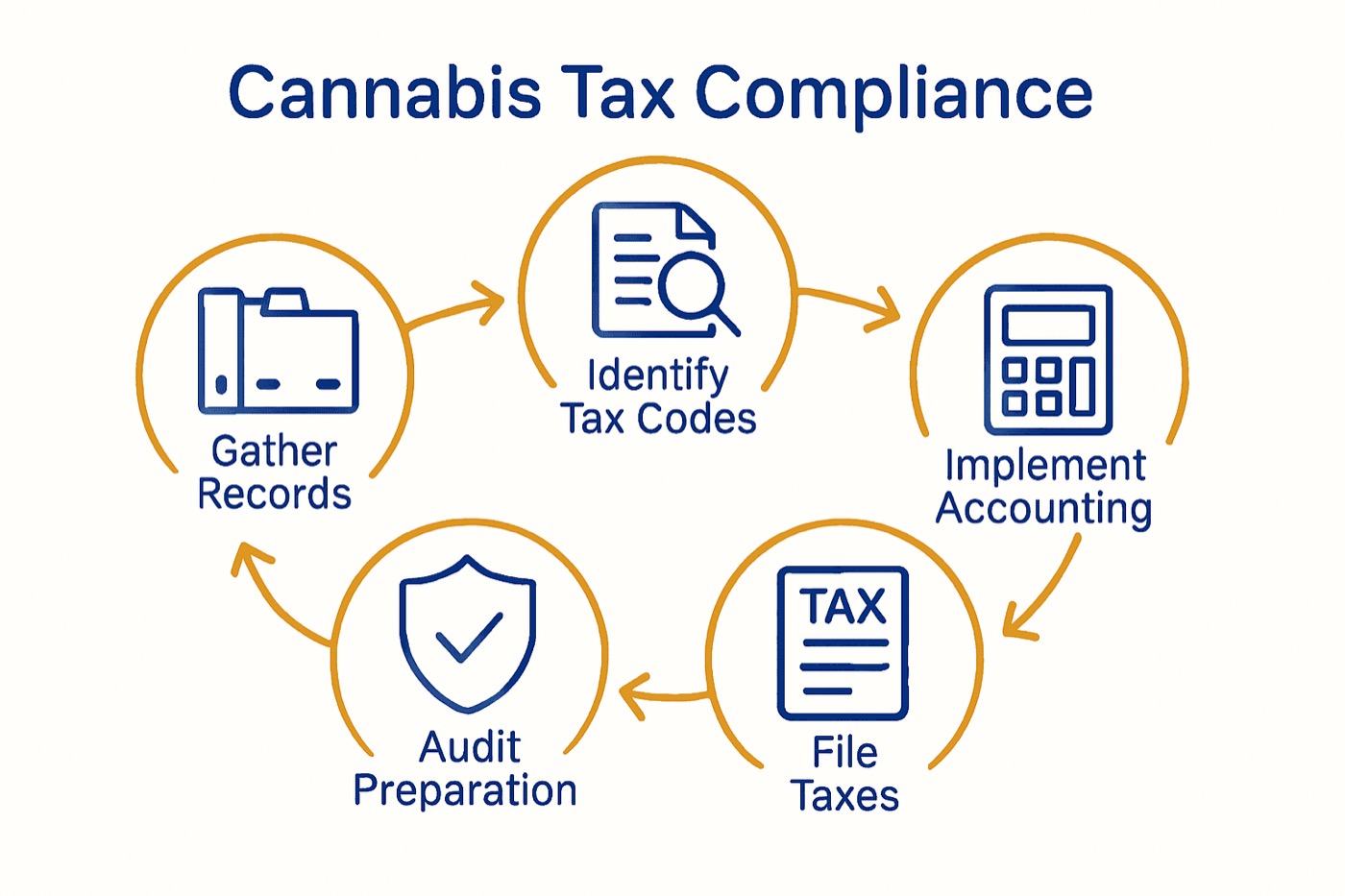
| 1. Gather Comprehensive Records | Collect and organize business and financial documents for compliance and audits. |
| 2. Understand Tax Codes | Research federal and state cannabis tax regulations relevant to your business operations. |
| 3. Implement Specialized Accounting | Adopt accounting methods specific to cannabis to ensure financial integrity and compliance. |
| 4. File Accurate Tax Returns | Prepare and submit precise tax returns while considering applicable state and federal laws. |
| 5. Conduct Regular Compliance Checks | Regularly verify records and prepare for audits to maintain regulatory adherence and operational transparency. |
|
Step 1: Gather Required Business and Financial Records
Gathering comprehensive business and financial records is your crucial first step toward full tax compliance in the cannabis industry. You will collect and organize a wide range of documents that demonstrate your business’s financial history and ownership structure.
According to the Cannabis Business Times, the Corporate Transparency Act now requires cannabis businesses to maintain detailed records of ownership structures and financial transactions. This means you need to prepare documentation that covers several key areas:
- Beneficial ownership information
- Corporate formation documents
- Articles of incorporation
- Operational licenses
- Tax identification numbers
- Financial transaction logs
The Tax Administrators emphasize the necessity of comprehensive financial records including sales data, tax payments, and inventory logs. Your records should be meticulously organized and easily retrievable for potential audits or regulatory reviews.
ProTip: Create both digital and physical backup copies of all documents. Store them securely and ensure multiple authorized team members know how to access these critical files. This approach protects your business from potential record loss and demonstrates proactive compliance.
In the next step, you will review and validate these gathered documents to ensure they meet all current regulatory standards.
Step 2: Identify Applicable Federal and State Cannabis Tax Codes
Identifying the right federal and state cannabis tax codes is a critical step in maintaining legal and financial compliance for your cannabis business. In this process, you will navigate the complex landscape of tax regulations that vary significantly across different jurisdictions.
According to the Tax Foundation, cannabis tax structures are diverse across U.S. states. They typically include two primary tax models ad valorem (based on percentage of sales price) and weight based taxes. This means you need to carefully research the specific tax codes applicable to your business location and operational model.
The Tax Administrators emphasize the critical need for businesses to stay informed about evolving tax regulations. To effectively identify your applicable tax codes, you should:
- Review federal tax requirements under Internal Revenue Code Section 280E
- Research state specific cannabis tax rates and structures
- Consult with a tax professional specializing in cannabis businesses
- Check for local municipal tax regulations
- Monitor ongoing changes in tax legislation
Pro Tip: Create a dedicated compliance folder where you archive all current tax code documentation. Update this folder quarterly to ensure you always have the most recent regulatory information at your fingertips.
In the next step, you will analyze these identified tax codes to understand their specific implications for your cannabis business financial strategy.
Step 3: Implement Proper Accounting Methods for Cannabis Operations
Implementing proper accounting methods is crucial for maintaining financial integrity and regulatory compliance in your cannabis business. You will develop a systematic approach to tracking financial transactions that meets both industry standards and legal requirements.
According to the Tax Foundation, cannabis businesses must adopt accounting methods that accurately reflect their financial activities to comply with complex tax laws. This means going beyond standard bookkeeping and creating a specialized accounting framework tailored to the unique challenges of the cannabis industry.
The Tax Administrators emphasize the importance of robust accounting systems designed specifically for cannabis operations. To implement effective accounting methods, you should:
- Separate cultivation, production, and retail revenue streams
- Track cost of goods sold (COGS) meticulously
- Implement comprehensive inventory tracking
- Use specialized cannabis accounting software
- Maintain detailed transaction records
- Prepare for potential IRS Section 280E limitations
Pro Tip: Work with an accountant who specializes in cannabis businesses. Their expertise can help you navigate the intricate financial reporting requirements and minimize potential tax liabilities.

In the next step, you will develop strategies to manage your financial records and ensure ongoing compliance with evolving regulatory standards.
Step 4: Calculate and File Accurate Cannabis Tax Returns
Calculating and filing accurate cannabis tax returns requires meticulous attention to detail and a comprehensive understanding of your business financial landscape. You will navigate the complex process of converting your financial records into precise tax submissions that meet both state and federal requirements.
According to the Tax Foundation, cannabis tax rates and structures vary significantly across different states. This means you must carefully analyze your specific jurisdictional requirements and apply the correct tax calculation methodologies for your business type and location.
The Tax Administrators emphasize the critical importance of accuracy in tax filing to avoid potential penalties. To calculate and file your cannabis tax returns effectively, you should:
- Segregate revenue streams by product category
- Calculate tax liability using state specific rates
- Apply federal tax restrictions under Section 280E
- Verify all mathematical calculations multiple times
- Prepare supporting documentation for each tax line item
- Submit returns before established deadlines
- Maintain copies of all filed documentation
Pro Tip: Consider using specialized cannabis tax preparation software or consulting with a tax professional who understands the unique challenges of cannabis industry tax reporting.
In the next step, you will develop strategies for maintaining ongoing tax compliance and preparing for potential audits.
Step 5: Verify Compliance and Prepare for Audits
Verifying compliance and preparing for potential audits is a critical final step in your cannabis tax readiness strategy. You will develop a systematic approach to ensuring your financial records meet regulatory standards and can withstand intense governmental scrutiny.
According to the Tax Foundation, cannabis businesses must conduct regular compliance checks to maintain accurate records and adhere to complex tax laws. This means implementing a proactive review process that identifies potential gaps or inconsistencies before they become significant issues.
The Tax Administrators emphasize the importance of developing comprehensive audit preparation strategies. To effectively verify compliance and prepare for potential audits, you should:
- Conduct quarterly internal financial reviews
- Cross reference accounting records with tax filings
- Maintain organized digital and physical documentation
- Create a detailed audit trail for all financial transactions
- Develop a standardized document retrieval system
- Train staff on audit response protocols
- Retain financial records for minimum required periods
Pro Tip: Establish a dedicated compliance team or assign a specific team member responsible for maintaining audit readiness. This individual should have a comprehensive understanding of both cannabis industry regulations and your specific business operations.
In the final step, you will implement ongoing monitoring and continuous improvement strategies to maintain long term tax compliance.
Frequently Asked Questions
What business and financial records do I need for cannabis tax compliance?
Gather ownership information, corporate formation documents, operational licenses, and financial transaction logs. Organize these records meticulously to ensure they are easily retrievable for audits and regulatory reviews.
How do I identify the applicable federal and state cannabis tax codes?
Research federal tax requirements under Internal Revenue Code Section 280E and specific state tax regulations. Create a compliance folder to archive all relevant tax code documentation and update it quarterly to stay informed on changes.
What accounting methods should I implement for my cannabis operations?
Use specialized accounting methods that separate revenue streams, track cost of goods sold, and maintain detailed transaction records. Consider implementing cannabis-specific accounting software to simplify and enhance your financial tracking.
How can I accurately calculate and file cannabis tax returns?
Segregate your revenue streams by product category and calculate tax liability using applicable state rates. Prepare supporting documentation and submit your returns before the established deadlines to avoid penalties.
What steps should I take to verify compliance and prepare for audits?
Conduct quarterly internal financial reviews and cross-reference your accounting records with tax filings. Maintain organized and easily accessible documentation to create a detailed audit trail for all transactions, ensuring your business is always audit-ready.
How often should I review my compliance materials for ongoing cannabis tax readiness?
Review your compliance materials and financial records regularly, ideally on a quarterly basis. Implement a systematic approach to monitor updates in regulations, so you can adapt your processes within a targeted timeframe.
Recommended
- Cannabis Accounting – Cannabis Business Minds
- Master Cannabis Accounting Best Practices for 2025 Success – Cannabis Business Minds
- Cannabis Business Tax Filings Explained: U.S. Compliance Guide – Cannabis Business Minds
- Cannabis Tax – Cannabis Business Minds
This article is general education, not tax, legal or accounting advice. Cannabis rules change quickly; confirm how they apply to you with a qualified cannabis CPA or attorney.