Comprehensive Cannabis Business Budgeting Guide

Most american cannabis businesses face steep financial hurdles, from strict legal requirements to unexpected operational costs. With over 80 percent reporting challenges related to banking and capital access, financial planning in this industry is anything but ordinary. Whether you are launching a new dispensary or expanding an existing operation, understanding how to organize your finances sets the stage for growth and long-term compliance. This guide lays out steps to help you create a resilient, data-driven budget and navigate the unique financial demands of the cannabis sector.
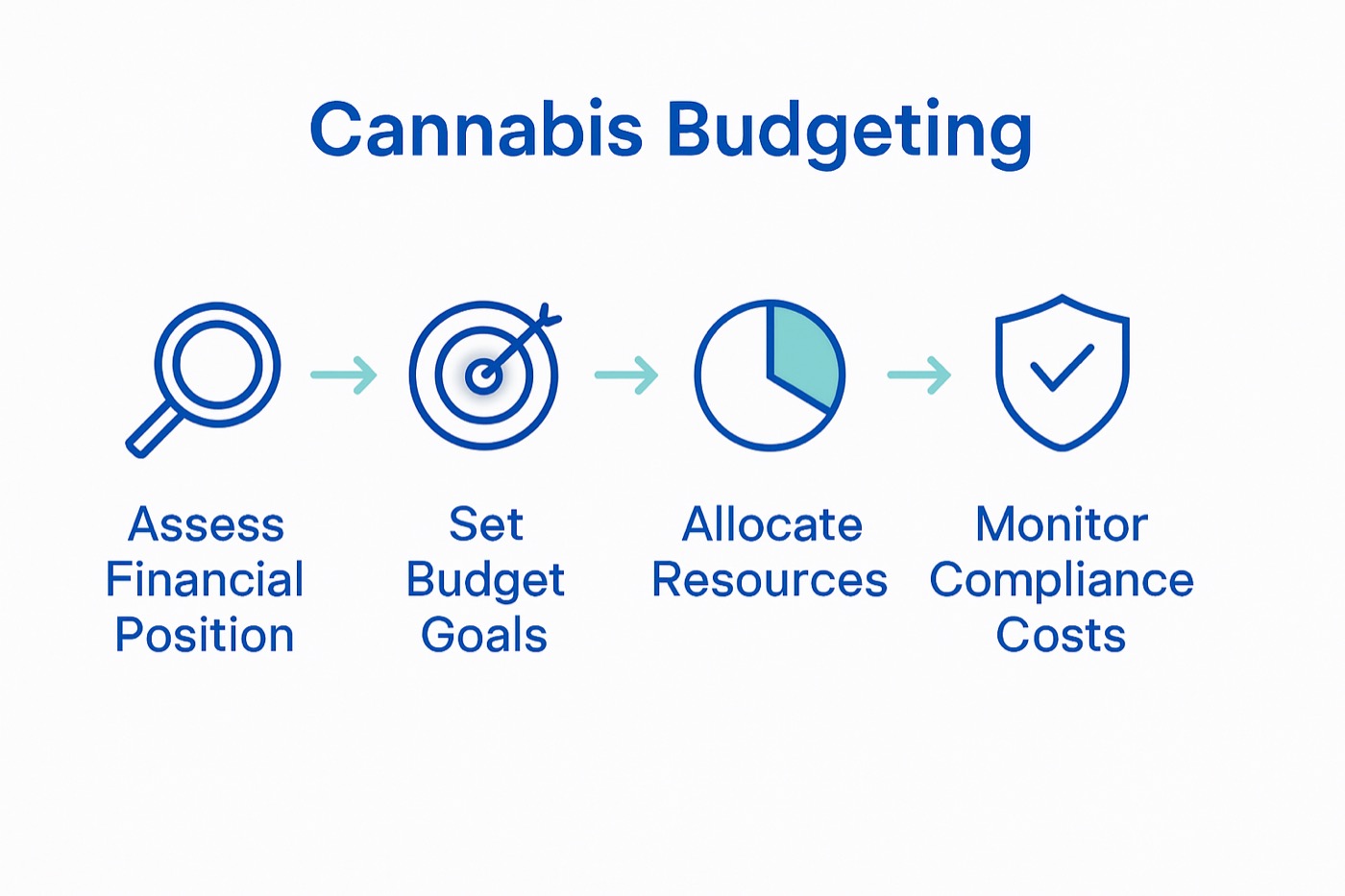
Quick Summary
| Key Insight | Explanation |
|---|---|
| 1. Assess Financial Position First | Analyze financial records from the past 24 months to understand revenue, expenses, and profit margins in the cannabis sector. |
| 2. Set Realistic Budget Goals | Develop budget goals that account for regulatory constraints, including compliance costs and taxes specific to the cannabis industry. |
| 3. Allocate Resources Wisely | Prioritize resource allocation across operational categories based on revenue potential and compliance needs to enhance efficiency. |
| 4. Implement Budget Monitoring System | Create a compliance-driven monitoring system to track expenses, ensuring adaptability to evolving regulatory environments. |
| 5. Regularly Evaluate and Adjust Strategy | Conduct quarterly reviews of financial performance to adjust your budget strategies effectively based on actual results and regulatory changes. |
Step 1: Assess Financial Position and Gather Data
Building a robust financial foundation starts with a comprehensive assessment of your cannabis business’s current financial landscape. According to CannaCon, this process involves analyzing critical market factors that will shape your budgeting strategy.
Begin by compiling detailed financial records including income statements, balance sheets, cash flow reports, and tax documents from the past 24 months. Pay special attention to revenue streams, operational expenses, and profit margins specific to your cannabis sector segment. As Congressional Black Caucus Foundation research highlights, cannabis businesses often face unique financial challenges like limited capital access and complex regulatory environments.
Critical data points to gather include:
- Monthly and annual revenue figures
- Operational expense breakdowns
- Current asset and liability positions
- Historical tax payment records
- Investor funding details
- Equipment and inventory investment costs
Your goal is creating a transparent financial snapshot that will guide strategic budgeting decisions.
Next, you will use this gathered information to develop precise budget projections and financial strategies.
Step 2: Set Budget Goals and Regulatory Constraints
Establishing clear budget goals and understanding regulatory constraints are crucial steps in financial planning for your cannabis business. Cato Institute highlights the importance of accounting for complex financial factors specific to the cannabis industry, including potential excise taxes and compliance costs.
Start by developing realistic revenue projections that consider both market potential and regulatory limitations. According to the American Economic Policy Center, cannabis businesses face unique challenges such as limited banking services and higher operational expenses due to cash based transactions. Your budget goals should include:
- Comprehensive compliance budget allocation
- Contingency funds for regulatory changes
- Detailed tracking of tax and licensing expenses
- Projected costs for regulatory documentation
- Financial buffers for potential legal or operational restrictions
Carefully document each budget goal with specific dollar amounts and timelines. By anticipating regulatory constraints and building flexibility into your financial planning, you can create a resilient budget strategy that adapts to the dynamic cannabis industry landscape. Your next step will involve detailed financial modeling and risk assessment.
Step 3: Allocate Resources Across Cannabis Operations
Successfully allocating resources requires a strategic approach that balances operational needs with financial constraints. Emerging Markets Coalition emphasizes the critical importance of establishing a comprehensive compliance budget that covers all regulatory requirements while maintaining operational efficiency.
Break down your resource allocation into key operational categories such as cultivation, processing, distribution, retail, and compliance. Prioritize spending based on revenue potential and legal mandates. Consider creating a percentage based allocation model that ensures:
- 25 35% for direct operational costs
- 15 20% for compliance and regulatory expenses
- 10 15% for marketing and customer acquisition
- 10 15% for technology and infrastructure
- 5 10% for contingency and unexpected expenses
Your guide on budgeting for dispensaries can provide additional insights into precise allocation strategies. Remember that flexibility is key most budgets will require periodic adjustments as market conditions and regulatory landscapes evolve. Strategic resource allocation allows you to maximize financial efficiency while maintaining legal compliance.
Your next step will involve implementing detailed tracking mechanisms to monitor these allocations.
Step 4: Implement Compliance-Driven Budget Monitoring
Implementing a robust compliance-driven budget monitoring system is crucial for cannabis businesses navigating complex regulatory environments. Brookings Institution highlights the significant financial challenges small and minority owned businesses face when managing regulatory compliance costs.
Develop a comprehensive monitoring framework that tracks expenses across key compliance areas. According to the U.S. Securities and Exchange Commission, ongoing budget adaptation is essential as cannabis regulations continue to evolve. Your monitoring system should include:
- Real time expense tracking for regulatory requirements
- Monthly compliance cost assessments
- Quarterly budget reconciliation
- Automated alerts for potential budget overruns
- Detailed documentation of compliance related expenditures
Pro tip: Invest in specialized accounting software designed for cannabis businesses to streamline your monitoring process. By proactively tracking compliance expenses, you can identify potential financial risks and adjust your budget strategy quickly. Your next step involves creating contingency plans to address unexpected regulatory changes and associated costs.
Step 5: Evaluate Results and Adjust Budget Strategy
Evaluating your cannabis business budget requires a systematic approach that anticipates and responds to dynamic market conditions. California Legislative Analyst’s Office emphasizes the critical need for businesses to regularly assess financial performance and adapt strategies in response to regulatory uncertainties.
Conduct a comprehensive quarterly review of your financial performance, comparing actual expenses and revenues against your original budget projections. According to the U.S. Securities and Exchange Commission, cannabis businesses must be prepared for substantial cost variations due to evolving legal frameworks. Your evaluation should focus on:
- Comparing projected versus actual compliance expenses
- Analyzing revenue performance across different operational segments
- Identifying unexpected cost overruns or savings
- Assessing the effectiveness of your current resource allocation
- Measuring return on investment for key business initiatives
Pro tip: Create a dynamic budget model that allows for swift adjustments when financial or regulatory shifts occur. By maintaining flexibility and conducting rigorous quarterly assessments, you can proactively manage financial risks and optimize your cannabis business strategy. Your final step involves developing a forward looking financial planning approach that anticipates potential industry changes.
Frequently Asked Questions
How do I assess the financial position of my cannabis business?
To assess your cannabis business’s financial position, compile financial records such as income statements, balance sheets, and cash flow reports from the past 24 months. Start by analyzing revenue streams and operational expenses to understand your financial landscape.
What budget goals should I set for my cannabis business?
Set realistic budget goals that take into account potential revenue and regulatory constraints. Aim to allocate funds for compliance, taxes, and unexpected operational costs, ensuring you have flexibility within your budget strategy.
How can I allocate resources effectively across cannabis operations?
Break down your resource allocation by operational categories such as cultivation, processing, and retail. Consider using a percentage-based model where 25-35% is allocated for operational costs and 15-20% for compliance expenses.
What are the best practices for monitoring my cannabis business budget?
Implement a monitoring framework that tracks compliance-related expenses in real time and assesses compliance costs monthly. This allows you to identify potential overages and make adjustments as necessary.
How often should I evaluate my business budget for my cannabis operations?
Conduct a comprehensive review of your budget at least quarterly to compare projected versus actual financial performance. This evaluation helps you identify trends and adapt your budget strategy to mitigate financial risks effectively.
What steps should I take if my cannabis business faces unexpected regulatory changes?
Develop contingency plans within your budget to accommodate unexpected regulatory changes. Allocating a portion of your budget for unanticipated expenses can help your business adapt quickly and maintain compliance.
Recommended
- How to Budget for Dispensaries: Step-by-Step Success – Cannabis Business Minds
- Cannabis Accounting – Cannabis Business Minds
- Budgeting – Cannabis Business Minds
- Blog – Cannabis Business Minds
This article is general education, not tax, legal or accounting advice. Cannabis rules change quickly; confirm how they apply to you with a qualified cannabis CPA or attorney.