Cannabis Financial Reporting Guide for Full Compliance Success

2026 update: what rescheduling changed for 280E (reviewed October 2026)
Effective April 22, 2026, a DOJ/DEA final order moved marijuana covered by a qualifying state medical license (and FDA-approved marijuana drugs) to Schedule III. Section 280E only applies to Schedule I and II substances, so state-licensed medical cannabis activity is generally no longer subject to 280E going forward. Adult-use cannabis remains in Schedule I and fully subject to 280E. The DEA proceeding to reschedule all marijuana was temporarily stayed in October 2026, and Treasury/IRS guidance on transition years and mixed medical/adult-use businesses is still pending.
This article was written before the order took effect. Check where your business stands in about a minute.
Nearly every cannabis business faces intense scrutiny when it comes to financial reporting. With regulators expecting detailed transparency at every stage, missing a single document or misclassifying an expense could trigger major setbacks. Over 80 percent of cannabis businesses receive additional regulatory requests due to incomplete or unclear records. Knowing exactly how to prepare, organize, and verify your financial documentation is the key to smoother audits, fewer hurdles, and lasting business credibility.
Quick Summary
| Key Point | Explanation |
|---|---|
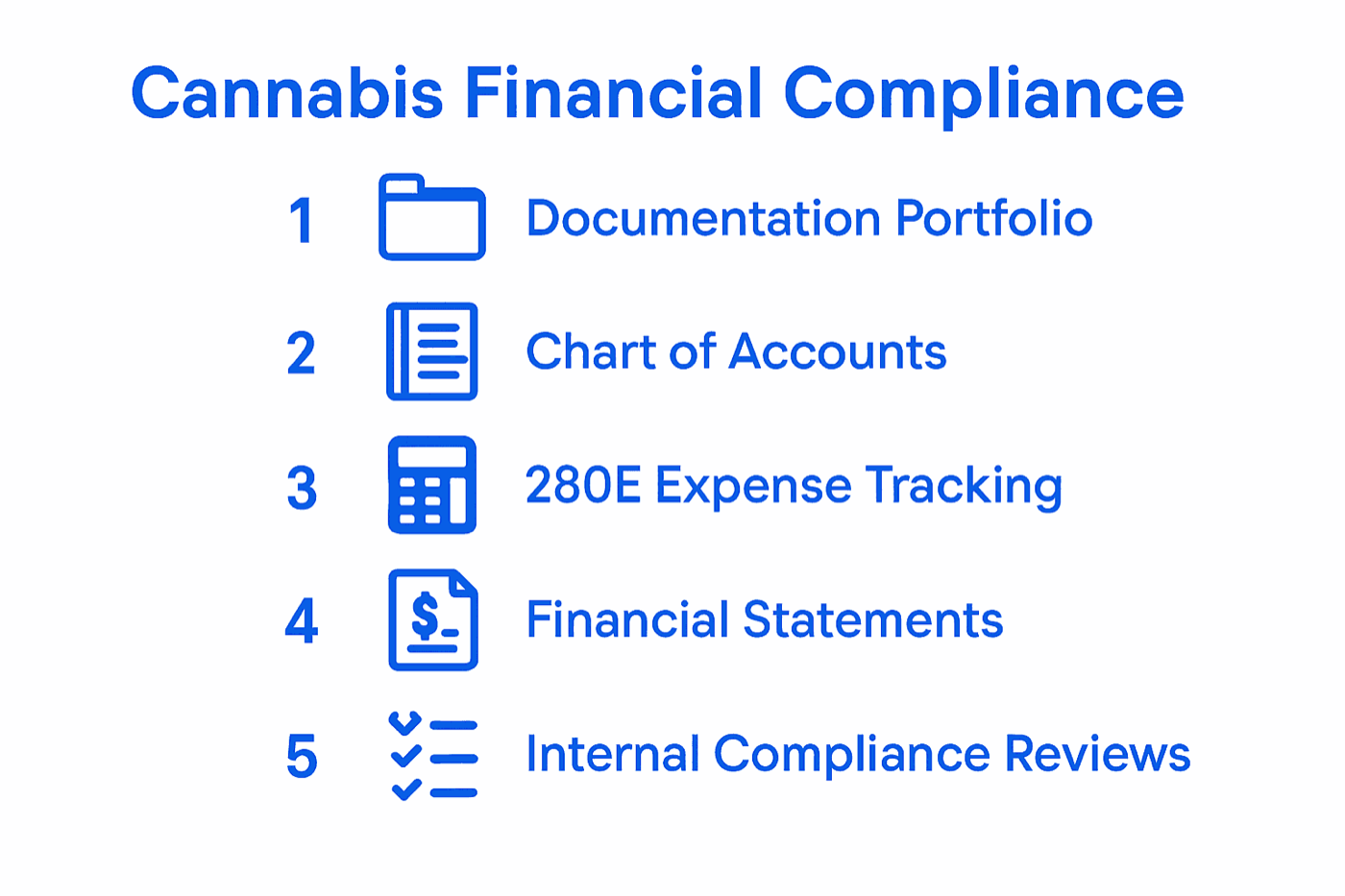
| 1. Assemble a comprehensive documentation portfolio | Gather essential documents like licenses and financial records to demonstrate operational transparency for regulatory compliance. |
| 2. Create a robust chart of accounts | Design account categories for accurate financial reporting, separating different revenue streams and expenses for regulatory adherence. |
| 3. Implement meticulous expense tracking under 280E | Keep detailed records of allowable expenses to comply with IRS rules, segregating cost of goods sold from non-deductible costs. |
| 4. Prepare accurate financial statements | Compile complete financial documents, ensuring they reflect full transparency and compliance with regulations in the cannabis industry. |
| 5. Conduct regular internal compliance reviews | Establish a checklist for compliance checks and schedule quarterly audits to maintain operational integrity and anticipate regulatory needs. |
Step 1: Assess Regulatory and Documentation Requirements
Your cannabis business financial reporting journey starts with comprehensive regulatory assessment. According to the Cannabis Financial Industry Group, you need a systematic approach to gathering critical documentation that demonstrates your operational transparency and compliance readiness.
Start by assembling a comprehensive documentation portfolio. This includes your state cannabis business license, formal business registration documents, detailed financial records, and operational information. As research from PMC indicates, robust record keeping is fundamental for cannabis businesses to meet regulatory requirements. Your documentation should clearly demonstrate your business processes, financial transactions, physical security protocols, and internal control mechanisms.
Pro Tip: Create a digital and physical filing system that allows quick retrieval of documents. Regulators and financial institutions appreciate businesses that can promptly produce requested documentation.
The next step involves carefully reviewing each document to ensure accuracy and completeness. Anticipate potential questions by organizing your materials in a logical sequence that tells the story of your cannabis business financial practices. Your preparedness will significantly streamline future interactions with regulatory bodies and financial institutions.
Step 2: Set Up Effective Cannabis Chart of Accounts
Establishing a robust chart of accounts is critical for your cannabis business financial reporting success. According to research from the Journal of Cannabis Research, your chart of accounts must be meticulously designed to facilitate accurate financial reporting and ensure regulatory compliance specific to the cannabis industry.
Begin by creating distinct account categories that reflect the unique financial landscape of cannabis operations. This includes separating revenue streams such as retail sales, wholesale distribution, cultivation income, and ancillary services. As highlighted in SEC documentation, comprehensive financial records are essential for meeting anti-money laundering requirements. Your chart of accounts should enable precise expense tracking segregated by operational segments like cultivation, processing, distribution, and retail.
Pro Tip: Design your account structure to support both internal management reporting and external regulatory compliance. Include granular subcategories that allow for detailed financial analysis while maintaining clean accounting practices.
Consider working with a cannabis-specialized accountant who understands the intricate financial reporting requirements unique to your industry. Your goal is creating a chart of accounts that not only meets compliance standards but provides actionable financial insights for strategic business decision making.
Step 3: Implement Proper Expense Tracking Under 280E
Navigating the complex landscape of IRS Section 280E requires meticulous expense tracking for cannabis businesses. According to research from the Journal of Cannabis Research, precise documentation of cost of goods sold is crucial because this section disallows most standard business deductions for companies dealing with controlled substances.
Your primary focus should be on segregating allowable expenses directly related to product production from non deductible operational costs. As highlighted in SEC documentation, cannabis businesses must develop sophisticated tracking mechanisms that clearly distinguish between cost of goods sold and general administrative expenses. This means creating detailed records that demonstrate exactly which expenses can be legitimately allocated to inventory production.
Pro Tip: Maintain separate accounting records for your cannabis and non cannabis business activities. This separation will help you maximize allowable deductions and minimize potential tax complications.
Consult with a tax professional who specializes in cannabis accounting to ensure your expense tracking meets IRS requirements. The goal is building a robust financial system that provides transparency while protecting your business from potential audit risks.
Step 4: Prepare Accurate Financial Statements
Accurate financial statement preparation is a critical cornerstone of cannabis business financial compliance. Research from the Journal of Cannabis Research emphasizes the paramount importance of detailed record keeping and comprehensive financial reporting for businesses operating in this highly regulated industry.
Begin by gathering all relevant financial documents including income statements, balance sheets, cash flow records, and transaction logs. As highlighted in SEC documentation, cannabis businesses must develop financial statements that demonstrate complete transparency and strict adherence to anti money laundering regulations. Your statements should clearly articulate revenue streams, operational expenses, and provide a granular breakdown of financial activities across different business segments.
Pro Tip: Implement a double review process where two separate team members independently verify financial statement accuracy before submission.
Consider engaging a cannabis specialized accountant who understands the nuanced reporting requirements unique to your industry.
Your ultimate objective is creating financial statements that not only meet regulatory standards but also provide meaningful insights into your business performance.
Step 5: Verify Compliance and Conduct Internal Reviews
Ensuring ongoing regulatory compliance requires a systematic approach to internal reviews and verification processes. According to the Journal of Cannabis Research, cannabis businesses must implement robust internal controls that go beyond basic record keeping to demonstrate comprehensive operational integrity.
Begin by developing a comprehensive internal review checklist that covers all critical compliance areas. As outlined in SEC documentation, your review should include thorough examinations of financial transactions, physical security protocols, documentation accuracy, and adherence to anti money laundering regulations. This means conducting regular audits that scrutinize every aspect of your financial reporting process looking for potential gaps or inconsistencies.
Pro Tip: Schedule quarterly internal reviews and maintain a detailed log of findings and corrective actions to demonstrate proactive compliance management.
Consider engaging an external cannabis compliance consultant to provide an independent perspective on your internal review processes. The ultimate goal is creating a culture of continuous improvement and transparency that anticipates regulatory requirements before they become problematic.
Frequently Asked Questions
How do I assess the regulatory requirements for my cannabis financial reporting?
To assess regulatory requirements, begin by gathering essential documents such as your business license, financial records, and operational information. Organize your documentation systematically for easy access, ensuring compliance readiness within 30 days.
What should I include in my cannabis chart of accounts?
Your cannabis chart of accounts should include distinct categories for various revenue streams like retail sales and wholesale distribution. To ensure clear financial analysis, create subcategories that allow for tracking expenses across operational segments.
How can I accurately track expenses under IRS Section 280E?
To accurately track expenses under IRS Section 280E, you should segregate allowable production costs from non-deductible operational expenses. Maintain separate accounting records for cannabis and non-cannabis activities to ensure compliance and maximize allowable deductions.
What are the key components of accurate financial statements for cannabis businesses?
Accurate financial statements must include income statements, balance sheets, and cash flow records that demonstrate revenue streams and operational expenses. Implement a double review process to verify the accuracy of your financial statements before submission.
How often should I conduct internal reviews for compliance?
Conduct internal reviews at least quarterly to verify compliance with all regulatory requirements.
 Maintain a detailed log of findings and corrective actions to support your proactive compliance management strategies.
Why is engaging a cannabis-specialized accountant important?
Engaging a cannabis-specialized accountant is crucial because they understand the unique financial reporting requirements of the cannabis industry. They can help design effective accounting systems that ensure compliance and provide actionable financial insights.
Recommended
- Blog – Cannabis Business Minds
- Master the Family Office Reporting Process for Accuracy – Future Family Office
This article is general education, not tax, legal or accounting advice. Cannabis rules change quickly; confirm how they apply to you with a qualified cannabis CPA or attorney.