Cannabis Business Tax Filings Explained: U.S. Compliance Guide

2026 update: what rescheduling changed for 280E (reviewed October 2026)
Effective April 22, 2026, a DOJ/DEA final order moved marijuana covered by a qualifying state medical license (and FDA-approved marijuana drugs) to Schedule III. Section 280E only applies to Schedule I and II substances, so state-licensed medical cannabis activity is generally no longer subject to 280E going forward. Adult-use cannabis remains in Schedule I and fully subject to 280E. The DEA proceeding to reschedule all marijuana was temporarily stayed in October 2026, and Treasury/IRS guidance on transition years and mixed medical/adult-use businesses is still pending.
This article was written before the order took effect. Check where your business stands in about a minute.
Did you know that cannabis businesses face some of the strictest tax rules in the country? Federal law blocks most standard business deductions for cannabis companies, forcing owners to manage unique tax challenges every year. With rules that differ widely between states, cities, and the federal government, tax filing in the cannabis industry is unlike any other. Understanding these regulations helps businesses avoid costly penalties and stay compliant with a patchwork of ever-changing requirements.
Key Takeaways
| Point | Details |
|---|---|
| Tax Compliance Complexity | Cannabis businesses face unique tax obligations due to federal regulations, requiring careful navigation of distinct federal, state, and local tax structures. |
| Impact of IRC Section 280E | Section 280E severely limits expense deductions for cannabis businesses, making precise financial documentation and COGS calculations essential for compliance. |
| Importance of Record-Keeping | Maintaining detailed financial records is critical to mitigate risks associated with common tax mistakes and ensure compliance with evolving regulations. |
| Proactive Tax Strategy Development | Engaging specialized tax professionals and implementing a year-round tax preparation process can significantly enhance compliance and financial management in the cannabis sector. |
Defining Cannabis Business Tax Filings
Navigating tax obligations for cannabis businesses represents a complex challenge unlike traditional industry tax filings. Federal tax regulations fundamentally treat cannabis enterprises differently, creating unique compliance requirements that demand precise understanding and strategic financial planning.
According to the Internal Revenue Service, cannabis remains a Schedule I controlled substance, which dramatically impacts tax treatment. This federal classification means that while businesses must file standard tax returns, they face severe limitations on standard business expense deductions under Section 280E. The critical nuance? Businesses can reduce gross receipts by calculating cost of goods sold when determining gross income.
Specific tax filing requirements vary based on business structure and state regulations. For instance, California’s Franchise Tax Board outlines that cannabis businesses file income tax returns similarly to other businesses, but with critical differences in:
- Restricted deduction options
- More complex credit calculations
- Enhanced record-keeping obligations
- Entity-specific reporting requirements
Successful tax compliance in the cannabis industry demands meticulous financial documentation, deep understanding of both federal and state regulations, and proactive tax strategy development. Cannabis business owners must work closely with tax professionals who specialize in this highly regulated sector to ensure accurate, legally compliant financial reporting.
Federal, State, And Local Taxation Differences
Cannabis taxation represents an intricate landscape of overlapping regulations where federal, state, and local jurisdictions impose dramatically different tax structures. Unlike traditional industries, cannabis businesses navigate a complex web of tax obligations that vary significantly across different governmental levels.
At the federal level, cannabis businesses face strict limitations under Internal Revenue Code Section 280E, which prevents deducting most standard business expenses due to marijuana’s Schedule I controlled substance status. This means federal tax filings essentially require businesses to pay taxes on gross income rather than net income, creating substantial financial challenges.
According to the California Franchise Tax Board, state-level taxation offers slightly more flexibility. California allows licensed cannabis businesses to deduct ordinary and necessary business expenses under state law for taxable years through 2029, creating a notable divergence from federal regulations. The California Department of Tax and Fee Administration further highlights the complexity by outlining multiple state-specific tax categories:
- Excise taxes on cannabis retail sales
- Sales taxes for general transactions
- Cultivation taxes based on harvested cannabis weight
- Specific registration and filing requirements unique to cannabis enterprises
Local jurisdictions often layer additional tax structures onto state and federal requirements, with some municipalities imposing supplemental business taxes, licensing fees, and local sales tax percentages specific to cannabis businesses. This multi-tiered taxation approach demands cannabis entrepreneurs maintain meticulous financial records and work closely with tax professionals who understand the nuanced regulatory environment across different governmental levels.
Here’s a comparison of federal, state, and local cannabis tax requirements:
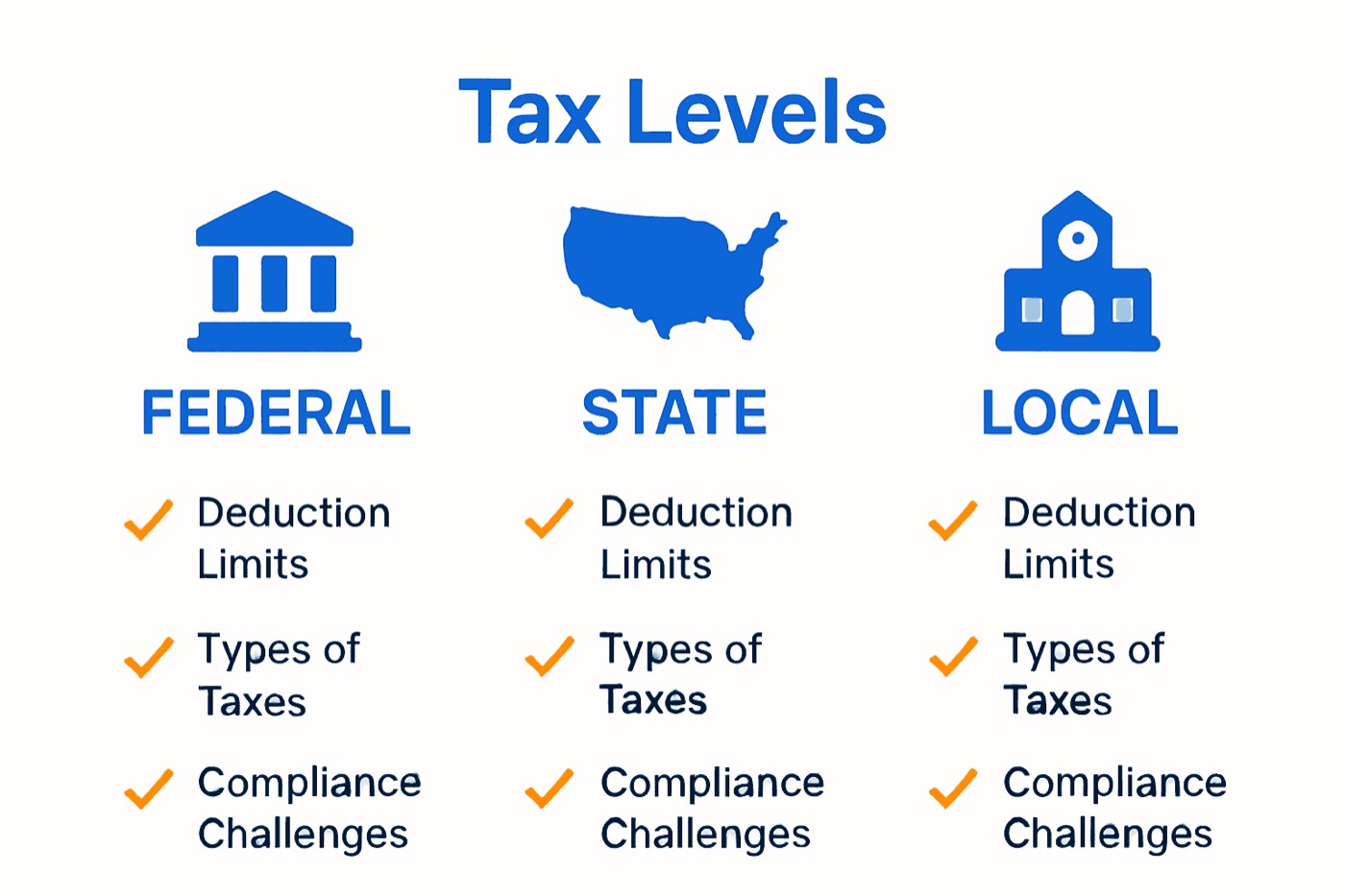
| Tax Authority | Deductibility of Expenses | Common Taxes Imposed | Key Compliance Challenges |
|---|---|---|---|
| Federal | Severely limited (280E); COGS only | Income tax on gross income | Minimal deductions Strict reporting 280E compliance |
| State | More flexibility (e.g., CA allows standard deductions through 2029) | Income tax Excise tax Cultivation tax |
Varies by state Tax categories Extra documentation |
| Local | Not deductible on federal return | Local business taxes Local sales taxes Licensing fees |
Additional registrations Layered tax rates Frequent changes |
Impact Of IRC Section 280E On Filings
IRC Section 280E represents one of the most significant tax challenges for cannabis businesses, creating a complex financial landscape that fundamentally reshapes how these enterprises approach tax reporting and financial strategy. This federal tax provision specifically targets businesses trafficking controlled substances, effectively penalizing cannabis companies by dramatically limiting standard business expense deductions.
According to the Congressional Research Service, Section 280E disallows virtually all tax deductions and credits for businesses involved with controlled substances—even in states where cannabis is legally operated. The critical nuance? While most business expenses are prohibited, companies can still reduce their tax liability by deducting cost of goods sold (COGS), providing a narrow path for financial optimization.
The practical implications of Section 280E are profound. Cannabis businesses must meticulously document and allocate expenses, distinguishing between:
- Direct production costs (allowable)
- Indirect operational expenses (typically non-deductible)
- Administrative and marketing expenditures (generally prohibited)
Recent litigation and ongoing legal challenges suggest potential future changes. Recent updates highlight emerging legal strategies and potential legislative modifications, including cases like New Mexico Top Organics challenging the statute’s broad application. Cannabis business owners must stay informed about these developments, working closely with tax professionals who specialize in navigating this complex regulatory environment to maximize their financial strategy within existing legal constraints.
Annual Filing Obligations And Key Deadlines
Tax compliance in the cannabis industry demands precise timing and meticulous attention to multiple filing deadlines across federal, state, and local jurisdictions. Missing even a single deadline can result in significant penalties and potential compliance challenges for cannabis businesses.
Highly Capitalized Tax Resources outlines critical federal filing dates that cannabis entrepreneurs must track carefully:
- January 15: Fourth quarter estimated tax payments
- March 15: Tax returns for partnerships and S corporations
- April 15: Corporate and calendar-year individual tax returns
- June 15: Second quarter estimated tax payments
- September 15: Third quarter estimated tax payments
- October 15: Extended filing deadline for most returns
According to the Cannabis CPA Masters Tax Calendar, cannabis businesses must also track additional critical filing requirements:
- Quarterly estimated tax payments in April, June, September, and January
- Payroll tax form submissions
- Information return deadlines for W-2s and 1099s
- State-specific cannabis business tax registrations
Successful tax management requires cannabis businesses to maintain comprehensive financial records, work with specialized tax professionals, and implement robust tracking systems. Proactive planning and understanding these complex filing obligations can help businesses avoid costly penalties and maintain compliance in this highly regulated industry.
Common Tax Mistakes And Compliance Strategies
Cannabis tax compliance represents a minefield of potential financial and legal risks where even minor errors can trigger significant penalties. Understanding the most common pitfalls is crucial for businesses seeking to navigate this complex regulatory landscape successfully.
Redbud Advisors highlights several critical mistakes that cannabis businesses frequently encounter:
- Poor record-keeping that complicates cost of goods sold (COGS) calculations
- Misclassification of business expenses
- Ignoring Section 280E regulatory limitations
- Incorrect employee classification
- Inadequate tax and cash flow planning
According to Cannabiz Advisor, successful compliance strategies demand a proactive approach:
- Maintain meticulous financial documentation
- Separate business entities across different cannabis verticals
- Work exclusively with tax professionals specializing in cannabis regulations
- Develop comprehensive estimated tax payment strategies
- Stay current with evolving state and local tax obligations
The most effective compliance strategy involves treating tax preparation as a year-round process. Cannabis businesses must invest in specialized accounting support, implement robust tracking systems, and continuously educate themselves about the shifting regulatory environment. Proactive planning, detailed record-keeping, and professional guidance are the cornerstones of successfully managing the unique tax challenges in the cannabis industry.
Frequently Asked Questions
What is IRC Section 280E, and how does it impact cannabis business taxes?
IRC Section 280E prohibits cannabis businesses from deducting most standard business expenses due to marijuana’s classification as a Schedule I controlled substance, significantly affecting their tax obligations and increasing overall tax burdens.
What are the primary tax filing deadlines for cannabis businesses?
Cannabis businesses must adhere to multiple tax filing deadlines including estimated tax payments on January 15, March 15 for partnerships and S corporations, April 15 for corporate and individual tax returns, with additional quarterly and specific state filing deadlines.
How can cannabis businesses effectively manage their tax compliance?
To manage tax compliance, cannabis businesses should maintain meticulous financial records, work with tax professionals specialized in the cannabis industry, implement proactive tax strategies, and stay informed about evolving regulations.
What common mistakes do cannabis businesses make regarding taxes?
Common mistakes include poor record-keeping, misclassification of expenses, ignoring Section 280E limitations, and inadequate tax planning, all of which can lead to significant penalties and compliance issues.
Recommended
This article is general education, not tax, legal or accounting advice. Cannabis rules change quickly; confirm how they apply to you with a qualified cannabis CPA or attorney.