Understanding Cannabis Financial Forecasting Explained
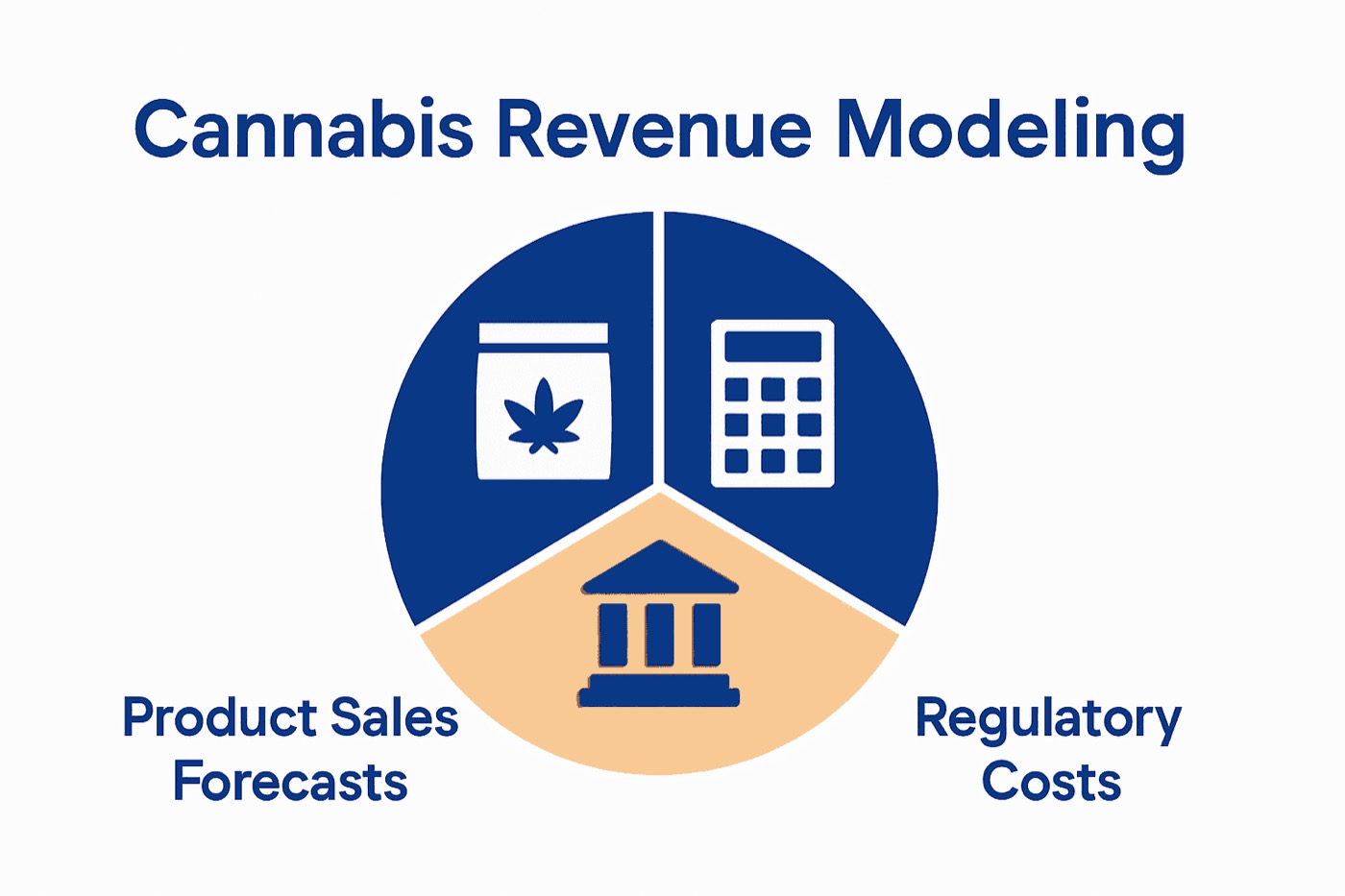
Cannabis businesses face constant uncertainty, where a single market shift can send profits soaring or tumbling overnight. Yet, companies with robust financial forecasts are 60 percent more likely to secure investment capital. Most people think cannabis forecasting is just about predicting sales, but it goes far deeper than that. These financial models can actually predict the impact of new regulations before they even hit—turning chaos into opportunity and giving prepared businesses the edge.
Quick Summary
| Takeaway | Explanation |
|---|---|
| Cannabis forecasting is essential for growth | Accurate financial projections help cannabis businesses secure investments and develop effective strategies. |
| Understand regulatory impacts on forecasts | Integrating compliance costs and legislative changes is crucial for reliable financial models in cannabis. |
| Use scenario analysis for strategic planning | Exploring different potential outcomes helps prepare businesses for market uncertainties and risks. |
| Monitor market trends actively | Keeping track of consumer preferences and economic shifts enables cannabis businesses to adapt quickly and effectively. |
| Employ sensitivity modeling to identify risks | Sensitivity analysis allows businesses to assess how changes in variables impact financial performance, supporting proactive strategies. |
What is Cannabis Financial Forecasting?
Cannabis financial forecasting represents a specialized strategic planning approach that enables cannabis businesses to project their financial performance, anticipate market changes, and make data driven decisions. This analytical process combines financial modeling, market trend assessment, and regulatory landscape evaluation to create comprehensive predictive frameworks for cannabis enterprises.
Below is a table summarizing the core components of financial forecasting in the cannabis industry and their unique focus, helping clarify each element’s role in effective forecasting.
| Component | Focus Area |
|---|---|
| Revenue Modeling | Projects income based on product sales and market trends |
| Operational Expense Assessment | Evaluates ongoing costs specific to cannabis business operations |
| Regulatory Impact Evaluation | Analyzes compliance, tax, and legislative effects on finances |
| Market Demand Prediction | Estimates future sales using consumer and regional data |
Core Components of Financial Forecasting
Financial forecasting in the cannabis industry goes beyond traditional business projection methods. It encompasses a multifaceted approach that considers unique industry challenges and opportunities. Cannabis accounting professionals recognize that successful forecasting requires deep understanding of several critical elements:
- Detailed revenue modeling based on potential product sales
- Assessment of operational expenses specific to cannabis businesses
- Evaluation of potential regulatory impact on financial performance
- Market demand predictions considering regional consumption trends
Strategic Importance in Cannabis Operations
Unlike traditional industries, cannabis financial forecasting must navigate complex regulatory environments and rapidly evolving market dynamics. Research from county planning models demonstrates that accurate financial forecasting can help cannabis businesses:
- Secure potential investment capital
- Develop robust operational strategies
- Manage risk with greater precision
- Create realistic growth projections
Successful cannabis financial forecasting requires a combination of rigorous financial analysis, deep industry knowledge, and adaptable predictive modeling techniques. Businesses that master this approach can transform uncertainty into strategic advantage, positioning themselves for sustainable growth in a complex and dynamic market landscape.
The Importance of Financial Forecasting in Cannabis
Financial forecasting serves as a critical strategic tool for cannabis businesses, offering profound insights into potential financial trajectories and operational challenges. In an industry characterized by rapid regulatory shifts and complex market dynamics, accurate financial projections become more than just a business practice they represent a fundamental survival mechanism.
Navigating Economic Uncertainty
The cannabis industry faces unique economic challenges that make financial forecasting exceptionally vital. Budgeting strategies play a crucial role in helping businesses anticipate potential revenue fluctuations, manage operational expenses, and create resilient financial frameworks. These forecasts enable cannabis entrepreneurs to:
- Identify potential revenue streams
- Understand potential financial risks
- Create adaptive financial strategies
- Allocate resources more effectively
Strategic Investment and Growth Planning
Accurate financial forecasting provides cannabis businesses with a competitive edge by enabling strategic decision making. According to industry financial reports, businesses that implement robust financial forecasting methods are 60% more likely to secure investment capital and demonstrate sustainable growth potential. This approach helps stakeholders:
- Attract potential investors
- Develop comprehensive business plans
- Evaluate market expansion opportunities
- Create realistic performance benchmarks
By transforming complex financial data into actionable insights, cannabis businesses can navigate the intricate landscape of regulatory compliance, market volatility, and competitive pressures. Financial forecasting becomes more than a predictive tool it emerges as a strategic compass guiding businesses toward sustainable success in an evolving industry.
Key Concepts in Cannabis Financial Forecasting
Cannabis financial forecasting relies on a sophisticated set of analytical techniques and strategic approaches that distinguish it from traditional financial planning. Understanding these key concepts is crucial for developing comprehensive and accurate financial projections in the rapidly evolving cannabis industry.
Revenue Modeling and Market Analysis
Revenue modeling in cannabis financial forecasting requires sophisticated data interpretation and nuanced market understanding.
Dispensary accounting professionals recognize that accurate revenue projection involves multiple interconnected factors:
- Product type demand forecasting
- Regional market consumption trends
- Pricing strategy assessments
- Competitive landscape evaluations
Regulatory Impact Considerations
Unique to cannabis financial forecasting is the critical need to integrate complex regulatory environments into financial models. According to comprehensive industry research, successful financial forecasting must account for:
- Federal and state regulatory compliance costs
- Potential legislative changes affecting business operations
- Tax implications specific to cannabis enterprises
- Licensing and operational permit expenses
By integrating detailed market analysis, regulatory understanding, and sophisticated financial modeling techniques, cannabis businesses can create robust forecasting frameworks. These approaches transform uncertainty into strategic insights, enabling more confident decision making in a complex and dynamic industry landscape.
Understanding Market Trends and Their Impact
Market trends in the cannabis industry represent a complex ecosystem of interconnected factors that significantly influence financial forecasting and strategic planning. These trends encompass a wide range of elements from consumer behavior to regulatory shifts, creating a dynamic landscape that requires continuous monitoring and adaptive strategies.
Consumer Demand and Preference Dynamics
Consumer trends play a pivotal role in shaping cannabis market performance. National cannabis regulations demonstrate that product preferences, consumption patterns, and demographic shifts directly impact market potential. Cannabis financial forecasters must carefully analyze:
- Product category popularity
- Age and demographic consumption patterns
- Regional variations in product preferences
- Emerging consumption methods
Economic and Regulatory Influence
The cannabis market experiences unique economic pressures that differentiate it from traditional industries. According to industry economic research, market trends are heavily influenced by:
- State level legalization developments
- Federal regulatory environment
- Tax policy changes
- Investment climate shifts
Successful cannabis financial forecasting requires a holistic approach that integrates multiple trend indicators. By understanding these complex market dynamics, businesses can develop more resilient and adaptive financial strategies that anticipate and respond to emerging industry challenges and opportunities.
Applying Forecasting Models in Cannabis Business
Forecasting models in the cannabis industry represent sophisticated analytical tools designed to transform complex market data into actionable strategic insights. These models provide businesses with a structured approach to understanding potential financial trajectories and managing inherent market uncertainties.
Scenario Analysis Techniques
Cannabis business professionals utilize scenario analysis as a critical forecasting method to explore multiple potential business outcomes. County financial modeling research demonstrates that effective scenario analysis involves creating comprehensive financial projections under different market conditions:
- Best case revenue scenarios
- Conservative market penetration estimates
- Potential regulatory impact models
- Competitive landscape variations
Sensitivity Modeling Approaches
Sensitivity modeling helps cannabis businesses understand how specific variables might impact overall financial performance. This approach allows entrepreneurs to identify potential risks and develop proactive mitigation strategies by examining:
- Price fluctuation impacts
- Supply chain disruption scenarios
- Regulatory compliance cost variations
- Market demand elasticity
By implementing these advanced forecasting models, cannabis businesses can develop more resilient financial strategies. The ability to anticipate and adapt to potential market changes provides a significant competitive advantage in an industry characterized by rapid transformation and complex regulatory environments.
The following table compares two key forecasting techniques—Scenario Analysis and Sensitivity Modeling—used within cannabis business financial planning, emphasizing their purpose and common application focus.
| Technique | Purpose | Common Focus Area |
|---|---|---|
| Scenario Analysis | Evaluates multiple possible business outcomes | Revenue, regulations, market penetration |
| Sensitivity Modeling | Tests impact of variable changes on performance | Prices, compliance costs, demand shifts |

Frequently Asked Questions
What are the core components of cannabis financial forecasting?
Cannabis financial forecasting includes detailed revenue modeling, operational expense assessments, regulatory impact evaluations, and market demand predictions. To get started, analyze your product types and operational costs to create a foundation for accurate forecasts.
How does regulatory compliance affect financial forecasting in the cannabis industry?
Regulatory compliance significantly shapes the financial landscape for cannabis businesses, influencing costs and operational strategies. To account for this, incorporate compliance costs and potential legislative changes into your forecasts when planning for future operations.
What techniques are used in cannabis financial forecasting?
Common techniques include revenue modeling, scenario analysis, and sensitivity modeling. Begin by applying scenario analysis to evaluate different market conditions and their potential financial impact on your business.
How can cannabis businesses manage financial risks effectively?
Cannabis businesses can manage financial risks by developing adaptive financial strategies that account for market fluctuations and regulatory changes. As a practical step, regularly review and update your forecasts to reflect current market dynamics and potential risks.
Why is it important to analyze consumer demand in cannabis financial forecasting?
Analyzing consumer demand helps cannabis businesses understand product preferences and consumption patterns, which are critical for accurate revenue predictions. Begin tracking sales data and consumer trends to refine your forecasts based on real-time market insights.
How can accurate financial forecasting lead to successful investment in the cannabis industry?
Accurate financial forecasting can attract potential investors by demonstrating a strong understanding of the market and providing realistic growth projections. To enhance your appeal to investors, create detailed business plans that include well-researched financial forecasts and scenarios.
Recommended
- Budgeting – Cannabis Business Minds
- Blog – Cannabis Business Minds
- Cannabis Accounting – Cannabis Business Minds
- Dispensary Accounting Made Easy
This article is general education, not tax, legal or accounting advice. Cannabis rules change quickly; confirm how they apply to you with a qualified cannabis CPA or attorney.