What Is Tax Liability for Cannabis? Complete Breakdown
2026 update: what rescheduling changed for 280E (reviewed October 2026)
Effective April 22, 2026, a DOJ/DEA final order moved marijuana covered by a qualifying state medical license (and FDA-approved marijuana drugs) to Schedule III. Section 280E only applies to Schedule I and II substances, so state-licensed medical cannabis activity is generally no longer subject to 280E going forward. Adult-use cannabis remains in Schedule I and fully subject to 280E. The DEA proceeding to reschedule all marijuana was temporarily stayed in October 2026, and Treasury/IRS guidance on transition years and mixed medical/adult-use businesses is still pending.
This article was written before the order took effect. Check where your business stands in about a minute.
Most advice about cannabis taxes makes the mistake of treating them like any other business expense. In reality, federal rules can hit legal cannabis companies with effective tax rates reaching as high as 70 percent. This has upended how businesses plan for profitability and avoid costly mistakes. Understanding the real tax liabilities and dispelling persistent myths will help business owners avoid hidden pitfalls that threaten their bottom line.
Key Takeaways
| Point | Details |
|---|---|
| Complex Tax Environment | Cannabis businesses face unique federal tax regulations that increase financial burdens, particularly due to Section 280E, which limits allowable deductions. |
| High Effective Tax Rates | Without standard expense deductions, effective tax rates for cannabis businesses can exceed 70%, making financial planning crucial. |
| Need for Specialized Knowledge | Successful cannabis operators must collaborate with tax professionals who understand the nuances of federal cannabis taxation to mitigate liabilities. |
| Rigorous Compliance Requirements | Meticulous record-keeping and precise reporting are essential to avoid severe penalties and ensure compliance with federal tax regulations. |
Defining Cannabis Tax Liability and Common Myths
Cannabis businesses face a complex and challenging tax landscape that dramatically differs from traditional business taxation. Tax liability in the cannabis sector is not simply about paying standard business taxes – it involves navigating intricate federal regulations that create significant financial burdens. According to Taxpayer Advocate, despite state-level legalization, these businesses remain subject to strict federal tax rules due to marijuana’s classification as a Schedule I controlled substance.
The most critical myth to dispel is that state legal status automatically translates to straightforward federal tax treatment. Under Section 280E of the Internal Revenue Code, cannabis businesses are prohibited from deducting ordinary business expenses, which means they often pay tax on gross income rather than net income. This unique taxation approach can result in effective tax rates substantially higher than those faced by businesses in other industries. University of Michigan Law Repository highlights that this tax treatment creates significant financial challenges for otherwise legal state-operating businesses.
Key implications of cannabis tax liability include:
- Inability to claim standard business expense deductions
- Higher effective tax rates compared to other industries
- Complex reporting requirements
- Potential audit risks due to federal regulatory discrepancies
Successful cannabis business owners must develop sophisticated tax strategies that account for these unique constraints. This means working closely with tax professionals who understand the nuanced federal regulations governing cannabis operations and can help minimize tax liability while ensuring full regulatory compliance. Proactive financial planning becomes not just a recommendation, but an absolute necessity in this highly regulated industry.
Categories of Cannabis Taxes and IRS Section 280E
Cannabis businesses encounter a unique and complex tax landscape defined primarily by the stringent requirements of Section 280E. According to Marijuana Policy Project, this federal tax provision creates substantial financial challenges by prohibiting businesses from deducting ordinary business expenses due to marijuana’s federal classification as a controlled substance. The result is a tax structure that can push effective tax rates to an astonishing 70% or higher.
Congressional Research Service clarifies that under federal law, all income is taxable – including income from activities deemed unlawful at the federal level. For cannabis businesses, this means navigating a intricate tax environment where standard business deductions are severely limited. The primary categories of taxes impacting cannabis businesses include:
- Federal Income Tax: Calculated on gross income without standard business expense deductions
- State Income Tax: Varying requirements based on individual state regulations
- Payroll Taxes: Standard employment tax obligations
- Sales and Excise Taxes: Specific to cannabis product transactions
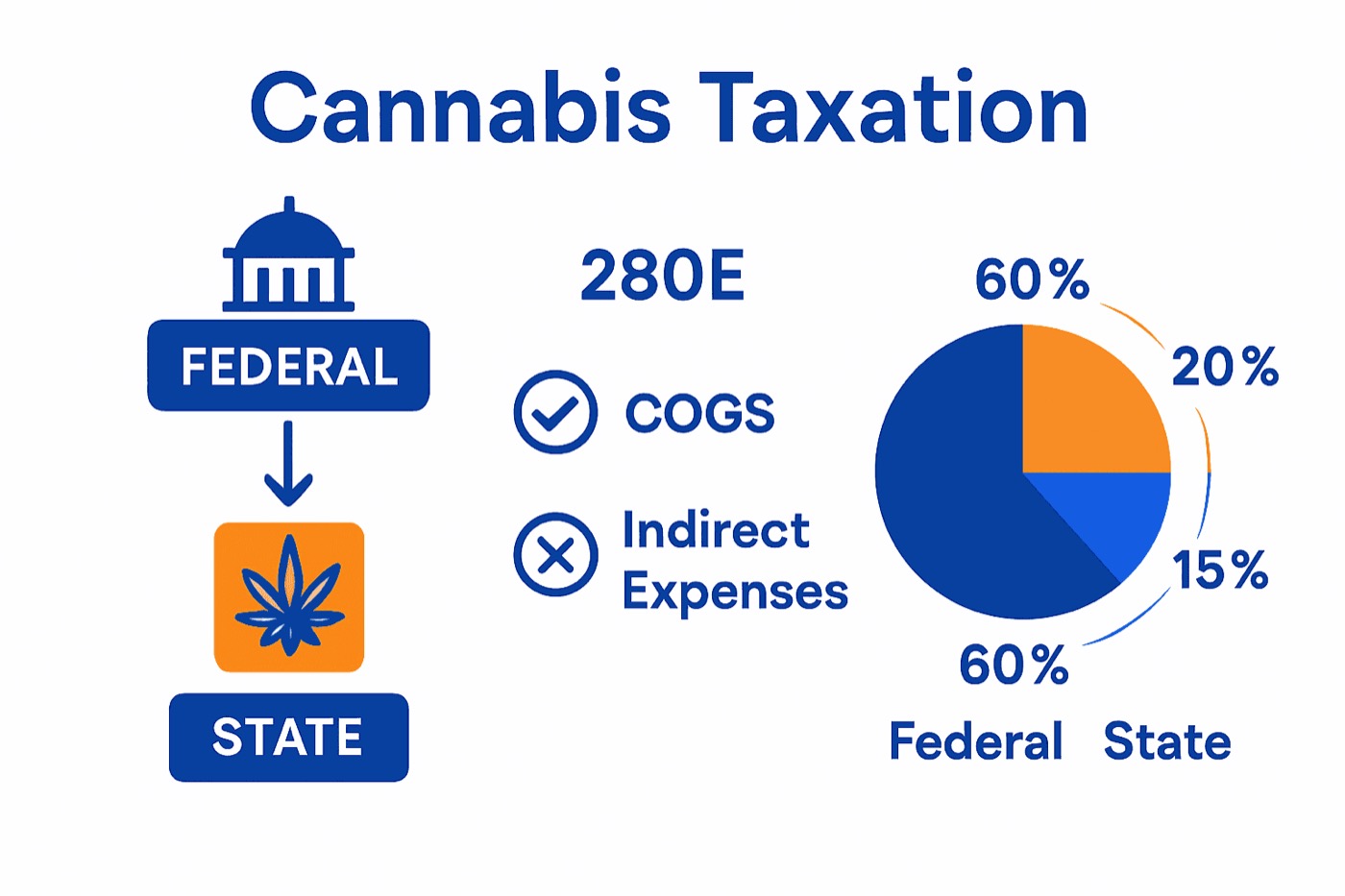
The critical nuance of Section 280E lies in its extremely narrow allowance for Cost of Goods Sold (COGS) deductions.
This means cannabis businesses can only deduct direct production costs, such as the actual price of cannabis inventory and direct manufacturing expenses. Indirect costs like marketing, rent, or administrative salaries remain non-deductible, creating a significant tax burden that requires sophisticated financial planning and expert guidance to manage effectively.
Calculating Taxable Income for Cannabis Businesses
Calculating taxable income for cannabis businesses represents an extraordinarily complex financial challenge that demands meticulous attention to detail and deep understanding of IRS regulations. Illinois CPA Society highlights the critical distinction that while cannabis businesses cannot deduct ordinary business expenses, they can strategically leverage Cost of Goods Sold (COGS) to minimize their tax liability. This nuanced approach requires precise documentation and a comprehensive understanding of what constitutes allowable cost allocations.
The calculation process varies significantly depending on the type of cannabis business. Cultivators, manufacturers, and retailers each face unique challenges in determining their COGS. Legal Clarity emphasizes the importance of strategically structuring business operations to maximize potential tax benefits. Key components typically included in COGS calculations involve:
- Direct material costs
- Direct labor expenses
- Packaging and processing expenses
- Certain cultivation and production overhead costs
- Inventory-related shipping and storage expenses
To navigate these complex tax requirements effectively, cannabis businesses must develop sophisticated accounting strategies. This might include creating separate legal entities for ancillary business activities, maintaining immaculate financial records, and working closely with tax professionals who specialize in cannabis industry regulations. The goal is not just compliance, but developing a proactive approach that minimizes tax burden while maintaining full transparency with federal and state tax authorities.

Compliance Requirements and Reporting Procedures
Navigating the complex landscape of tax compliance for cannabis businesses demands an unprecedented level of precision and documentation. IRS Chief Counsel Advice explicitly clarifies that no deductions or credits are permissible for businesses trafficking in controlled substances, creating a stringent reporting environment that leaves zero margin for error. Cannabis businesses must meticulously track every financial transaction, understanding that federal tax regulations remain uncompromising regardless of state-level legalization.
New York State Society of CPAs emphasizes the critical importance of comprehensive reporting, highlighting that marijuana remains a Schedule I controlled substance under federal law. The reporting procedures for cannabis businesses include:
- Detailed income documentation
- Precise COGS calculations
- Separate tracking of ancillary business activities
- Comprehensive expense categorization
- Maintenance of immaculate financial records
Successful compliance requires a proactive approach that goes beyond traditional accounting practices. Cannabis businesses must invest in specialized tax professionals who understand the intricate nuances of Section 280E, develop robust internal accounting systems, and maintain absolute transparency with federal and state tax authorities. The potential consequences of non-compliance can be devastating – including substantial financial penalties, potential audit risks, and even criminal charges for intentional misreporting.
Risks, Penalties, and Common Tax Pitfalls
The cannabis industry faces extraordinary tax vulnerability that can transform minor accounting mistakes into catastrophic financial consequences. NORML highlights how Section 280E creates punitive tax conditions that can push legal businesses toward potential insolvency. The fundamental risk stems from federal tax regulations that effectively penalize state-legal cannabis operations by disallowing standard business expense deductions, resulting in effective tax rates that can exceed 70%.
Marijuana Policy Project warns that cannabis businesses must navigate a treacherous regulatory landscape with significant potential penalties. The most common tax pitfalls include:
- Incomplete or inaccurate income reporting
- Improper COGS calculations
- Mixing personal and business expenses
- Failing to maintain meticulous financial records
- Overlooking state-specific tax nuances
The potential consequences of non-compliance are severe and multifaceted. Business owners could face substantial financial penalties, including back taxes, interest charges, and significant IRS-imposed fines. In extreme cases of intentional misreporting, criminal charges and potential business license revocation become real risks. Successful cannabis businesses must invest in specialized tax professionals, implement robust accounting systems, and maintain absolute transparency to mitigate these substantial financial and legal vulnerabilities.
Frequently Asked Questions
What is tax liability for cannabis businesses?
Tax liability for cannabis businesses refers to the responsibility to pay taxes on income generated from cannabis-related activities, subject to unique federal regulations that significantly differ from traditional business taxation.
How does IRS Section 280E affect cannabis businesses?
IRS Section 280E prohibits cannabis businesses from deducting ordinary business expenses from their taxable income, leading them to pay taxes on gross income instead of net income, which can result in effective tax rates exceeding 70%.
What are common financial challenges faced by cannabis businesses due to tax liability?
Common financial challenges include the inability to claim standard business expense deductions, higher effective tax rates, complicated reporting obligations, and increased audit risks stemming from federal regulations.
What strategies can cannabis business owners employ to manage tax liability?
Cannabis business owners should develop sophisticated tax strategies by working with tax professionals, maintaining meticulous financial records, leveraging allowable Cost of Goods Sold (COGS) deductions, and structuring their operations to optimize tax benefits.
Recommended
- Cannabis Business Tax Filings Explained: U.S. Compliance Guide – Cannabis Business Minds
- Cannabis Tax – Cannabis Business Minds
- Cannabis Expense Categories Explained: Tax and Compliance – Cannabis Business Minds
- Cannabis Tax Compliance Guide: Achieve Full Legal Readiness – Cannabis Business Minds
- IRS Installment Agreements | Tax Payment Plans | Tax Payment Agreement
- IRS Audit Closing Letter: Complete Guide for 2025 – Unique Solutions to IRS Tax Problems
This article is general education, not tax, legal or accounting advice. Cannabis rules change quickly; confirm how they apply to you with a qualified cannabis CPA or attorney.