Tax Exposure Cannabis – Impact on US Businesses

2026 update: what rescheduling changed for 280E (reviewed October 2026)
Effective April 22, 2026, a DOJ/DEA final order moved marijuana covered by a qualifying state medical license (and FDA-approved marijuana drugs) to Schedule III. Section 280E only applies to Schedule I and II substances, so state-licensed medical cannabis activity is generally no longer subject to 280E going forward. Adult-use cannabis remains in Schedule I and fully subject to 280E. The DEA proceeding to reschedule all marijuana was temporarily stayed in October 2026, and Treasury/IRS guidance on transition years and mixed medical/adult-use businesses is still pending.
This article was written before the order took effect. Check where your business stands in about a minute.
Most American cannabis businesses pay a higher tax rate than nearly any other industry, with effective rates soaring between 40 and 70 percent. The complex tax environment facing this sector stems from conflicting federal and state regulations, directly impacting profitability and survival. Knowing how these tax rules work is not just about compliance, it is a crucial step in safeguarding investments and competing in a rapidly changing market.
Key Takeaways
| Point | Details |
|---|---|
| Extraordinary Tax Challenges | Cannabis businesses face high effective tax rates due to Section 280E, limiting them to deducting only Cost of Goods Sold. |
| State Variability | Each state has its own complex tax regulations, making compliance and financial planning difficult for cannabis operators. |
| Risks of Noncompliance | Noncompliance can lead to severe penalties, including fines and loss of business licenses, necessitating rigorous accounting practices. |
| Strategic Tax Mitigation | Businesses must develop sophisticated strategies, such as separating legal entities and maximizing COGS, to reduce tax exposure effectively. |
Defining Tax Exposure in Cannabis
Tax exposure in the cannabis industry represents a complex financial challenge that goes far beyond standard business taxation. Unlike traditional enterprises, cannabis businesses face extraordinary tax constraints rooted in federal regulatory conflicts. The fundamental issue stems from Section 280E of the Internal Revenue Code, which prohibits cannabis businesses from deducting standard operating expenses, creating a uniquely punitive tax environment.
The impact of these tax restrictions is profound. Cannabis businesses can experience effective tax rates between 40 and 70 percent, significantly higher than those in other industries. This means that for every dollar earned, cannabis entrepreneurs must allocate a substantially larger percentage to tax obligations, dramatically reducing potential profitability and reinvestment capabilities.
Understanding tax exposure requires recognizing three critical dimensions: federal restrictions, state-level variations, and the ongoing legal complexity surrounding cannabis commerce. Potential rescheduling of marijuana could fundamentally transform these tax burdens, potentially enabling businesses to claim standard deductions and reduce their effective tax rates. Businesses must develop sophisticated tax strategies that account for these unique regulatory constraints, often requiring specialized accounting expertise and proactive financial planning to navigate this intricate landscape.
Key factors defining cannabis tax exposure include:
- Federal tax code restrictions under Section 280E
- Inability to deduct standard business expenses
- Varying state-level tax regulations
- Complex reporting requirements
- Potential future legislative changes affecting tax treatment
Section 280E and Federal Tax Impacts
Section 280E represents a critical federal tax provision that creates extraordinary financial challenges for cannabis businesses. Unique tax restrictions prevent state-legal cannabis enterprises from deducting standard business expenses, forcing them to pay taxes on gross income rather than net income. This punitive tax code effectively transforms cannabis businesses into high-tax entities, with effective tax rates often exceeding 70%.
The economic impact of Section 280E is staggering. Cannabis businesses paid over $1.8 billion in additional taxes in 2022 due to these restrictive federal regulations. Traditional businesses can deduct operational expenses like rent, utilities, marketing, and employee salaries. In stark contrast, cannabis businesses are limited to deducting only Cost of Goods Sold (COGS), which significantly reduces their ability to reinvest profits and maintain sustainable operations.
Navigating Section 280E requires sophisticated financial strategies and meticulous accounting. Cannabis entrepreneurs must carefully structure their business operations to maximize allowable deductions while maintaining strict compliance with federal tax regulations. This often involves complex accounting methods, separating plant-touching and non-plant-touching business activities, and developing intricate corporate structures that can withstand intense IRS scrutiny.
Key implications of Section 280E include:
- Prohibition of standard business expense deductions
- Taxation on gross income instead of net income
- Effective tax rates approaching 70-90%
- Significant financial strain on cannabis businesses
- Requirement for specialized accounting approaches
State-Level Taxation and Compliance Burdens
State-level cannabis taxation creates an intricate landscape of regulatory complexity that dramatically impacts business operations. Cannabis businesses in states like New Jersey face significant tax burdens that increase production and operating costs, forcing entrepreneurs to develop sophisticated financial strategies to remain competitive.
Each state presents unique tax frameworks that compound the challenges imposed by federal regulations. Excise taxes, cultivation taxes, and retail sales taxes vary dramatically across jurisdictions, creating a patchwork of compliance requirements that demand specialized accounting expertise. Some states impose additional local taxes, further complicating financial planning for cannabis businesses. These multi-layered tax structures require businesses to maintain meticulous records and develop adaptive financial strategies that can navigate rapidly changing regulatory environments.
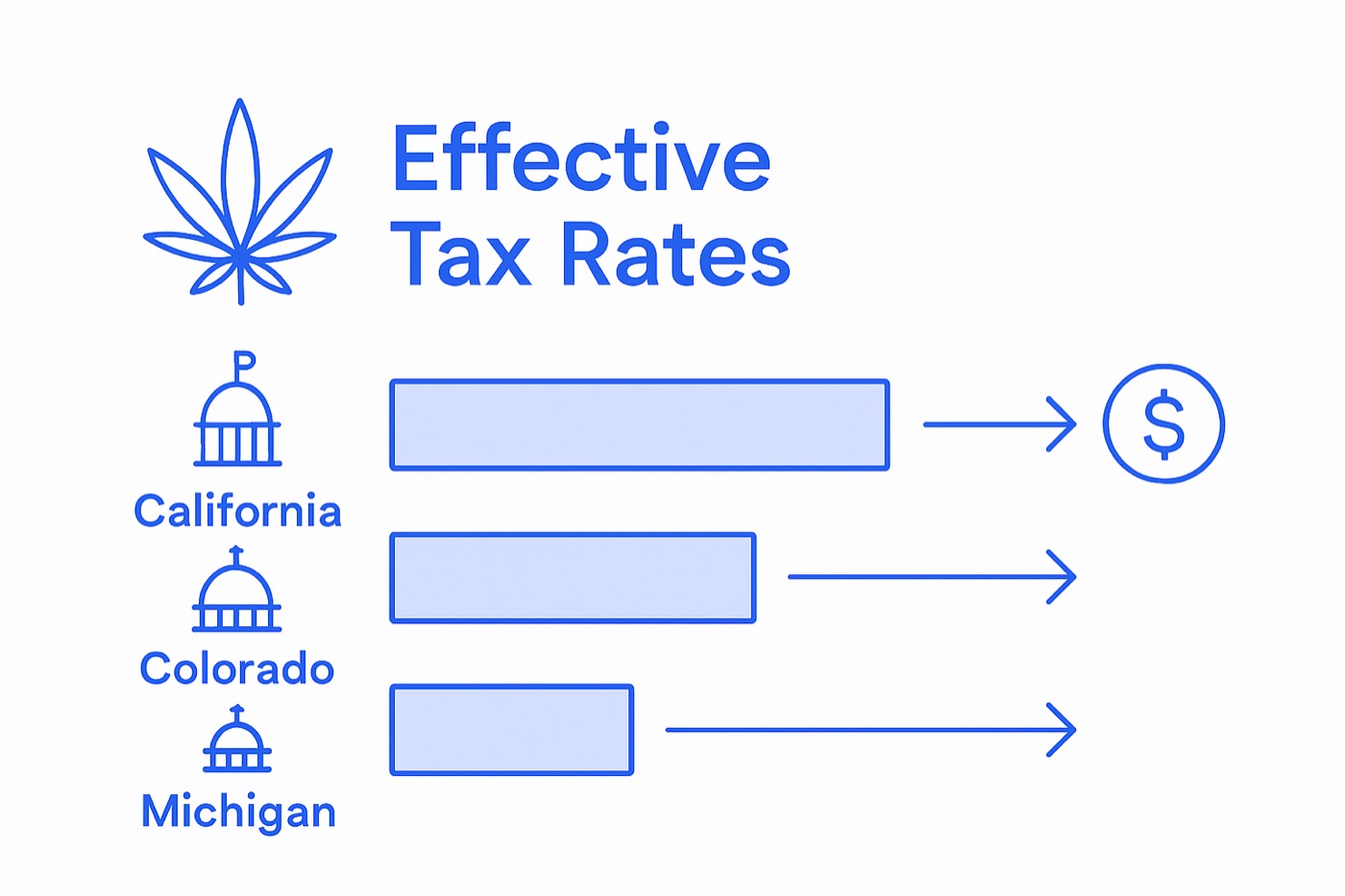
The compliance burden extends beyond mere financial calculations. Cannabis businesses must invest significant resources in understanding and implementing state-specific reporting requirements, tracking inventory, documenting transactions, and maintaining comprehensive audit trails. This often necessitates hiring specialized accounting professionals and investing in advanced compliance management systems. The complexity of these requirements creates substantial overhead costs that traditional businesses do not encounter, placing additional financial strain on cannabis entrepreneurs.
Key state-level taxation challenges include:
- Widely varying tax rates across different jurisdictions
- Complex multi-tiered taxation structures
- Significant reporting and documentation requirements
- Additional local tax considerations
- Continuous regulatory landscape changes
Risks of Noncompliance for Cannabis Operators
Tax noncompliance represents an existential threat to cannabis businesses, with potential consequences far more severe than traditional industry penalties. Cannabis businesses must maintain rigorous accounting practices to navigate complex tax regulations that can result in effective tax rates exceeding 50%, creating a high-stakes regulatory environment where precision is paramount.
The risks of noncompliance extend well beyond standard financial penalties. Cannabis operators face potential criminal and civil liabilities that can include substantial financial sanctions, loss of business licenses, and even criminal prosecution. Improper record-keeping, incorrect tax reporting, or failure to document transactions can trigger comprehensive IRS audits that may result in retroactive tax assessments, substantial fines, and potentially permanent business dissolution. These risks are magnified by the unique federal-state regulatory discrepancies that characterize the cannabis industry.
Navigating compliance requires a multifaceted approach that integrates sophisticated financial management, legal expertise, and proactive regulatory monitoring. Cannabis businesses must develop comprehensive internal control systems that meticulously track every financial transaction, maintain exhaustive documentation, and create transparent reporting mechanisms. This often necessitates significant investment in specialized accounting software, compliance training, and ongoing legal consultation to mitigate potential regulatory risks.
Key compliance risks for cannabis operators include:
- Potential criminal and civil tax penalties
- Permanent loss of business licensing
- Substantial financial sanctions
- Comprehensive IRS audit exposure
- Retroactive tax assessments
- Potential criminal prosecution for systematic noncompliance
Practical Strategies to Mitigate Tax Exposure
Cost of Goods Sold (COGS) represents the most critical strategic lever for cannabis businesses seeking to minimize tax exposure. Federal legislative solutions are actively exploring methods to address the financial disadvantages imposed by Section 280E, creating opportunities for businesses to optimize their tax positioning through sophisticated accounting approaches.
Successful tax mitigation requires a comprehensive approach that carefully separates plant-touching and ancillary business activities. Cannabis operators can strategically structure their businesses by creating distinct legal entities for different operational functions, such as separating cultivation, processing, and retail operations. This approach allows businesses to maximize allowable deductions by carefully allocating expenses and creating clear demarcations between different business segments. Sophisticated accounting methods, including detailed inventory tracking and precise expense categorization, become critical in navigating the complex regulatory landscape.
Advanced tax mitigation strategies demand a proactive and multifaceted approach. Cannabis businesses must invest in specialized accounting expertise, develop robust documentation systems, and maintain meticulous financial records that can withstand intense IRS scrutiny. This involves implementing advanced accounting software, conducting regular internal audits, and maintaining transparent financial reporting mechanisms that precisely track every aspect of business operations.
Key strategies for mitigating tax exposure include:
- Maximize Cost of Goods Sold (COGS) allocations
- Create separate legal entities for different business functions
- Implement advanced accounting and tracking systems
- Develop comprehensive documentation protocols
- Invest in specialized tax and legal expertise
- Maintain transparent financial reporting
Frequently Asked Questions
What is tax exposure in the cannabis industry?
Tax exposure in the cannabis industry refers to the heightened tax obligations faced by cannabis businesses due to federal regulations, specifically Section 280E, which prevents them from deducting standard operating expenses. This results in effective tax rates significantly higher than those in other industries.
How does Section 280E impact cannabis businesses?
Section 280E prohibits cannabis businesses from deducting typical business expenses, causing them to pay taxes on gross income rather than net income. This leads to effective tax rates often exceeding 70%, straining their profitability and ability to reinvest.
What are the state-level taxation challenges for cannabis businesses?
State-level taxation varies widely and includes excise taxes, cultivation taxes, and retail sales taxes. These multi-layered tax structures create complex compliance requirements that cannabis businesses must navigate, often leading to increased operational costs and requiring specialized accounting expertise.
What strategies can cannabis businesses use to mitigate tax exposure?
Cannabis businesses can mitigate tax exposure by maximizing their Cost of Goods Sold (COGS) allocations and strategically structuring their operations into separate entities for different functions. Additionally, investing in specialized accounting systems and maintaining meticulous documentation can help manage compliance and optimize tax obligations.
Recommended
- What Is Tax Liability for Cannabis? Complete Breakdown – Cannabis Business Minds
- Why Tax Compliance Matters: Complete Cannabis Guide – Cannabis Business Minds
- Cannabis Business Tax Filings Explained: U.S. Compliance Guide – Cannabis Business Minds
- Cannabis Tax Professionals: Complete Role Breakdown – Cannabis Business Minds
- 7 Χρήσιμα Tips για Φορολογική Δήλωση για Επιχειρήσεις – Χρήστος Καβαλλάρης – Λογιστής
This article is general education, not tax, legal or accounting advice. Cannabis rules change quickly; confirm how they apply to you with a qualified cannabis CPA or attorney.