Cannabis Tax Professionals: Complete Role Breakdown

2026 update: what rescheduling changed for 280E (reviewed October 2026)
Effective April 22, 2026, a DOJ/DEA final order moved marijuana covered by a qualifying state medical license (and FDA-approved marijuana drugs) to Schedule III. Section 280E only applies to Schedule I and II substances, so state-licensed medical cannabis activity is generally no longer subject to 280E going forward. Adult-use cannabis remains in Schedule I and fully subject to 280E. The DEA proceeding to reschedule all marijuana was temporarily stayed in October 2026, and Treasury/IRS guidance on transition years and mixed medical/adult-use businesses is still pending.
This article was written before the order took effect. Check where your business stands in about a minute.
Most american cannabis businesses face a unique tax burden that can lead to effective tax rates nearly double those of many other industries. The complex legal landscape in the United States leaves these companies with fewer tax deductions and greater financial risks, making specialized expertise absolutely vital. This article unpacks the critical role of cannabis tax professionals, revealing how their work helps businesses navigate regulatory obstacles while protecting financial health in an unpredictable environment.
Key Takeaways
| Point | Details |
|---|---|
| Specialized Knowledge Required | Cannabis tax professionals need a deep understanding of tax law, especially Section 280E, to navigate the unique challenges of the cannabis industry. |
| Importance of Record-Keeping | Effective cannabis accounting requires meticulous record-keeping and precise documentation to ensure compliance with federal tax regulations. |
| Strategic Planning is Key | Successful navigation of tax obligations involves developing sophisticated financial strategies that optimize allowable deductions under Section 280E. |
| Proactive Compliance Management | Cannabis businesses must stay ahead of regulatory changes and implement robust internal controls to mitigate tax-related risks and potential audits. |
Defining Cannabis Tax Professionals and Their Work
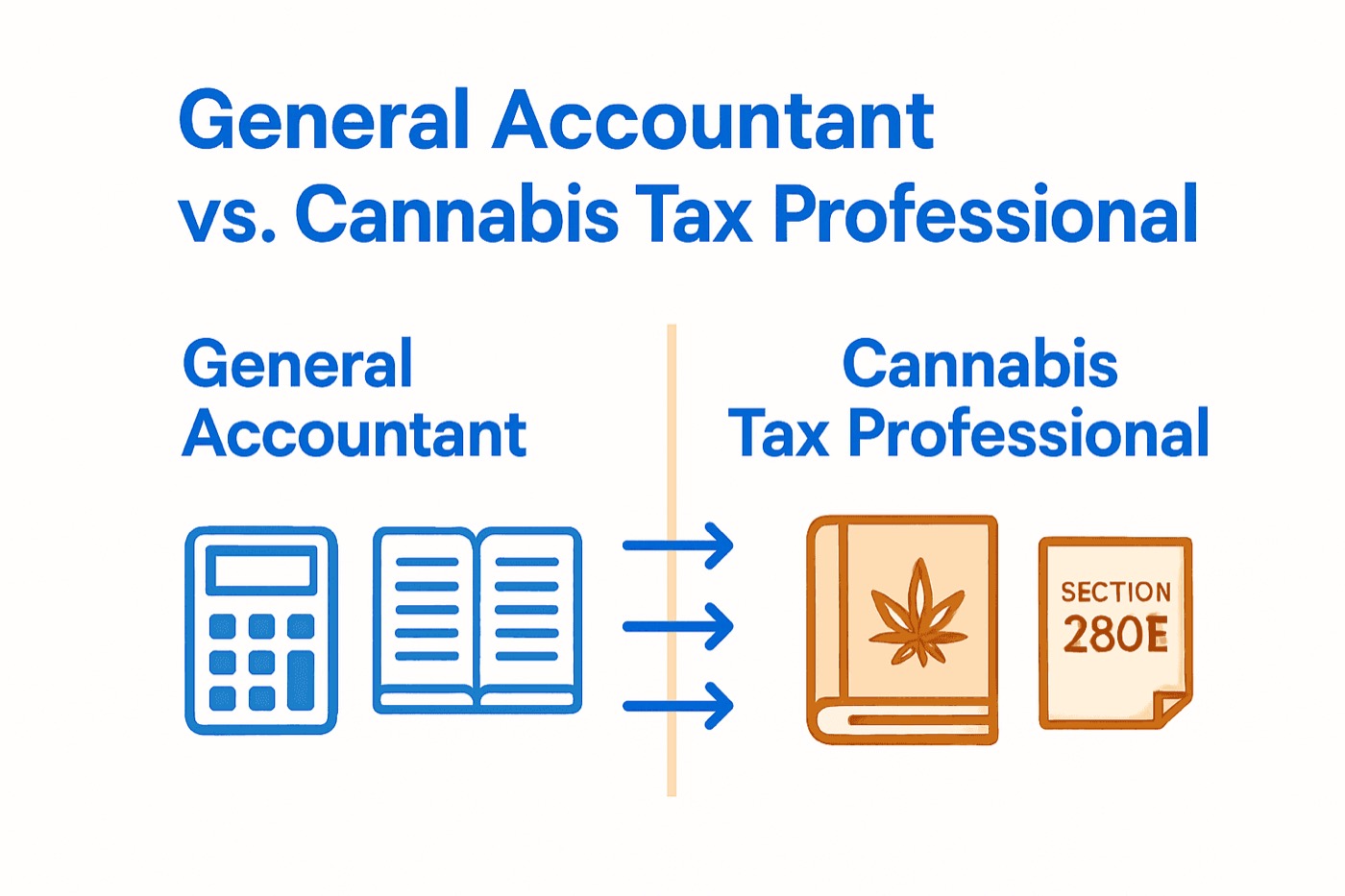
Cannabis tax professionals are specialized finance experts who navigate the complex fiscal landscape of the cannabis industry, focusing primarily on addressing unique tax challenges that traditional accountants might find overwhelming. According to research from tx.cpa, these professionals are critical in managing the intricate tax implications arising from Section 280E of the Internal Revenue Code, which specifically disallows standard business deductions for enterprises trafficking controlled substances.
The primary responsibilities of cannabis tax professionals extend far beyond standard accounting practices. As detailed by btcpa.net, they assist cannabis businesses in several crucial areas:
- Ensuring rigorous compliance with federal and state tax regulations
- Implementing meticulous record-keeping practices
- Preparing comprehensive documentation for potential IRS audits
- Developing strategic financial approaches that maximize allowable tax treatments
These professionals must possess a unique blend of skills, combining deep knowledge of tax law, cannabis industry regulations, and sophisticated financial strategy.
Their work requires not just mathematical precision, but also an adaptive approach to an evolving regulatory environment where legal nuances can significantly impact a business’s financial health. Cannabis tax professionals essentially serve as financial navigators, helping businesses maintain compliance while developing sustainable financial frameworks in a complex and often challenging regulatory landscape.
Core Responsibilities in Cannabis Accounting
Cannabis accounting professionals operate in an intricate financial ecosystem that demands exceptional precision and specialized expertise. According to btcpa.net, their core responsibilities include maintaining detailed financial records, meticulously categorizing expenses to ensure compliance with Section 280E, and conducting comprehensive internal audits to identify potential regulatory gaps.
The critical tasks of cannabis accountants extend well beyond traditional accounting practices. As highlighted by tx.cpa, these professionals are responsible for:
- Implementing robust internal controls to protect business assets
- Safeguarding cash and inventory management systems
- Ensuring precise accounting procedures
- Mitigating risks of potential tax evasion
Professionals in this field must develop sophisticated strategies for navigating the complex regulatory landscape. Cannabis bookkeeping best practices for success often require a multifaceted approach that combines deep understanding of tax law, keen financial analysis, and proactive compliance management. By maintaining meticulous financial documentation and staying ahead of regulatory changes, cannabis accounting professionals play a crucial role in helping businesses maintain financial integrity and operational sustainability in a challenging and evolving industry.
Navigating Section 280E and IRS Compliance
Section 280E represents one of the most significant regulatory challenges for cannabis businesses, creating a complex tax landscape that demands exceptional strategic planning. According to news.bloombergtax.com, this federal tax provision disallows deductions for ordinary business expenses for enterprises trafficking controlled substances, resulting in substantially higher effective tax rates for cannabis companies compared to traditional businesses.
Compliance with Section 280E requires an extraordinarily meticulous approach to financial management. As detailed by btcpa.net, cannabis businesses must:
- Document every financial transaction with exceptional precision
- Maintain comprehensive and organized financial records
- Conduct periodic internal audits to identify potential compliance gaps
- Develop robust accounting systems that withstand intense IRS scrutiny
Navigating this regulatory minefield requires more than just good record-keeping. Understanding the 280E deductible COGS factsheet becomes crucial for businesses seeking to maximize their allowable deductions. By carefully segregating direct costs of goods sold (COGS) from non-deductible expenses, cannabis businesses can strategically reduce their tax burden while maintaining strict compliance with federal regulations. Successful navigation of Section 280E demands a proactive, detail-oriented approach that combines deep tax law knowledge with sophisticated financial strategy.
Essential Qualifications and Specialized Expertise
Cannabis tax professionals require a sophisticated and nuanced skill set that goes far beyond traditional accounting expertise. According to tx.cpa, professionals in this field must possess a deep understanding of Section 280E, demonstrate extensive experience with complex internal controls, and navigate the intricate landscape of both federal and state tax regulations with exceptional precision.
The technical competencies required for success in this specialized field are comprehensive and demanding. As highlighted by btcpa.net, cannabis tax professionals must be adept at:
- Implementing meticulous record-keeping practices
- Preparing comprehensive documentation for potential IRS audits
- Developing sophisticated financial tracking systems
- Maintaining rigorous compliance protocols
Cannabis accounting tips for essential success underscore the importance of continuous learning and adaptability. Successful professionals in this domain must combine advanced technical knowledge with strategic thinking, staying ahead of rapidly evolving regulatory landscapes. This requires not just technical proficiency, but also a proactive approach to understanding the unique financial challenges inherent in the cannabis industry, where federal and state regulations create a complex and often contradictory regulatory environment.
Common Tax Pitfalls Cannabis Businesses Face
Navigating the complex tax landscape presents extraordinary challenges for cannabis businesses, with financial risks lurking at every regulatory turn. According to uzio.com, these enterprises frequently confront limited tax deductions under Section 280E, resulting in significantly higher effective tax rates that can dramatically strain cash flow and compromise financial sustainability.
The intricacies of tax compliance in the cannabis sector demand exceptional precision. As highlighted by btcpa.net, businesses commonly encounter critical challenges such as:
- Accurately allocating expenses to cost of goods sold
- Managing compliance with frequently shifting regulatory requirements
- Maintaining meticulous financial documentation
- Preventing potential audit triggers
Tax planning tips for dispensaries emphasize the critical importance of proactive strategy in mitigating these risks. Successfully navigating these tax pitfalls requires more than just technical expertise. Cannabis businesses must develop a comprehensive understanding of the unique regulatory environment, implementing sophisticated financial tracking systems that can withstand intense IRS scrutiny while preserving the organization’s financial health in an inherently challenging regulatory landscape.
Frequently Asked Questions
What are the main responsibilities of cannabis tax professionals?
Cannabis tax professionals specialize in navigating the complex tax landscape of the cannabis industry. Their primary responsibilities include ensuring compliance with federal and state tax regulations, maintaining meticulous financial records, preparing documentation for IRS audits, and developing financial strategies that maximize allowable tax treatments.
How does Section 280E affect cannabis businesses?
Section 280E disallows standard business deductions for cannabis enterprises, resulting in significantly higher effective tax rates compared to traditional businesses. Cannabis businesses must navigate this provision carefully to manage their tax obligations effectively.
What skills are essential for cannabis tax professionals?
Essential skills for cannabis tax professionals include a deep understanding of tax law, particularly Section 280E, expertise in internal controls, and the ability to adapt to evolving regulations. They must also be proficient in record-keeping and financial documentation to ensure compliance.
What are common tax pitfalls that cannabis businesses face?
Common tax pitfalls include difficulties in allocating expenses to the cost of goods sold, maintaining compliance with changing regulations, managing meticulous financial documentation, and avoiding actions that might trigger an IRS audit.
Recommended
- What Is Tax Liability for Cannabis? Complete Breakdown – Cannabis Business Minds
- Cannabis Tax – Cannabis Business Minds
- Master Cannabis Taxation Workflow 2025: Step-by-Step Guide – Cannabis Business Minds
- Cannabis Business Tax Filings Explained: U.S. Compliance Guide – Cannabis Business Minds
- How Estate Planning Attorneys Can Help with Tax Planning – Law Office of Eric Ridley
This article is general education, not tax, legal or accounting advice. Cannabis rules change quickly; confirm how they apply to you with a qualified cannabis CPA or attorney.