Effective Cannabis Inventory: Complete Guide for U.S. Operators

2026 update: what rescheduling changed for 280E (reviewed October 2026)
Effective April 22, 2026, a DOJ/DEA final order moved marijuana covered by a qualifying state medical license (and FDA-approved marijuana drugs) to Schedule III. Section 280E only applies to Schedule I and II substances, so state-licensed medical cannabis activity is generally no longer subject to 280E going forward. Adult-use cannabis remains in Schedule I and fully subject to 280E. The DEA proceeding to reschedule all marijuana was temporarily stayed in October 2026, and Treasury/IRS guidance on transition years and mixed medical/adult-use businesses is still pending.
This article was written before the order took effect. Check where your business stands in about a minute.
More than 80 percent of american cannabis businesses identify inventory management as their most frequent source of regulatory risk. The stakes are high because the intersection of strict laws, fast product movement, and complex tracking compels every operator to be exact and vigilant. By understanding what defines effective cannabis inventory management, entrepreneurs give their business the foundation needed for compliance, financial control, and steady growth in a rapidly changing industry.
Key Takeaways
| Point | Details |
|---|---|
| Comprehensive Inventory Management | Successful cannabis operators must integrate precise tracking systems to ensure compliance and operational efficiency throughout the entire product lifecycle. |
| Regulatory Compliance Focus | Cannabis businesses should develop robust operational protocols to navigate complex federal, state, and local regulations effectively. |
| Financial Planning for Section 280E | Understanding Section 280E is critical for cannabis operators to manage tax liabilities and optimize allowable deductions through meticulous recordkeeping. |
| Strong Recordkeeping Practices | Implementing detailed tracking and documentation for all product movements is essential to maintain compliance and protect against regulatory scrutiny. |
Defining Effective Cannabis Inventory Management
Cannabis inventory management represents far more than basic product tracking. Inventory management in the cannabis sector demands precision, regulatory compliance, and strategic operational oversight. Successful operators recognize this process as a critical foundation for business sustainability and legal adherence.
Effective inventory management encompasses comprehensive tracking from product acquisition through final sale, integrating multiple complex components. Specialized tracking systems help cannabis businesses monitor product quantities, monitor expiration dates, understand sales patterns, and maintain strict regulatory documentation. Businesses must implement systematic approaches that address both operational efficiency and legal requirements.
Key elements of robust cannabis inventory management include:
- Conducting regular physical inventory audits
- Implementing first-in-first-out (FIFO) product rotation methods
- Utilizing integrated point-of-sale and inventory tracking software
- Maintaining detailed documentation of product movement
- Training staff on precise tracking and reporting protocols
The primary objectives of cannabis inventory management extend beyond simple product counting. Operators must develop strategic systems that provide real-time visibility, prevent product loss, optimize purchasing decisions, and ensure compliance with state-specific regulatory frameworks. Cannabis recordkeeping requirements play a crucial role in maintaining accurate and defensible inventory records that can withstand potential regulatory scrutiny.
Types of Cannabis Inventory Systems Used
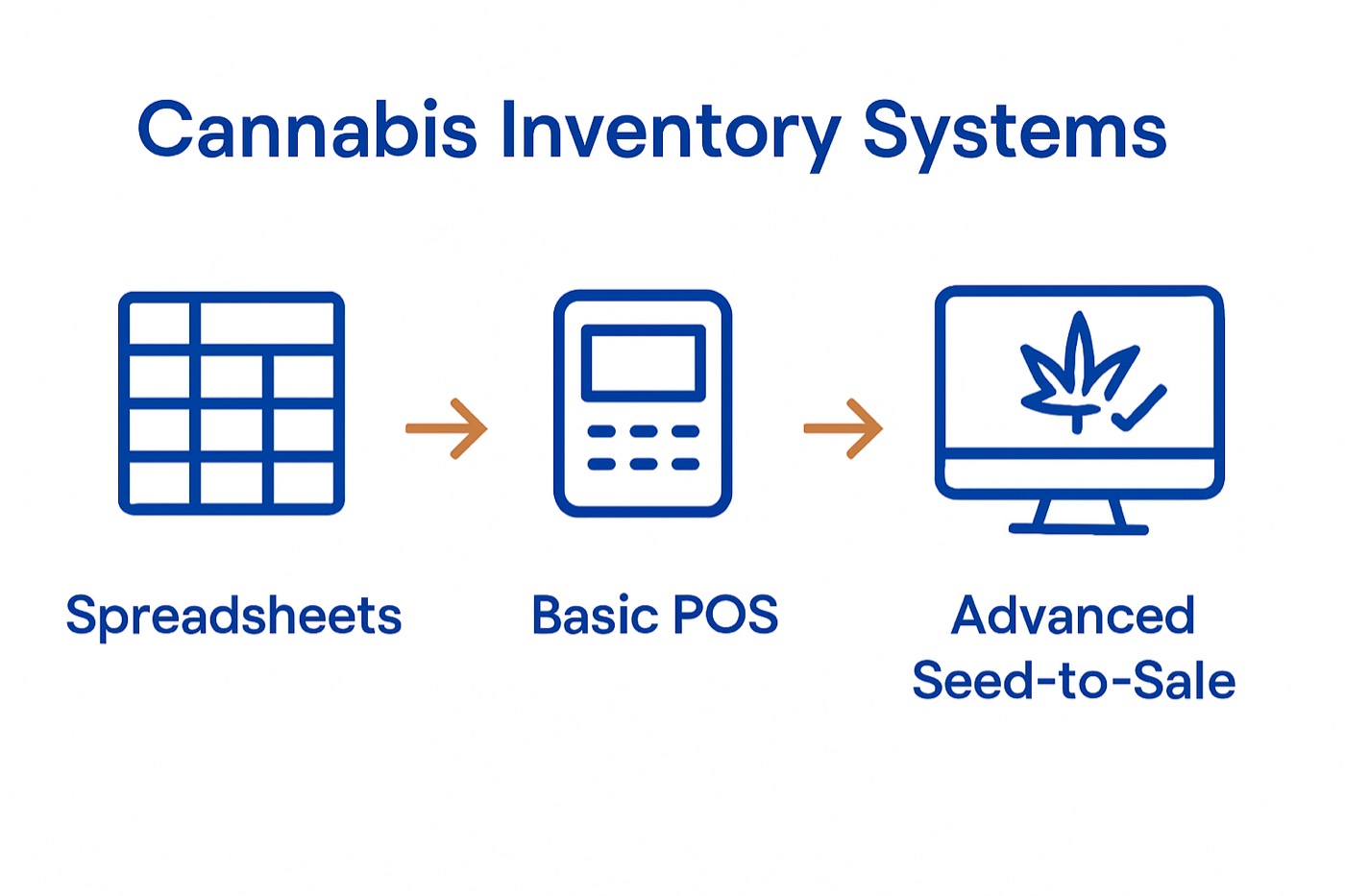
Cannabis inventory management systems are sophisticated technological solutions designed to meet the complex tracking and compliance requirements of the cannabis industry. These systems go far beyond traditional inventory tracking, incorporating advanced features that address the unique regulatory challenges specific to cannabis businesses.
The landscape of cannabis inventory systems includes several prominent platforms that offer comprehensive tracking capabilities. Advanced seed-to-sale tracking solutions help businesses navigate the intricate regulatory environment, providing real-time monitoring and detailed reporting functionalities. Most systems integrate critical components such as point-of-sale tracking, compliance reporting, and inventory management into unified platforms.
Key cannabis inventory systems include:
- Metrc: State-mandated tracking system used in multiple jurisdictions
- BioTrack: Comprehensive seed-to-sale monitoring platform
- MJ Freeway by Akerna: Compliance and operational management solution
- Green Bits: Dispensary-focused inventory management software
- LeafLogix: Enterprise-level inventory tracking system
Each inventory system offers unique features tailored to different operational scales and regulatory requirements. Dispensary management platforms help operators maintain precise product tracking, ensure regulatory compliance, and optimize inventory control processes. Successful cannabis businesses carefully evaluate these systems based on their specific needs, state regulations, and operational complexity.
Essential Tracking and Recordkeeping Practices
Cannabis recordkeeping represents a critical operational foundation that extends far beyond simple documentation. Successful cannabis businesses must develop comprehensive tracking systems that provide granular visibility into every aspect of product movement, ensuring regulatory compliance and operational transparency.
Cannabis audit trails require meticulous attention to detail, incorporating systematic approaches that capture precise inventory data. Operators must implement robust tracking practices that document product origins, quantities, transfers, sales, and potential waste or destruction. These detailed records serve as essential protection against regulatory challenges and potential compliance investigations.
Key recordkeeping practices for cannabis businesses include:
- Conducting regular physical inventory audits
- Implementing systematic cycle counting procedures
- Maintaining detailed product tracking documentation
- Documenting all product transfers and sales transactions
- Recording product testing and quality control information
- Preserving comprehensive packaging and labeling records
Effective recordkeeping extends beyond mere compliance. Cannabis bookkeeping best practices emphasize creating standardized processes that not only meet regulatory requirements but also provide strategic insights into business performance. Sophisticated tracking systems enable operators to analyze sales trends, optimize inventory management, and make data-driven decisions that support long-term business growth and operational efficiency.
Regulatory Compliance and Legal Requirements
Cannabis regulatory compliance represents a complex landscape of federal, state, and local requirements that demand meticulous attention from business operators. Navigating these intricate legal frameworks requires a comprehensive understanding of evolving regulations that impact every aspect of cannabis business operations.
Dispensary compliance tips highlight the critical importance of implementing robust operational protocols that address multiple regulatory dimensions. Cannabis businesses must develop systematic approaches to meet stringent guidelines covering personnel qualifications, facility standards, security measures, and quality control systems. These requirements extend beyond simple paperwork, demanding active implementation and continuous monitoring.
Key regulatory compliance areas for cannabis businesses include:
- Obtaining and maintaining proper state licensing
- Implementing comprehensive security protocols
- Ensuring precise product tracking and documentation
- Adhering to packaging and labeling requirements
- Maintaining strict inventory control systems
- Complying with taxation and financial reporting regulations
Dispensary licensing compliance represents a fundamental aspect of legal operations, requiring businesses to navigate complex regulatory environments. The ongoing challenge for cannabis operators involves staying current with evolving legal requirements, understanding nuanced state-specific regulations, and developing proactive compliance strategies that protect the business from potential legal and financial risks.
Financial Impact and Section 280E Considerations
Section 280E represents a complex federal tax regulation that profoundly impacts cannabis businesses, creating unique financial challenges that require strategic financial planning. This Internal Revenue Code provision specifically prohibits businesses trafficking controlled substances from deducting ordinary business expenses, significantly reducing potential tax deductions for cannabis operators.
Understanding the 280E deductible COGS becomes crucial for managing tax liabilities. Cannabis businesses can only deduct cost of goods sold (COGS), forcing operators to develop sophisticated accounting strategies that maximize allowable deductions while maintaining strict compliance with federal tax regulations.
Key financial strategies for managing Section 280E impact include:
- Meticulously documenting all cost of goods sold
- Separating ancillary business activities from direct cannabis sales
- Maintaining comprehensive and precise financial records
- Implementing strategic expense allocation methods
- Consulting with tax professionals specializing in cannabis regulations
- Exploring potential restructuring of business operations
Cannabis tax planning strategies are essential for mitigating the financial burden imposed by Section 280E. Successful cannabis businesses must adopt proactive approaches that optimize their financial structures, carefully navigate complex tax regulations, and develop innovative accounting methods to maximize their operational financial health while maintaining strict legal compliance.
Frequently Asked Questions
What is cannabis inventory management?
Cannabis inventory management involves the systematic tracking of cannabis products from acquisition through sale, ensuring precision, regulatory compliance, and operational oversight.
Why is recordkeeping important in the cannabis industry?
Recordkeeping is crucial for compliance and provides detailed visibility into product origins, transfers, sales, and waste, protecting businesses against regulatory challenges.
What are the key features of cannabis inventory management systems?
Key features include seed-to-sale tracking, compliance reporting, point-of-sale integration, and real-time monitoring of inventory to meet regulatory requirements.
How does Section 280E affect financial planning for cannabis businesses?
Section 280E restricts cannabis businesses from deducting ordinary business expenses, allowing only the deduction of cost of goods sold (COGS), which necessitates strategic financial planning and meticulous recordkeeping.
Recommended
- What Is Inventory Tracking Cannabis? Complete Overview – Cannabis Business Minds
- 7 Essential Cannabis Dispensary Compliance Tips for Success – Cannabis Business Minds
- Why Reconcile Cannabis Inventory: Essential Guide – Cannabis Business Minds
- Cannabis Accounting – Cannabis Business Minds
This article is general education, not tax, legal or accounting advice. Cannabis rules change quickly; confirm how they apply to you with a qualified cannabis CPA or attorney.