Why Reconcile Cannabis Inventory: Essential Guide
Nearly every cannabis business faces the risk of costly penalties from just a single inventory mistake. As regulations tighten and the value of each product rises, proper inventory reconciliation becomes more than good practice—it is crucial for survival. By understanding the steps and strategies behind accurate reconciliation, business owners can stay ahead of compliance demands, prevent financial pitfalls, and maintain control over every gram moving through their operation.
Key Takeaways
| Point | Details |
|---|---|
| Importance of Inventory Reconciliation | Regular inventory reconciliation ensures compliance with regulatory requirements and prevents costly errors in the cannabis industry. |
| Regulatory Requirements | Cannabis businesses must adhere to state-specific regulations for inventory tracking, requiring meticulous documentation and consistent reporting. |
| Risks of Poor Practices | Ineffective inventory management can lead to regulatory non-compliance, financial misreporting, and operational disruptions. |
| Best Practices for Auditing | Implementing real-time tracking and frequent reconciliation with physical counts enhances accuracy and compliance in cannabis inventory management. |
Defining Cannabis Inventory Reconciliation
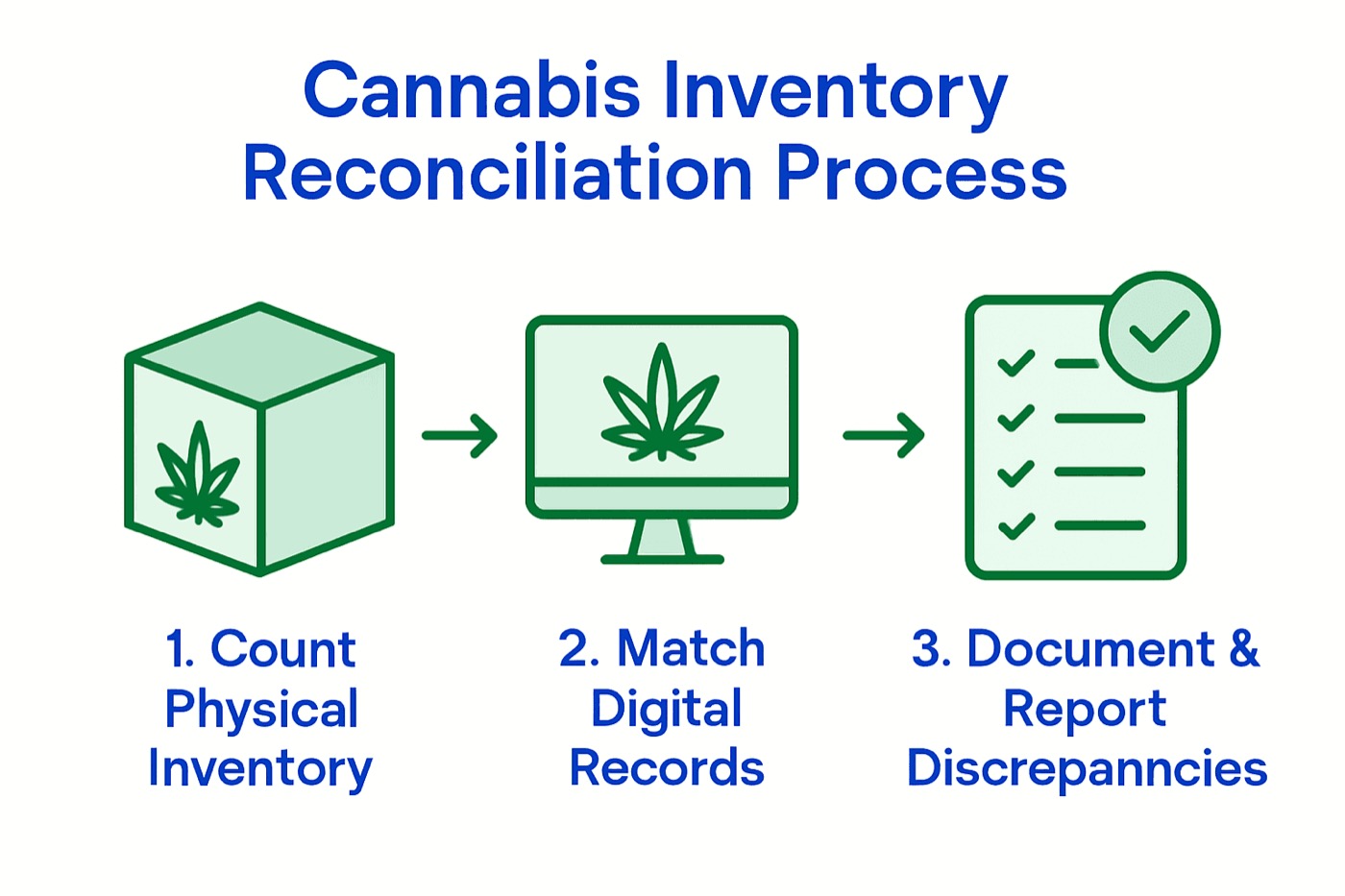
Cannabis inventory reconciliation represents a critical accounting process where businesses systematically verify and align physical inventory counts with digital system records. Inventory reconciliation is essentially a detailed audit mechanism designed to maintain precise tracking of cannabis product quantities, values, and movements within a business operation.
According to Dutchie Business, auditing or inventory reconciliation involves “counting current inventory and aligning those counts with system records to maintain accurate data and detect discrepancies early.” This process is particularly crucial in the cannabis industry due to stringent regulatory requirements and the high-value nature of cannabis products.
The reconciliation process typically involves several key steps:
- Conducting physical inventory counts
- Comparing physical counts against digital system records
- Identifying and investigating any quantity or valuation discrepancies
- Documenting all variations and adjustments
- Updating inventory management systems with accurate information
For cannabis businesses, effective inventory reconciliation serves multiple critical functions. It ensures compliance with state tracking requirements, prevents potential inventory shrinkage, supports accurate financial reporting, and provides essential insights into product movement and potential operational inefficiencies. By maintaining meticulous records, cannabis operators can demonstrate transparency and accountability to regulators, investors, and stakeholders.

Understanding and implementing robust inventory recordkeeping practices becomes fundamental to successfully managing a cannabis business in today’s complex regulatory landscape.
Key Regulatory Requirements and Compliance
Cannabis inventory reconciliation is not just a best practice but a legal necessity driven by complex regulatory landscapes across different jurisdictions. Regulatory compliance in cannabis inventory management demands meticulous documentation, precise tracking, and consistent reporting to meet state and federal guidelines.
According to Distru, state regulations frequently mandate “regular reconciliation between physical inventory and track-and-trace system records, with frequencies ranging from daily to monthly, depending on the state.” This variability underscores the importance of understanding specific local requirements for inventory management.
Key regulatory compliance requirements typically include:
- Maintaining real-time inventory tracking
- Documenting all product transfers and movements
- Reporting accurate product quantities and weights
- Ensuring chain of custody documentation
- Implementing robust seed-to-sale tracking mechanisms
The regulatory landscape for cannabis businesses is notably complex. Each state has unique requirements that demand precise record-keeping and transparent reporting.
Failure to meet these standards can result in severe consequences, including potential license suspension, substantial financial penalties, and legal challenges. Businesses must develop comprehensive compliance strategies that not only meet current regulations but also remain adaptable to evolving legal frameworks.
For cannabis operators seeking to navigate this intricate regulatory environment, understanding comprehensive recordkeeping requirements becomes crucial for maintaining operational legitimacy and avoiding potential regulatory complications.
How Reconciliation Prevents Costly Errors
Inventory reconciliation serves as a critical financial safeguard for cannabis businesses, helping them identify and mitigate potential operational and financial risks before they escalate into significant problems. Financial protection through systematic inventory tracking is not just a recommended practice but a strategic necessity in the highly regulated cannabis marketplace.
According to Dutchie Business, “frequent auditing ensures accurate inventory counts, catching discrepancies early and preventing costly errors such as overstocking, understocking, or regulatory penalties.” These potential errors can dramatically impact a cannabis business’s bottom line and operational stability.
The most common costly errors that inventory reconciliation helps prevent include:
- Inventory Shrinkage: Detecting and addressing product losses
- Pricing Inaccuracies: Ensuring correct valuation of cannabis inventory
- Compliance Violations: Avoiding regulatory fines and potential license suspension
- Tax Reporting Mistakes: Maintaining precise financial documentation
- Operational Inefficiencies: Identifying systemic inventory management issues
Financial risks in the cannabis industry are particularly pronounced due to tight margins and stringent regulatory environments. A single undetected inventory discrepancy can lead to substantial financial losses, legal complications, and potential damage to a business’s reputation. Proactive reconciliation allows businesses to maintain financial integrity, demonstrate transparency to regulators, and make data-driven operational decisions.
For cannabis operators seeking to develop robust financial controls, understanding comprehensive financial reporting strategies becomes essential in creating a resilient and compliant business model.
Common Risks of Poor Inventory Practices
In the cannabis industry, ineffective inventory management can create a cascade of operational, financial, and legal challenges that can quickly destabilize a business. Inventory vulnerability represents a critical concern for cannabis operators, where even minor tracking mistakes can lead to significant consequences.
According to Dutchie Business, “poor inventory management can lead to disorganized purchasing and inventory, resulting in time-consuming corrections and potential regulatory issues.” These complications extend far beyond simple administrative inconveniences.
The most significant risks associated with poor inventory practices include:
- Regulatory Non-Compliance: Increased likelihood of state and federal penalties
- Financial Misreporting: Inaccurate accounting and potential tax complications
- Product Loss: Higher vulnerability to theft and unexplained inventory shrinkage
- Operational Disruptions: Unpredictable stock levels causing sales interruptions
- Legal Exposure: Potential investigations and license revocation risks
Cannabis businesses operate under microscopic regulatory scrutiny, where every gram of product must be meticulously tracked. A single inventory discrepancy can trigger comprehensive audits, substantial financial penalties, and potentially compromise a business’s entire operational license. Proactive inventory management isn’t just a best practice—it’s a fundamental survival strategy in an industry where margins are thin and regulatory oversight is exceptionally stringent.
For cannabis entrepreneurs seeking to build resilient operational frameworks, understanding comprehensive recordkeeping requirements becomes an essential step in mitigating these complex institutional risks.
Best Practices for Accurate Cannabis Auditing
Accurate cannabis inventory auditing requires a strategic, comprehensive approach that combines technological solutions, meticulous documentation, and rigorous verification processes. Audit precision is not just about counting products, but creating a robust system that ensures complete transparency and regulatory compliance.
According to Dutchie Business, “regular auditing, involving physical counts and reconciliation with system records, helps maintain accurate inventory data and ensures compliance.” This process demands more than casual oversight.
Key best practices for effective cannabis inventory auditing include:
- Implementing real-time tracking systems
- Conducting frequent and systematic physical inventory counts
- Cross-referencing digital records with physical inventory
- Documenting all discrepancies with detailed investigation protocols
- Establishing clear chain of custody documentation
Technology plays a critical role in modern cannabis auditing. As Biotrack notes, “implementing barcode scanners and RFID systems simplifies product tracking, reducing errors and enhancing audit results.” These technological solutions transform manual, error-prone processes into streamlined, accurate tracking mechanisms that provide real-time insights and minimize human error.
For cannabis operators committed to developing robust audit frameworks, exploring comprehensive bookkeeping best practices represents an essential step toward creating a resilient and compliant operational strategy.
Frequently Asked Questions
What is cannabis inventory reconciliation?
Cannabis inventory reconciliation is the process of systematically verifying and aligning physical inventory counts with digital system records in cannabis businesses. It serves as an audit mechanism to maintain accurate tracking of product quantities, values, and movements.
Why is inventory reconciliation important for cannabis businesses?
Inventory reconciliation is crucial for cannabis businesses to ensure compliance with regulatory requirements, prevent inventory shrinkage, support accurate financial reporting, and gain insights into product movement and operational efficiencies.
What are the key steps involved in the reconciliation process for cannabis inventory?
The reconciliation process typically includes conducting physical inventory counts, comparing these counts with digital records, identifying discrepancies, documenting variations, and updating inventory management systems with accurate information.
What are the risks of poor inventory management in the cannabis industry?
Poor inventory management can lead to regulatory non-compliance, financial misreporting, product loss, operational disruptions, and increased legal exposure, severely impacting a business’s stability and reputation.
Recommended
- 7 Essential Cannabis Bookkeeping Best Practices for Success – Cannabis Business Minds
- 7 Steps to a Cannabis Financial Reporting Checklist Success – Cannabis Business Minds
- 7 Essential Cannabis Accounting Tips for Business Success – Cannabis Business Minds
- Understanding Cannabis Recordkeeping Requirements – Cannabis Business Minds
This article is general education, not tax, legal or accounting advice. Cannabis rules change quickly; confirm how they apply to you with a qualified cannabis CPA or attorney.