Understanding Cannabis Recordkeeping Requirements
2026 update: what rescheduling changed for 280E (reviewed October 2026)
Effective April 22, 2026, a DOJ/DEA final order moved marijuana covered by a qualifying state medical license (and FDA-approved marijuana drugs) to Schedule III. Section 280E only applies to Schedule I and II substances, so state-licensed medical cannabis activity is generally no longer subject to 280E going forward. Adult-use cannabis remains in Schedule I and fully subject to 280E. The DEA proceeding to reschedule all marijuana was temporarily stayed in October 2026, and Treasury/IRS guidance on transition years and mixed medical/adult-use businesses is still pending.
This article was written before the order took effect. Check where your business stands in about a minute.
Cannabis businesses face some of the strictest documentation rules in the country. One missed record and you could end up with serious fines or even lose your license. Yet companies with solid recordkeeping systems are 70 percent less likely to face hefty regulatory penalties. Forget the idea that documentation is just busywork. In this industry, it can mean the difference between staying in business or getting shut down.
Quick Summary
| Takeaway | Explanation |
|---|---|
| Accurate recordkeeping is legally required. | Cannabis businesses must document all operations from seed to sale to comply with complex regulations. |
| Robust documentation supports tax compliance. | Precise records are essential for navigating specific tax challenges, such as IRS Section 280E limitations. |
| Comprehensive logs mitigate legal risks. | Detailed records can protect businesses from audits, regulatory penalties, and potential legal disputes. |
| Technological systems enhance tracking efficiency. | Advanced tracking technologies enable real-time documentation and monitoring of cannabis products throughout their lifecycle. |
| Seed-to-sale tracking is fundamental. | Maintaining unique identities for products throughout their lifecycle ensures compliance and operational transparency. |
What are Cannabis Recordkeeping Requirements?
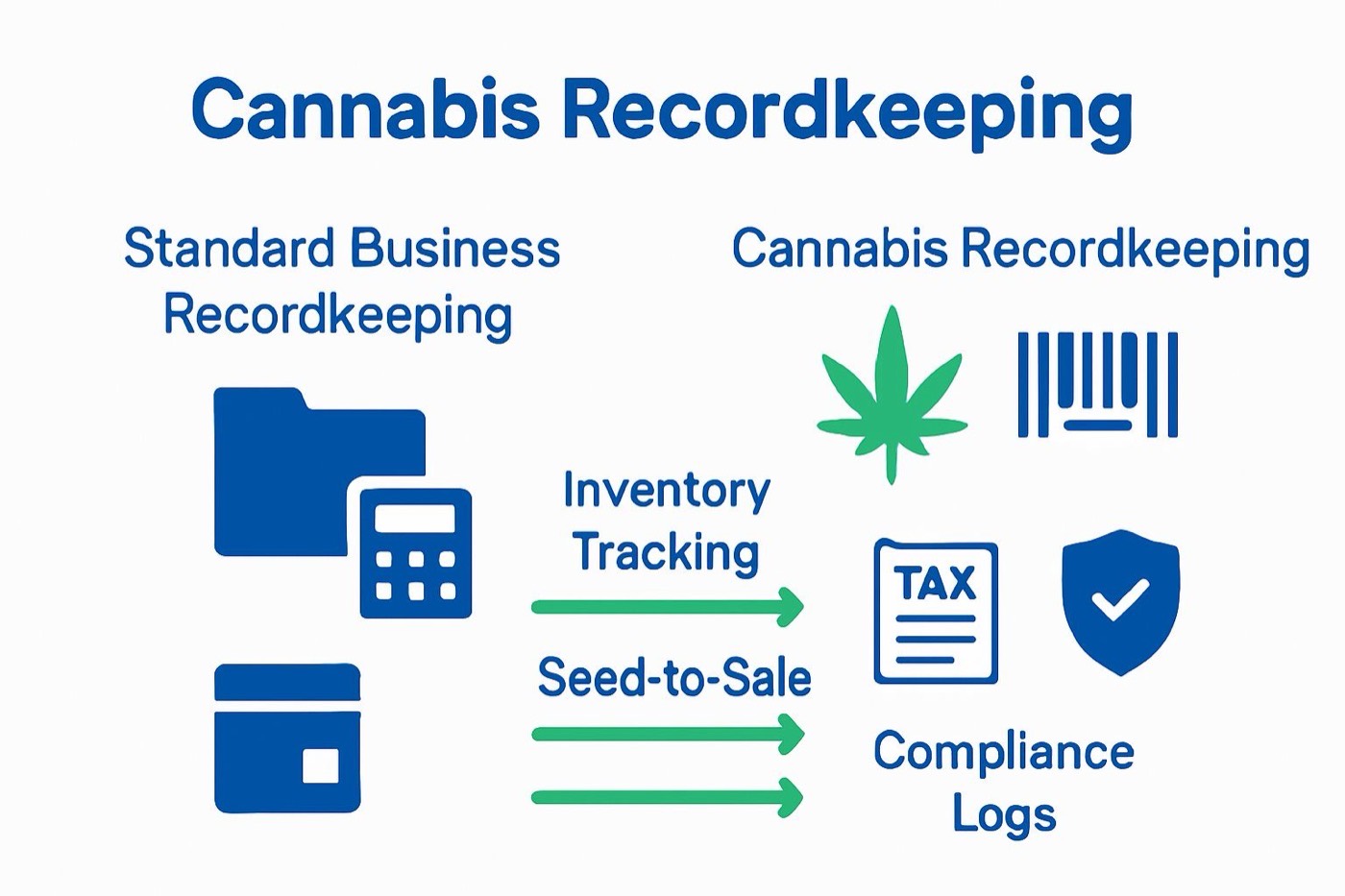
Cannabis recordkeeping requirements are comprehensive documentation protocols that cannabis businesses must maintain to ensure regulatory compliance, financial transparency, and operational integrity. These requirements are far more complex than standard business record management, reflecting the highly regulated nature of the cannabis industry.
Legal and Regulatory Context
In the cannabis sector, recordkeeping is not merely a best practice but a strict legal mandate. Businesses must document every aspect of their operations, from seed to sale, to satisfy state and federal regulatory agencies. Cannabis accounting practices play a crucial role in maintaining these meticulous records.
Recordkeeping requirements typically encompass several critical documentation areas:
- Inventory Tracking: Detailed logs of all cannabis products, including quantity, strain, potency, and movement
- Financial Transactions: Comprehensive records of sales, purchases, expenses, and revenue
- Compliance Documentation: Licenses, permits, tax filings, and regulatory submissions
Purpose and Importance
The primary objectives of robust cannabis recordkeeping include:
- Ensuring tax compliance under complex regulations like IRS Section 280E
- Providing transparent documentation for potential audits
- Supporting accurate financial reporting and business management
- Demonstrating adherence to state and local cannabis regulations
According to research from the National Cannabis Industry Association, businesses that implement rigorous recordkeeping systems are significantly more likely to maintain regulatory compliance and avoid potential legal complications. Precise documentation serves as both a defensive strategy and a critical operational tool for cannabis enterprises.
The following table summarizes the key categories of cannabis recordkeeping requirements alongside examples of the documentation each category entails.
| Documentation Category | Example Records |
|---|---|
| Inventory Tracking | Quantity logs, strain details, potency levels, movement records |
| Financial Transactions | Sales receipts, purchase invoices, expense records, revenue reports |
| Compliance Documentation | Licenses, permits, tax filings, regulatory submissions |
| Cultivation Records | Plant genealogy logs, growth stage documentation |
| Laboratory Testing/Quality | Test results, quality control certificates |
| Transport & Distribution | Shipping manifests, product transfer logs |
Why are Recordkeeping Requirements Important in Cannabis?
Recordkeeping requirements represent a critical lifeline for cannabis businesses, serving as both a protective mechanism and a strategic operational tool in an industry characterized by intense regulatory scrutiny. These documentation protocols extend far beyond traditional business record management, becoming fundamental to survival and success.
Financial and Tax Compliance
In the cannabis sector, precise recordkeeping is essential for navigating the complex financial landscape. Dispensary accounting practices demand extraordinary levels of detail due to unique tax regulations like IRS Section 280E, which restricts standard business expense deductions for cannabis enterprises.
Key financial recordkeeping imperatives include:
- Documenting every financial transaction with extreme precision
- Tracking cost of goods sold (COGS) meticulously
- Maintaining separate records for different revenue streams
Legal Protection and Risk Mitigation
Comprehensive records serve as a business’s primary defense against potential legal challenges. Regulatory agencies can conduct surprise audits at any moment, making contemporaneous and accurate documentation crucial. According to research from the Cannabis Financial Association, businesses with robust recordkeeping systems are 70% less likely to face significant regulatory penalties.
The documentation serves multiple protective functions:
- Proving compliance with state and federal regulations
- Creating a transparent audit trail
- Defending against potential tax disputes
- Demonstrating operational integrity
In an industry where regulatory landscapes can shift rapidly, meticulous recordkeeping is not just a recommendation but a fundamental business survival strategy. Cannabis businesses must view their documentation systems as dynamic, evolving tools that protect their financial interests and operational legitimacy.
This table illustrates the major purposes of cannabis recordkeeping and the specific benefits each provides to business management, compliance, and operational performance.
| Purpose | Business Benefit |
|---|---|
| Tax Compliance | Simplifies IRS Section 280E navigation and supports accurate filings |
| Audit Preparedness | Creates transparent records for regulatory and tax audits |
| Financial Reporting | Enables precise and reliable internal and external reporting |
| Legal Protection | Provides evidence for regulatory defense or legal disputes |
| Operational Transparency | Demonstrates adherence to state and local rules for all product stages |
How Cannabis Recordkeeping Works: A Detailed Overview
Cannabis recordkeeping represents a sophisticated, multi-layered approach to documentation that integrates technological solutions with rigorous regulatory compliance strategies. The process involves comprehensive tracking mechanisms designed to provide unprecedented transparency across every operational stage of cannabis businesses.
Digital Tracking and Inventory Management
Modern cannabis recordkeeping fundamentally relies on advanced technological systems that enable real-time monitoring and documentation. Budgeting strategies play a crucial role in supporting these complex tracking mechanisms. Electronic tracking platforms allow businesses to capture granular data about each cannabis product from cultivation through final sale.
Key technological tracking components include:
- Unique product identification codes
- Geolocation tracking for cannabis movements
- Automated transaction logging systems
- Integrated compliance reporting tools
Comprehensive Documentation Protocols
Successful recordkeeping extends beyond simple inventory management. Businesses must create comprehensive documentation that addresses multiple regulatory requirements simultaneously. According to research from the National Cannabis Industry Association, electronic seed-to-sale tracking systems capture intricate details about each plant and product through advanced technologies like barcoding and RFID tagging.
Essential documentation categories include:
- Cultivation records with detailed plant genealogy
- Precise financial transaction logs
- Laboratory testing and quality control documentation
- Transport and distribution tracking
These multifaceted recordkeeping approaches transform documentation from a mundane administrative task into a strategic business intelligence tool, enabling cannabis enterprises to demonstrate compliance, manage risk, and make data-driven operational decisions.
Key Concepts in Cannabis Recordkeeping
Cannabis recordkeeping encompasses a sophisticated set of interconnected concepts that collectively form a comprehensive documentation framework designed to meet complex regulatory requirements. Understanding these foundational principles is crucial for cannabis businesses seeking to maintain compliance and operational excellence.
Seed-to-Sale Tracking
Seed-to-sale tracking represents the most fundamental concept in cannabis recordkeeping. Our blog provides additional insights into this critical documentation strategy. According to research from the National Conference of State Legislatures, this approach requires businesses to maintain continual records of cannabis throughout its entire lifecycle from initial cultivation through processing, manufacturing, and final retail sale or destruction.
Key elements of seed-to-sale tracking include:
- Unique identification for each cannabis plant
- Comprehensive documentation of plant growth stages
- Detailed tracking of product transformations
- Monitoring of product transfers between licensed entities
Compliance and Documentation Integrity
Comprehensive recordkeeping goes beyond simple transaction logs. Cannabis businesses must create documentation systems that demonstrate:
- Chain of custody for all cannabis products
- Precise inventory reconciliation
- Transparent financial reporting
- Verifiable quality control processes
The integrity of these records is paramount. Regulatory agencies require not just the presence of documentation but its accuracy, completeness, and ability to withstand potential audits. Each record must be contemporaneous, meaning it is created at the time of the event, providing real-time accountability and preventing retroactive manipulation.
These key concepts transform recordkeeping from a mundane administrative task into a strategic operational tool that protects businesses, ensures regulatory compliance, and provides critical insights into operational performance.

Real-World Applications of Recordkeeping in Cannabis Businesses
Recordkeeping in the cannabis industry transcends theoretical compliance, becoming a critical operational strategy that directly impacts business sustainability, financial management, and regulatory navigation. These practical applications demonstrate how sophisticated documentation transforms from a regulatory requirement to a strategic business asset.
Operational Risk Management
In cannabis businesses, recordkeeping serves as a comprehensive risk mitigation tool. Dispensary accounting practices rely on meticulous documentation to protect against potential legal and financial vulnerabilities. Each record creates a transparent trail that can defend against potential disputes, regulatory challenges, or internal inconsistencies.
Key risk management applications include:
- Tracking product quality and potential recall scenarios
- Documenting employee training and compliance certifications
- Recording equipment maintenance and calibration logs
- Maintaining comprehensive tax documentation
Financial and Tax Optimization
Precise recordkeeping directly influences a cannabis business’s financial performance. According to research from the Cannabis Financial Association, businesses with rigorous documentation systems can optimize their tax strategies, particularly when navigating complex regulations like IRS Section 280E.
Financial recordkeeping applications demonstrate critical strategic value:
- Identifying legitimate cost of goods sold (COGS) deductions
- Supporting accurate financial reporting
- Enabling detailed profitability analysis by product line
- Providing evidence for potential tax dispute resolutions
These real-world applications illustrate how recordkeeping transforms from a regulatory obligation into a powerful business intelligence mechanism, enabling cannabis enterprises to make data-driven decisions while maintaining stringent compliance standards.
Take Control of Cannabis Recordkeeping and Achieve True Compliance
Confused by the tight regulations and complex documentation needs your cannabis business faces? Keeping up with evolving legal requirements, mastering seed-to-sale tracking, and ensuring audit-ready records is a major challenge for even the most organized operators. Missing just one detail in your cannabis accounting process or failing to track transactions for IRS Section 280E can put your license and your business at risk.
You do not have to tackle this alone. Visit Cannabis Business Minds for expert guides, practical tools, and actionable strategies to reinforce your compliance protocols. Ready to take the next step? Dive into our specialized cannabis tax resources now and transform recordkeeping from a source of stress into a source of strength for your cannabis business.
Frequently Asked Questions
What are the key cannabis recordkeeping requirements?
Cannabis recordkeeping requirements include detailed documentation of inventory tracking, financial transactions, and compliance documentation like licenses and tax filings. To ensure compliance, start by creating a checklist that outlines each area and establishes a schedule for regular updates.
How can I implement effective seed-to-sale tracking in my cannabis business?
To implement effective seed-to-sale tracking, adopt an electronic system that captures data from cultivation to sale, including unique identification for each plant. Invest in tracking software that allows real-time updates and reports, ensuring the entire lifecycle is documented accurately.
What essentials should my financial recordkeeping include?
Your financial recordkeeping should include precise logs of every sales transaction, expense tracking, and detailed documentation of cost of goods sold (COGS). Organize your records weekly to maintain accuracy and make it easier to review during audits or tax filing periods.
How does cannabis recordkeeping help with tax compliance?
Accurate cannabis recordkeeping assists with tax compliance by providing comprehensive financial records that meet reporting requirements under regulations like IRS Section 280E. Establish a clear system for documenting all financial transactions, which reduces potential tax liabilities by ensuring you can substantiate all deductions.
What steps should I take to prepare for a cannabis audit?
To prepare for a cannabis audit, ensure that all records are up-to-date, organized, and easily accessible. Conduct a self-audit quarterly to identify any discrepancies or missing documentation, allowing you to address issues proactively before the auditors arrive.
Why is compliance documentation critical in cannabis recordkeeping?
Compliance documentation is critical because it demonstrates that your cannabis business adheres to state and federal regulations. Create a dedicated folder for compliance documents and regularly review it to confirm all licenses, permits, and regulatory submissions are current and accurately recorded.
Recommended
- Budgeting – Cannabis Business Minds
- Cannabis Accounting – Cannabis Business Minds
- Blog – Cannabis Business Minds
This article is general education, not tax, legal or accounting advice. Cannabis rules change quickly; confirm how they apply to you with a qualified cannabis CPA or attorney.