Role of Audits in Cannabis: Complete Industry Guide
2026 update: what rescheduling changed for 280E (reviewed October 2026)
Effective April 22, 2026, a DOJ/DEA final order moved marijuana covered by a qualifying state medical license (and FDA-approved marijuana drugs) to Schedule III. Section 280E only applies to Schedule I and II substances, so state-licensed medical cannabis activity is generally no longer subject to 280E going forward. Adult-use cannabis remains in Schedule I and fully subject to 280E. The DEA proceeding to reschedule all marijuana was temporarily stayed in October 2026, and Treasury/IRS guidance on transition years and mixed medical/adult-use businesses is still pending.
This article was written before the order took effect. Check where your business stands in about a minute.
Over 60 percent of cannabis businesses in american markets report facing at least one regulatory audit each year. As legal cannabis expands, these detailed inspections become more than routine—they shape how companies protect themselves and build credibility in a complex industry. Understanding audits is not just about meeting legal demands, it is also about staying competitive and maintaining operational integrity as expectations continue to change.
Key Takeaways
| Point | Details |
|---|---|
| Importance of Audits | Audits enhance transparency, compliance, and risk management in the cannabis industry. They serve as critical tools for maintaining operational integrity. |
| Types of Audits | Internal and third-party audits play key roles in assessing compliance and operational efficiency. Each type offers unique insights for improvement. |
| Legal Frameworks | Understanding the complex legal and regulatory frameworks is essential for cannabis businesses to navigate compliance requirements effectively. |
| Best Practices | Maintaining meticulous records and training staff are vital for successful audits. Implementing robust tracking systems can prevent common mistakes in the audit process. |
Defining Audits Within the Cannabis Industry
An audit in the cannabis industry represents a comprehensive, systematic examination of a business’s financial records, operational procedures, compliance protocols, and quality control measures. As the cannabis sector continues to mature and face increasingly complex regulatory environments, audits have become critical tools for ensuring transparency, mitigating risks, and maintaining legal compliance.
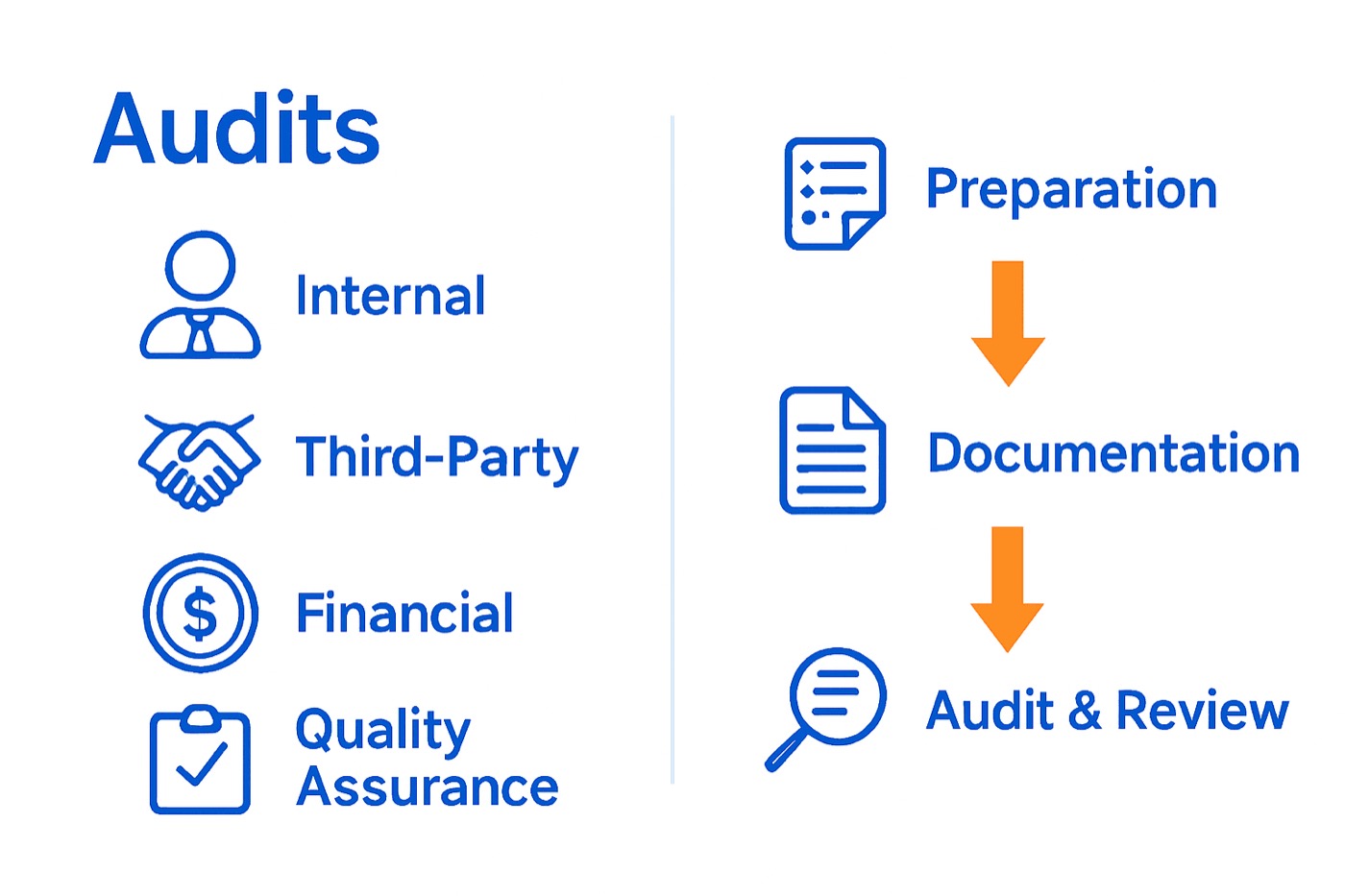
According to aaps, audits play a crucial role in cannabis quality assurance by providing unbiased external evaluations that help businesses maintain product safety, consistency, and regulatory alignment. These evaluations typically fall into two primary categories: internal audits and third-party audits. Internal audits are conducted by a company’s own personnel to assess internal processes and identify potential areas of improvement, while third-party audits involve independent external experts who offer objective assessments of a company’s operations.
The primary objectives of cannabis industry audits encompass several key areas:
-
Verifying compliance with state and federal regulations
-
Ensuring product safety and quality standards
-
Identifying potential financial risks or discrepancies
-
Validating inventory management practices
-
Assessing operational efficiency and control mechanisms
By implementing rigorous audit processes, cannabis businesses can proactively address potential compliance issues, protect their operational integrity, and demonstrate a commitment to professional standards. For a comprehensive understanding of financial reporting requirements, check out our cannabis financial reporting guide for full compliance.
Successful cannabis audits require meticulous preparation, transparent documentation, and a willingness to implement recommended improvements. Businesses that view audits as opportunities for growth rather than administrative burdens will be better positioned to navigate the complex regulatory landscape of the cannabis industry.
Types of Cannabis Audits and Their Purposes
Navigating the complex regulatory landscape of the cannabis industry requires a comprehensive understanding of different audit types. These specialized evaluations serve as critical mechanisms for ensuring operational integrity, compliance, and continuous improvement across cannabis businesses.
According to aaps, cannabis audits can be categorized into several distinct types, each serving unique purposes within the industry. The primary audit classifications include:
- Internal Compliance Audits
- Conducted by company personnel
- Focus on assessing internal processes and protocols
- Identify potential operational vulnerabilities
- Prepare for external regulatory inspections
- Third-Party Compliance Audits
- Performed by independent external experts
- Provide objective assessments of business operations
- Validate adherence to state and federal regulations
- Offer unbiased recommendations for improvement
- Financial Audits
- Examine financial records and transactions
- Ensure accurate financial reporting
- Verify inventory valuation and tracking
- Assess potential tax compliance risks
- Quality Assurance Audits
- Evaluate product safety and consistency
- Review manufacturing and handling procedures
- Assess laboratory testing protocols
- Validate product quality control mechanisms
For cannabis businesses seeking to maintain rigorous standards, understanding these audit types is crucial.
Learn more about recordkeeping requirements to support successful audit preparation and execution.
Successful cannabis enterprises recognize audits not as administrative burdens, but as strategic opportunities for continuous improvement, risk mitigation, and demonstrating commitment to professional excellence in an evolving regulatory environment.
Legal and Regulatory Frameworks for Audits
The legal and regulatory frameworks governing cannabis audits represent a complex, multifaceted system designed to ensure transparency, compliance, and operational integrity within the rapidly evolving cannabis industry. These frameworks are critical mechanisms that establish standardized guidelines for businesses to maintain rigorous professional standards and mitigate potential regulatory risks.
According to canada, regulatory oversight involves comprehensive compliance and enforcement activities that systematically monitor industry operations. The primary legal frameworks encompass several key dimensions:
- Federal Regulatory Requirements
- State-specific cannabis licensing regulations
- Comprehensive tracking of product movement
- Detailed financial reporting standards
- Strict quality control protocols
Drawing insights from sao, effective regulatory frameworks must balance robust oversight with practical industry implementation. This involves creating adaptive mechanisms that can respond to the dynamic nature of the cannabis market while maintaining stringent compliance standards.
The most effective legal frameworks integrate multiple layers of regulatory supervision, including:
- Licensing and Permitting
- Financial Transparency Requirements
- Product Safety Protocols
- Comprehensive Tracking Systems
For cannabis businesses seeking to navigate these complex regulatory landscapes, understanding the nuanced legal requirements is paramount. Learn more about tax compliance strategies to ensure comprehensive regulatory alignment.
Successful navigation of these legal frameworks demands proactive compliance, continuous education, and a commitment to maintaining the highest standards of operational transparency in an increasingly sophisticated regulatory environment.
Compliance, Risk Management, and Section 280E
Navigating the complex landscape of cannabis business operations requires a sophisticated approach to compliance and risk management, with Section 280E playing a pivotal role in shaping financial strategies for cannabis enterprises. The intricate regulatory environment demands proactive, strategic planning to mitigate potential legal and financial risks.
According to acams, understanding the nuanced compliance challenges is crucial for cannabis businesses. Section 280E of the Internal Revenue Code presents unique challenges by:
- Prohibiting tax deductions for businesses trafficking controlled substances
- Limiting financial reporting options
- Creating complex accounting requirements
- Increasing potential tax liability
- Requiring specialized financial management strategies
Drawing insights from banking-cannabis, effective risk management in the cannabis industry involves a multifaceted approach:
- Comprehensive Financial Documentation
- Strict Inventory Control
- Robust Compliance Monitoring
- Strategic Tax Planning
Businesses must develop sophisticated strategies to navigate these complex regulatory requirements. Learn more about cannabis business risk management to build a resilient operational framework.
Successful cannabis enterprises recognize that compliance is not just about avoiding penalties, but about creating a sustainable business model that can thrive within the current regulatory landscape. Proactive risk management, coupled with a deep understanding of Section 280E, becomes the cornerstone of long-term success in this challenging and dynamic industry.

Common Mistakes and Best Practices for Cannabis Audits
Navigating cannabis audits requires a strategic approach that balances meticulous preparation with comprehensive understanding of industry-specific regulatory requirements. Cannabis businesses must recognize that successful audits are not just about passing an inspection, but about demonstrating operational excellence and commitment to regulatory compliance.
According to aaps, many cannabis businesses make critical mistakes during audit processes that can significantly impact their operational standing. Common mistakes include:
- Inadequate documentation practices
- Incomplete inventory tracking
- Poor record-keeping systems
- Lack of standardized compliance protocols
- Insufficient staff training on regulatory requirements
Best practices for preparing and executing successful cannabis audits involve a comprehensive, proactive strategy:
- Maintain Immaculate Records
- Implement Robust Tracking Systems
- Conduct Regular Internal Audits
- Stay Updated on Regulatory Changes
- Develop Comprehensive Staff Training Programs
To enhance financial and operational readiness, explore our guide on cannabis accounting best practices that can help streamline your audit preparation process.
Ultimately, successful cannabis audits are about more than avoiding penalties. They represent an opportunity to demonstrate professionalism, build trust with regulators, and create a solid foundation for sustainable business growth in a complex and evolving industry.
Frequently Asked Questions
What are the main objectives of audits in the cannabis industry?
Audits in the cannabis industry aim to verify compliance with regulations, ensure product safety, identify financial risks, validate inventory management practices, and assess operational efficiency.
What types of audits are conducted within the cannabis industry?
The primary types of audits in the cannabis industry include internal compliance audits, third-party compliance audits, financial audits, and quality assurance audits, each serving unique purposes to ensure overall business operations integrity.
How can cannabis businesses prepare effectively for an audit?
To prepare for an audit, cannabis businesses should maintain immaculate records, implement robust tracking systems, conduct regular internal audits, stay updated on regulatory changes, and develop comprehensive staff training programs.
Why is Section 280E important for cannabis businesses?
Section 280E prohibits tax deductions for businesses trafficking controlled substances, impacting financial reporting options and increasing potential tax liability. It necessitates specialized financial management strategies for compliance and risk mitigation.
Recommended
- Cannabis Tax Compliance Guide: Achieve Full Legal Readiness – Cannabis Business Minds
- Master Cannabis Accounting Best Practices for 2025 Success – Cannabis Business Minds
- Cannabis Financial Reporting Guide for Full Compliance Success – Cannabis Business Minds
- Understanding Cannabis Recordkeeping Requirements – Cannabis Business Minds
- Understanding the Role of Food Safety Audits – Probe IT
This article is general education, not tax, legal or accounting advice. Cannabis rules change quickly; confirm how they apply to you with a qualified cannabis CPA or attorney.