How to Calculate Cannabis COGS for Compliance Success

2026 update: what rescheduling changed for 280E (reviewed October 2026)
Effective April 22, 2026, a DOJ/DEA final order moved marijuana covered by a qualifying state medical license (and FDA-approved marijuana drugs) to Schedule III. Section 280E only applies to Schedule I and II substances, so state-licensed medical cannabis activity is generally no longer subject to 280E going forward. Adult-use cannabis remains in Schedule I and fully subject to 280E. The DEA proceeding to reschedule all marijuana was temporarily stayed in October 2026, and Treasury/IRS guidance on transition years and mixed medical/adult-use businesses is still pending.
This article was written before the order took effect. Check where your business stands in about a minute.
Most american cannabis businesses face intense scrutiny from regulators and tax authorities. Accurate cost of goods sold accounting is not just a financial strategy, it can make or break compliance efforts. A single audit error can lead to thousands of dollars in penalties. This guide lays out practical steps to help you collect records, classify costs, and ensure your cannabis business is financially ready for any tax season.
Quick Summary
| Key Point | Explanation |
|---|---|
| 1. Organize financial records carefully | Collect invoices, payroll, and utility bills to establish thorough documentation for cost of goods sold (COGS) calculations. |
| 2. Understand IRS cost categorization | Classify expenses into deductible and non-deductible categories to ensure compliance with IRS Section 280E regulations. |
| 3. Allocate costs accurately | Differentiate between direct and indirect costs and develop a consistent method for allocating expenses to cannabis inventory. |
| 4. Sum total COGS precisely | Add all qualifying direct and indirect costs related to cannabis inventory for accurate financial reporting during tax season. |
| 5. Verify calculations diligently | Cross-check COGS against source documents and consider involving a tax professional for an independent review to ensure accuracy. |
Step 1: Collect relevant financial and inventory records
Building a solid foundation for calculating your cannabis business’s cost of goods sold (COGS) starts with meticulous record collection. According to Oversight, comprehensive documentation of direct material costs, direct labor expenses, and indirect costs is essential for accurate financial reporting and regulatory compliance.
To begin collecting records, focus on gathering several key document types that provide a complete financial picture. Start with purchase invoices for cannabis inventory, tracking every gram purchased from licensed cultivators or distributors. Compile detailed payroll records for staff directly involved in production or handling inventory. Include utility bills, equipment depreciation records, and rent expenses for production spaces. Track shipping and packaging costs, as these are considered part of your COGS calculation.
One critical tip: create a standardized digital filing system that organizes records chronologically and by expense category. This approach not only simplifies your COGS calculation process but also prepares you for potential tax audits. By maintaining organized, accessible financial documentation, you’ll streamline your accounting workflow and demonstrate transparency to regulatory agencies.
With your records collected and organized, you’re now ready to move forward with the precise calculations needed to determine your cannabis business’s true cost of goods sold.
Step 2: Classify cost categories according to IRS rules
Navigating the complex landscape of cannabis accounting requires precise understanding of IRS cost categorization rules. According to Bennett Thrasher, under IRS Section 280E, cannabis businesses face strict limitations on expense deductions. Understanding which costs qualify as cost of goods sold (COGS) and which do not is crucial for maintaining financial compliance.
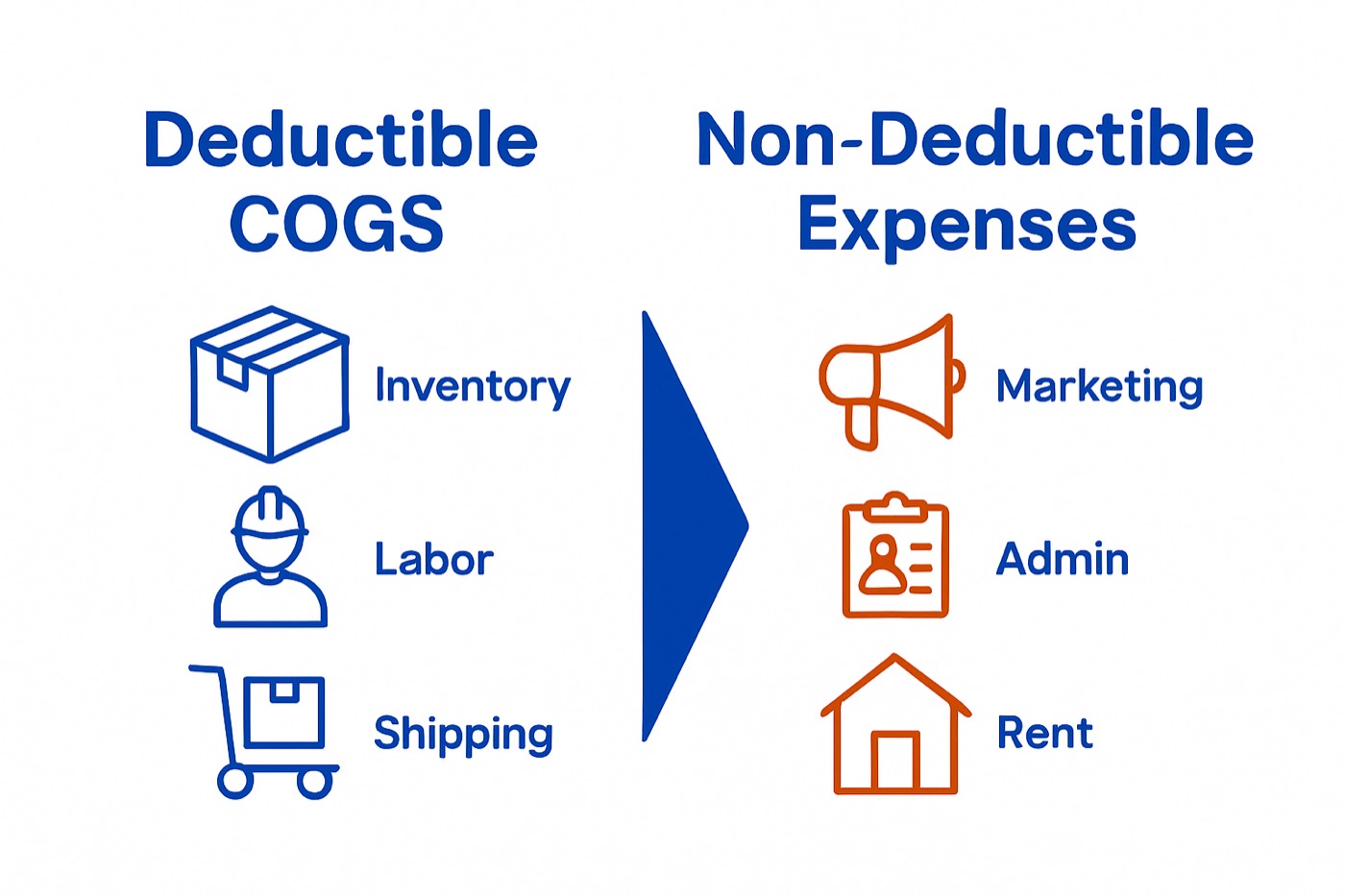
To classify your expenses accurately, segregate your costs into two primary categories: deductible and non-deductible. Deductible COGS expenses include direct material costs like cannabis inventory, direct labor wages for production staff, and costs directly associated with inventory acquisition and processing. Non deductible expenses typically encompass standard business operating costs such as marketing, sales, administrative salaries, and general overhead. Cost accounting for cannabis expenses requires careful documentation to demonstrate that each expense meets IRS guidelines.
A critical tip for cannabis business owners is maintaining meticulous records that clearly differentiate between COGS and non deductible expenses. Create a robust tracking system that assigns each expense to its appropriate category with supporting documentation. This approach not only ensures tax compliance but also provides a clear financial roadmap for your business.
 By understanding these classification rules, you will be better prepared to maximize your allowable deductions while avoiding potential tax penalties.
With your expenses carefully categorized, you are now ready to move forward with calculating your precise cost of goods sold.
Step 3: Allocate direct and indirect costs to cannabis inventory
Accurately allocating costs to your cannabis inventory is a critical step in maintaining financial compliance. According to Oversight, the Treasury Inspector General for Tax Administration provides specific guidance on distinguishing between direct and indirect costs that can be incorporated into your cost of goods sold (COGS) calculation.
Direct costs are the most straightforward to allocate. These include the purchase price of cannabis inventory, direct labor costs for cultivation and processing staff, and any expenses directly tied to producing your cannabis products. Indirect costs require more nuanced allocation. These might include a proportional share of utility expenses for cultivation spaces, facility rent, equipment depreciation, and other overhead expenses related to production. When allocating indirect costs, you’ll want to use a consistent and defensible method that accurately reflects the true cost of producing your inventory.
One critical tip for precise cost allocation is to develop a systematic approach that can withstand potential tax authority scrutiny. Inventory tracking for cannabis businesses becomes crucial in this process, as you’ll need detailed records that demonstrate how each expense relates to your inventory production. Consider creating a detailed spreadsheet that breaks down every expense, showing exactly how it contributes to your final product cost. This level of documentation not only ensures compliance but also provides valuable insights into your production efficiency.
With your costs carefully allocated, you are now prepared to move forward with calculating your total cost of goods sold.
Step 4: Calculate total cannabis COGS for the reporting period
Calculating your total cost of goods sold represents the critical financial moment where your meticulous record keeping transforms into actionable tax reporting. According to Oversight, the Treasury Inspector General for Tax Administration provides specific guidance on summing all allowable direct and indirect costs allocated to inventory during the reporting period.
The calculation process involves systematically adding up all qualifying expenses. Start by totaling your direct costs including cannabis inventory purchase prices, direct labor wages for cultivation and processing staff, and packaging materials. Next, incorporate your allocated indirect costs such as a proportional share of utility expenses, facility rent, equipment depreciation, and other production related overhead. As Catalyst BC emphasizes, precision in this calculation ensures both compliance and financial efficiency.
One critical tip is to create a comprehensive spreadsheet that breaks down every expense category, allowing you to transparently track and verify each component of your COGS calculation. Understanding the 280E Deductible COGS Factsheet can provide additional insights into navigating these complex calculations. Remember that your goal is not just compliance but creating a clear financial narrative that demonstrates the true cost of producing your cannabis inventory.
With your total COGS calculated, you are now prepared to move forward with your financial reporting and tax documentation.
Step 5: Verify cannabis COGS calculations for tax compliance
Verifying your cannabis cost of goods sold calculations is the final critical step in ensuring financial accuracy and regulatory compliance. According to Oversight, the Treasury Inspector General for Tax Administration emphasizes the importance of regular audits and comprehensive reviews of financial records to identify potential discrepancies.
The verification process requires a systematic approach. Begin by cross checking your calculated COGS against original source documents including purchase invoices, payroll records, utility bills, and inventory tracking logs. Cannabis Tax specialists recommend comparing your calculations against previous reporting periods to identify any unusual fluctuations. As Bennett Thrasher advises, consider engaging an external tax professional who specializes in cannabis accounting to conduct an independent review of your calculations.
One critical tip is to establish a consistent verification protocol that includes detailed documentation of your review process. Create a verification checklist that tracks each step of your COGS calculation review, noting any adjustments or reconciliations made. This documentation not only supports your tax reporting but also provides a clear audit trail that demonstrates your commitment to financial transparency and regulatory compliance.
With your COGS calculations thoroughly verified, you are now prepared to confidently submit your financial documentation and navigate potential tax reporting challenges.
Frequently Asked Questions
How do I collect financial records for cannabis COGS calculation?
To collect financial records for cannabis cost of goods sold (COGS) calculation, gather purchase invoices, detailed payroll records for staff directly involved in production, and various utility bills. Create a standardized digital filing system that organizes records by date and expense category to streamline your accounting process.
What are the key expense categories for cannabis COGS?
The key expense categories for cannabis COGS include direct costs like cannabis inventory purchase prices and direct labor costs for production staff, as well as indirect costs such as rent and utility expenses. Make a comprehensive list of these costs and ensure you document each with supporting documentation to remain compliant with tax regulations.
How do I allocate indirect costs to my cannabis inventory?
To allocate indirect costs to your cannabis inventory, use a consistent method to distribute expenses such as utilities and rent proportionally to your production outputs. For example, if your total overhead expenses are $1,000 and you produce 10,000 units, allocate $0.10 of indirect costs to each unit produced.
What should I include in my cannabis COGS calculation?
Your cannabis COGS calculation should include all direct costs like inventory purchase prices and direct labor wages, as well as allocated indirect costs such as rent and utilities associated with production. Compile these expenses into a comprehensive spreadsheet to track and verify your total costs effectively.
How can I verify my cannabis COGS calculations for tax compliance?
To verify your cannabis COGS calculations, cross-check your figures against original source documents such as invoices and payroll records. Establish a verification protocol using a checklist to document each step in your review process, which can help you identify any discrepancies and prepare for tax reporting.
Recommended
- Understanding the 280E Deductible COGS Factsheet: Key Insights for Cannabis Businesses
- Cannabis Expense Categories Explained: Tax and Compliance – Cannabis Business Minds
- Cost Accounting Cannabis: Complete U.S. Industry Guide – Cannabis Business Minds
- 7 Essential Cannabis Bookkeeping Best Practices for Success – Cannabis Business Minds
This article is general education, not tax, legal or accounting advice. Cannabis rules change quickly; confirm how they apply to you with a qualified cannabis CPA or attorney.