What Is GAAP for Cannabis? Complete U.S. Overview

2026 update: what rescheduling changed for 280E (reviewed October 2026)
Effective April 22, 2026, a DOJ/DEA final order moved marijuana covered by a qualifying state medical license (and FDA-approved marijuana drugs) to Schedule III. Section 280E only applies to Schedule I and II substances, so state-licensed medical cannabis activity is generally no longer subject to 280E going forward. Adult-use cannabis remains in Schedule I and fully subject to 280E. The DEA proceeding to reschedule all marijuana was temporarily stayed in October 2026, and Treasury/IRS guidance on transition years and mixed medical/adult-use businesses is still pending.
This article was written before the order took effect. Check where your business stands in about a minute.
More than 90 percent of cannabis companies face financial reporting hurdles that most other businesses never encounter. In a field where regulations shift quickly and compliance mistakes can be costly, getting the numbers right means more than just good bookkeeping. Learning how GAAP standards apply to cannabis helps leaders build trust with investors, avoid expensive errors, and stand out in a crowded marketplace.
Key Takeaways
| Point | Details |
|---|---|
| Importance of GAAP in Cannabis | GAAP compliance is crucial for cannabis businesses, ensuring transparency and consistency in financial reporting amid a complex regulatory landscape. |
| Challenges Under Section 280E | Cannabis companies face significant tax deduction limitations, necessitating meticulous accounting strategies to navigate compliance effectively. |
| Core GAAP Principles | Key principles, including revenue recognition and inventory valuation, are essential for accurate financial documentation and comparison across the cannabis sector. |
| Best Practices for Reporting | To enhance transparency, cannabis businesses should implement rigorous financial controls and maintain detailed COGS records while reconciling GAAP and non-GAAP measures. |
Defining GAAP and Its Relevance to Cannabis
Generally Accepted Accounting Principles (GAAP) are the standard financial reporting framework that guides how businesses prepare and present their financial statements. For cannabis companies, GAAP compliance represents a critical foundation for transparent and accurate financial reporting, especially given the complex regulatory landscape of the industry.
According to the SEC, preparing financial statements in conformity with GAAP requires management to make precise estimates and assumptions that directly impact reported financial amounts. This becomes particularly challenging for cannabis businesses navigating intricate regulatory environments where financial reporting standards must account for unique industry constraints.
The relevance of GAAP for cannabis businesses extends far beyond simple record keeping. It provides a standardized approach to:
- Ensuring consistent financial reporting across different cannabis organizations
- Creating transparency for investors and stakeholders
- Establishing credible financial documentation that can withstand regulatory scrutiny
- Enabling accurate performance comparisons between different cannabis enterprises
Understanding GAAP becomes even more critical when you consider the complex financial ecosystem of cannabis businesses. From tracking inventory costs to recognizing revenue under strict compliance guidelines, GAAP offers a structured methodology that helps cannabis companies maintain financial integrity.
For a comprehensive exploration of how these principles apply specifically to cannabis revenue recognition, check out our cannabis revenue recognition guide.
By adopting GAAP standards, cannabis businesses can build trust, demonstrate professional financial management, and create a solid foundation for sustainable growth in an increasingly competitive and regulated market.
GAAP Accounting Principles Applied to Cannabis
In the dynamic cannabis industry, GAAP accounting principles serve as a critical framework for financial reporting and transparency. According to the SEC, companies in the cannabis industry report financial results in accordance with U.S. GAAP, ensuring consistency and comparability in financial statements that provide stakeholders a clear understanding of financial performance.
Specifically, cannabis businesses must apply several core GAAP principles that address unique industry challenges. These principles include revenue recognition, inventory valuation, expense allocation, and comprehensive financial documentation. For instance, under Section 280E of the tax code, cannabis companies face significant restrictions on deducting business expenses, which requires meticulous accounting approaches.
Key GAAP accounting principles applied in cannabis businesses include:
- Revenue Recognition: Establishing precise methods for recording and reporting income
- Inventory Accounting: Tracking and valuing cannabis inventory according to strict guidelines
- Cost Allocation: Managing complex expense structures under federal tax constraints
- Financial Statement Preparation: Creating transparent and compliant financial reports
Navigating these principles requires specialized knowledge. Our accrual accounting cannabis guide offers deeper insights into managing these complex financial reporting requirements. By adhering to GAAP standards, cannabis businesses can build credibility, attract potential investors, and demonstrate financial sophistication in a rapidly evolving regulatory landscape.
Ultimately, GAAP principles provide a standardized approach that helps cannabis companies transform complex financial challenges into clear, actionable financial strategies. This approach not only ensures compliance but also supports strategic decision making and long term business sustainability.
Section 280E and Cannabis Financial Compliance
Section 280E of the Internal Revenue Code represents a critical and complex challenge for cannabis businesses, fundamentally reshaping their financial compliance strategies. According to the SEC, this tax provision limits cannabis businesses to deducting only expenses directly related to the cost of goods sold, resulting in significantly higher effective tax rates and requiring meticulous financial planning.
Tax Restrictions Under 280E create unique accounting challenges. As Accounting Insights explains, the provision restricts cannabis businesses from deducting typical business expenses, allowing deductions exclusively for the cost of goods sold (COGS). This limitation forces cannabis companies to develop sophisticated accounting approaches that maximize allowable deductions while maintaining strict regulatory compliance.
Key implications of Section 280E for cannabis businesses include:
- Dramatically reduced tax deduction opportunities
- Increased financial reporting complexity
- Higher effective tax rates compared to other industries
- Critical need for precise cost of goods sold documentation
- Enhanced importance of strategic financial planning
Navigating these restrictions requires specialized knowledge and proactive financial management. Our cannabis expense categories guide provides deeper insights into managing these challenging tax environments. Successful cannabis businesses must develop comprehensive strategies that optimize their financial reporting while strictly adhering to Section 280E requirements.
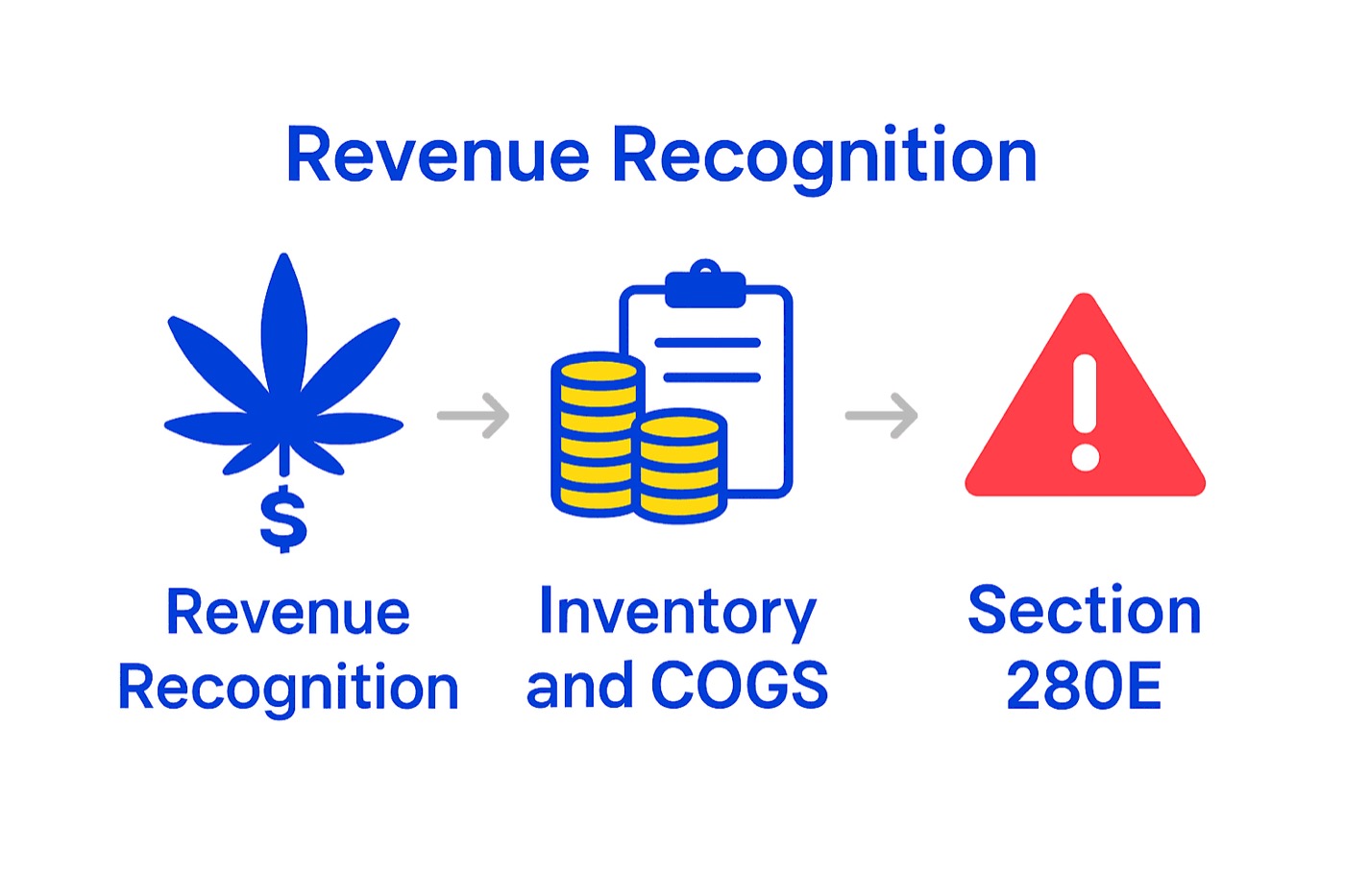
Ultimately, Section 280E demands a transformative approach to financial management. Cannabis businesses must view tax compliance not as a burden, but as an opportunity to demonstrate financial sophistication, build investor confidence, and create resilient financial frameworks that can withstand intense regulatory scrutiny.
Common GAAP Challenges in Cannabis Industry
Cannabis companies navigate an extraordinarily complex financial reporting landscape, facing unique GAAP implementation challenges that distinguish them from traditional industries. According to the SEC, these businesses encounter significant difficulties in applying accounting principles, particularly in areas like goodwill impairment testing and accounting for intangible assets within an evolving regulatory environment.
The regulatory constraints create multiple intricate financial reporting obstacles. As documented in SEC filings, cannabis businesses struggle with unique accounting complexities that stem from federal and state regulatory discrepancies. These challenges manifest in several critical areas of financial management, requiring sophisticated and adaptive accounting strategies.
Primary GAAP challenges for cannabis businesses include:
- Complex goodwill and intangible asset valuation
- Restrictions on standard business expense deductions
- Inconsistent regulatory frameworks across different jurisdictions
- Limited comparability with traditional industry financial reporting
- Heightened scrutiny of financial documentation
Our comprehensive GAAP overview guide provides deeper insights into navigating these complex financial reporting requirements. By understanding these challenges, cannabis businesses can develop proactive strategies that ensure accurate financial representation while maintaining regulatory compliance.
Successful navigation of these GAAP challenges requires more than technical accounting knowledge. It demands a holistic approach that combines financial expertise, regulatory understanding, and strategic planning. Cannabis businesses must view these challenges as opportunities to demonstrate financial sophistication and build investor confidence in an increasingly regulated marketplace.
Best Practices for GAAP Cannabis Reporting
Navigating GAAP reporting in the cannabis industry requires a strategic and meticulous approach that goes beyond traditional financial documentation. According to the SEC, cannabis companies must prioritize transparent financial reporting by providing clear reconciliations of non-GAAP financial measures to their most directly comparable GAAP measures, enhancing stakeholder understanding of financial performance.
Financial Transparency demands comprehensive and precise reporting strategies. Cannabis businesses must develop robust accounting frameworks that accommodate the industry’s unique regulatory challenges while maintaining strict adherence to GAAP principles. This requires a multifaceted approach that balances regulatory compliance with accurate financial representation.
Key best practices for GAAP cannabis reporting include:
- Maintaining detailed and accurate cost of goods sold (COGS) documentation
- Implementing rigorous internal financial control mechanisms
- Creating comprehensive reconciliation statements
- Developing consistent revenue recognition methodologies
- Ensuring transparent disclosure of financial assumptions and estimates
Our financial reporting compliance guide offers deeper insights into developing sophisticated reporting strategies. By embracing these best practices, cannabis businesses can transform complex regulatory requirements into opportunities for demonstrating financial excellence and building investor trust.
Ultimately, successful GAAP reporting in the cannabis industry is about more than technical compliance. It represents a strategic approach to financial management that communicates reliability, professionalism, and a commitment to transparent business practices in an evolving and complex regulatory landscape.
Frequently Asked Questions
What is GAAP and why is it important for cannabis businesses?
GAAP, or Generally Accepted Accounting Principles, is a standard financial reporting framework that ensures transparent and accurate financial statements. For cannabis businesses, GAAP compliance is crucial due to the industry’s complex regulatory environment and the need for standardized financial reporting.
How does Section 280E impact cannabis companies’ financial reporting?
Section 280E restricts cannabis businesses from deducting typical business expenses, only allowing deductions for the cost of goods sold (COGS). This significantly raises effective tax rates and complicates financial planning and reporting for these companies.
What are some common GAAP challenges faced by cannabis businesses?
Cannabis businesses encounter unique GAAP challenges such as complex goodwill valuation, restrictions on expense deductions, inconsistent regulations across jurisdictions, and limited comparability with traditional companies, requiring adaptive financial strategies.
What best practices should cannabis companies follow for GAAP reporting?
Best practices for GAAP reporting in the cannabis industry include maintaining detailed COGS documentation, implementing strong internal controls, developing reconciliation statements, standardizing revenue recognition methods, and ensuring clear disclosure of financial assumptions.
Recommended
- Cannabis GAAP Overview: Complete Guide for U.S. Businesses – Cannabis Business Minds
- What Is Cannabis Revenue Recognition? Complete Guide – Cannabis Business Minds
- Cannabis Accounting – Cannabis Business Minds
- Cannabis Tax – Cannabis Business Minds
This article is general education, not tax, legal or accounting advice. Cannabis rules change quickly; confirm how they apply to you with a qualified cannabis CPA or attorney.