The Essential Guide to Accrual Accounting Cannabis

2026 update: what rescheduling changed for 280E (reviewed October 2026)
Effective April 22, 2026, a DOJ/DEA final order moved marijuana covered by a qualifying state medical license (and FDA-approved marijuana drugs) to Schedule III. Section 280E only applies to Schedule I and II substances, so state-licensed medical cannabis activity is generally no longer subject to 280E going forward. Adult-use cannabis remains in Schedule I and fully subject to 280E. The DEA proceeding to reschedule all marijuana was temporarily stayed in October 2026, and Treasury/IRS guidance on transition years and mixed medical/adult-use businesses is still pending.
This article was written before the order took effect. Check where your business stands in about a minute.
More than 90 percent of cannabis businesses face extra scrutiny from the IRS due to strict tax laws. Understanding financial reporting is not just about staying organized, it can determine a company’s survival in this tightly regulated industry. Choosing the right accounting method gives cannabis entrepreneurs the power to manage tax risks and create clear financial records that withstand audits. Learn how accrual accounting plays a central role in meeting compliance and strengthening your financial strategy.
Key Takeaways
| Point | Details |
|---|---|
| Accrual Accounting Importance | Accrual accounting provides cannabis businesses with a comprehensive financial perspective by recognizing income and expenses when incurred, enabling better regulatory compliance. |
| Navigating Section 280E | Precise tracking of Cost of Goods Sold (COGS) under accrual accounting is crucial for cannabis businesses to maximize tax deductions and ensure adherence to IRS regulations. |
| Strategic Financial Management | By adopting accrual accounting, businesses gain insights for improved cash flow management, accurate financial forecasting, and enhanced credibility with investors. |
| Risks and Challenges | Cannabis entrepreneurs should be aware of the risks associated with misclassifying expenses and inadequate record-keeping to avoid costly IRS penalties. |
What Is Accrual Accounting in Cannabis?
Accrual accounting represents a sophisticated financial tracking method specifically designed to help cannabis businesses navigate complex regulatory landscapes. According to BTCPA, this accounting approach involves recognizing income and expenses when they are incurred, rather than when actual cash transactions occur.
In practical terms, accrual accounting means tracking financial activities as they happen, not just when money changes hands. This method provides cannabis entrepreneurs with a more comprehensive and transparent view of their business’s financial health. For instance, if a dispensary orders $10,000 of inventory in June but pays the invoice in July, accrual accounting records that expense in June when the goods were received.
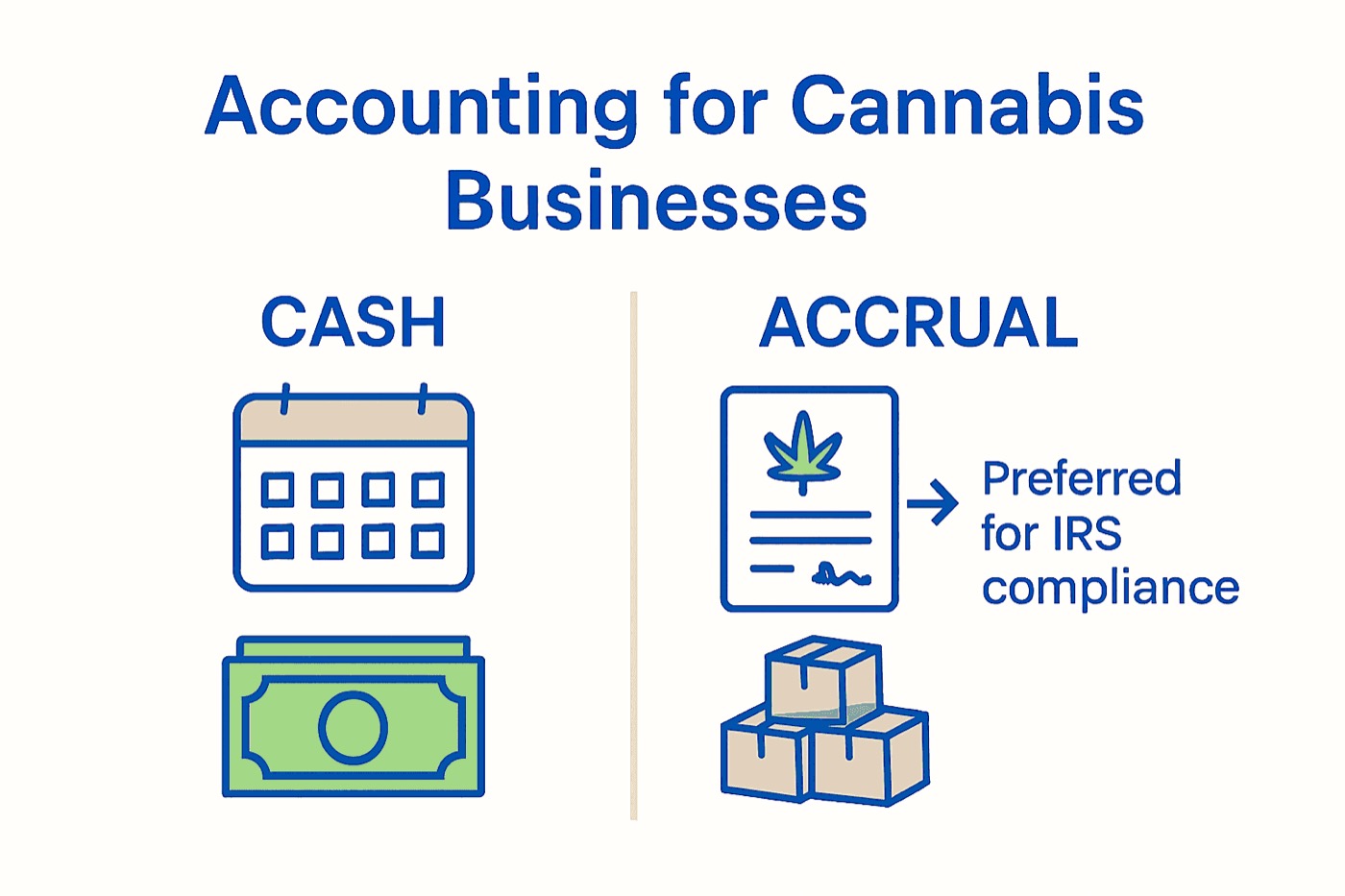
The cannabis industry faces unique accounting challenges, particularly around tax compliance. According to BTCPA, the IRS generally prefers accrual-based accounting for cannabis businesses under Section 471. This preference stems from the method’s ability to support precise Cost of Goods Sold (COGS) calculations, which are critical for navigating Section 280E tax regulations.
Key advantages of accrual accounting for cannabis businesses include:
- More accurate financial reporting
- Better tracking of cash flow
- Improved tax compliance
- Enhanced ability to make strategic financial decisions
By adopting accrual accounting, cannabis business owners can create a more robust financial management strategy that meets regulatory requirements while providing clear insights into their operational finances.
How Accrual Differs From Cash Accounting
In the cannabis industry, understanding the fundamental differences between accrual accounting and cash accounting is crucial for financial management. According to BTCPA, these two accounting methods represent significantly different approaches to tracking financial transactions.
Cash accounting is straightforward: transactions are recorded only when money actually changes hands. If a cannabis dispensary sells $5,000 worth of products but doesn’t receive payment for 30 days, cash accounting would not recognize that revenue until the payment is received. In contrast, accrual accounting records the transaction immediately when the sale occurs, providing a more real-time snapshot of the business’s financial position.
The critical distinction becomes particularly important for cannabis businesses navigating complex tax regulations. BTCPA notes that the IRS generally prefers accrual accounting under Section 471, primarily because it supports more accurate Cost of Goods Sold (COGS) calculations. This preference is especially significant given the unique tax challenges in the cannabis industry.
Key differences between cash and accrual accounting include:
- Timing of transaction recording
- Financial reporting accuracy
- Tax reporting requirements
- Complexity of financial management
For cannabis entrepreneurs, choosing the right accounting method isn’t just a bookkeeping decision—it’s a strategic choice that can significantly impact financial transparency, tax compliance, and overall business planning.
IRS Section 280E and Accrual Compliance
Section 280E represents a unique and challenging tax regulation that dramatically impacts financial reporting for cannabis businesses. This federal tax code specifically targets businesses dealing with controlled substances, effectively preventing cannabis companies from deducting most standard business expenses from their taxable income.
Under Section 280E, cannabis businesses can only deduct Cost of Goods Sold (COGS), which makes precise accrual accounting critically important. This means entrepreneurs must meticulously track and allocate expenses directly related to producing and purchasing inventory. Non-inventory expenses like marketing, rent, and administrative costs are typically non-deductible, creating complex accounting challenges that require strategic financial management.
The implications of Section 280E are profound. Cannabis businesses often face effective tax rates significantly higher than other industries because they cannot offset income with standard business deductions. Accrual accounting becomes a powerful tool in this environment, allowing businesses to:
- Accurately track inventory-related expenses
- Demonstrate transparent financial reporting
- Maximize allowable COGS deductions
- Prepare comprehensive documentation for potential IRS audits
By implementing robust accrual accounting practices, cannabis entrepreneurs can navigate the intricate tax landscape of Section 280E, ensuring compliance while optimizing their financial strategy. The key is maintaining meticulous records and understanding the nuanced requirements of this unique tax regulation.
Financial Benefits for Cannabis Businesses
Accrual accounting offers cannabis businesses a strategic approach to financial management that goes beyond basic record-keeping. According to BTCPA, this accounting method can lead to significant financial advantages, particularly in navigating the complex tax landscape of the cannabis industry.
One of the most critical financial benefits is the ability to more accurately calculate Cost of Goods Sold (COGS). By implementing accrual accounting, businesses can potentially reduce their taxable income through precise expense tracking. This method allows cannabis entrepreneurs to strategically allocate expenses, maximizing the limited deductions available under Section 280E and creating a more transparent financial picture.
The strategic advantages of accrual accounting extend beyond tax optimization. Businesses gain critical insights through:
- More accurate financial forecasting
- Enhanced ability to secure investor funding
- Improved cash flow management
- Better understanding of true business performance
- Increased credibility with financial institutions
Precise financial management becomes a competitive advantage in the cannabis industry. By adopting accrual accounting, businesses transform complex regulatory challenges into opportunities for strategic financial planning, ultimately positioning themselves for long-term success in a highly regulated market.
Risks, Challenges, and Common Pitfalls
Navigating accrual accounting in the cannabis industry presents unique challenges that can quickly overwhelm unprepared business owners. The complex regulatory environment creates a minefield of potential financial and legal risks that demand meticulous attention and specialized expertise.
One of the most significant risks involves misinterpreting Section 280E requirements. Cannabis businesses frequently struggle with precisely categorizing expenses, which can lead to severe tax complications. Incorrectly allocating expenses between Cost of Goods Sold (COGS) and non-deductible operational costs can trigger expensive IRS audits and potential penalties. These accounting errors can result in unexpected tax liabilities that dramatically impact a company’s financial stability.
Common pitfalls cannabis businesses encounter with accrual accounting include:
- Inadequate record-keeping
- Misclassifying business expenses
- Failing to separate state-legal and federally-prohibited activities
- Incomplete documentation of inventory transactions
- Overlooking subtle regulatory changes
Successful navigation of these challenges requires more than basic accounting knowledge. Cannabis entrepreneurs must develop a sophisticated understanding of both financial reporting principles and the unique legal constraints of their industry. Proactive compliance, continuous education, and potentially engaging specialized cannabis accounting professionals can help mitigate these complex risks.
Frequently Asked Questions
What is accrual accounting in cannabis?
Accrual accounting is a financial tracking method that records income and expenses when they are incurred, rather than when cash transactions occur. This method provides cannabis businesses with a comprehensive view of their financial health, supporting strategic decisions and regulatory compliance.
How does accrual accounting differ from cash accounting?
Accrual accounting records transactions when they occur, regardless of cash flow, while cash accounting records transactions only when money changes hands. This difference impacts financial reporting accuracy and tax compliance, especially in the cannabis industry.
Why is Section 280E significant for cannabis businesses?
Section 280E is a tax regulation that prevents cannabis businesses from deducting most standard business expenses. Under this regulation, only the Cost of Goods Sold (COGS) can be deducted, making accurate accrual accounting essential for tax compliance and financial optimization.
What are the common challenges of accrual accounting in the cannabis industry?
Common challenges include misclassifying expenses, inadequate record-keeping, and navigating the complex regulations surrounding Section 280E. These challenges can lead to financial risks, including expensive audits and unexpected tax liabilities.
Recommended
This article is general education, not tax, legal or accounting advice. Cannabis rules change quickly; confirm how they apply to you with a qualified cannabis CPA or attorney.