Master Cannabis Taxation Workflow 2025: Step-by-Step Guide

2026 update: what rescheduling changed for 280E (reviewed October 2026)
Effective April 22, 2026, a DOJ/DEA final order moved marijuana covered by a qualifying state medical license (and FDA-approved marijuana drugs) to Schedule III. Section 280E only applies to Schedule I and II substances, so state-licensed medical cannabis activity is generally no longer subject to 280E going forward. Adult-use cannabis remains in Schedule I and fully subject to 280E. The DEA proceeding to reschedule all marijuana was temporarily stayed in October 2026, and Treasury/IRS guidance on transition years and mixed medical/adult-use businesses is still pending.
This article was written before the order took effect. Check where your business stands in about a minute.
Nearly every american cannabis business faces intense scrutiny when it comes to tax compliance. Strict reporting rules and complicated tax codes mean even small mistakes can lead to audits or heavy fines. With over 80 percent of cannabis businesses under close watch from both state and federal regulators, mastering these compliance steps is not optional. This guide reveals exactly how to prepare your records, structure your accounts, and protect your business from costly pitfalls.
Quick Summary
| Key Insight | Explanation |
|---|---|
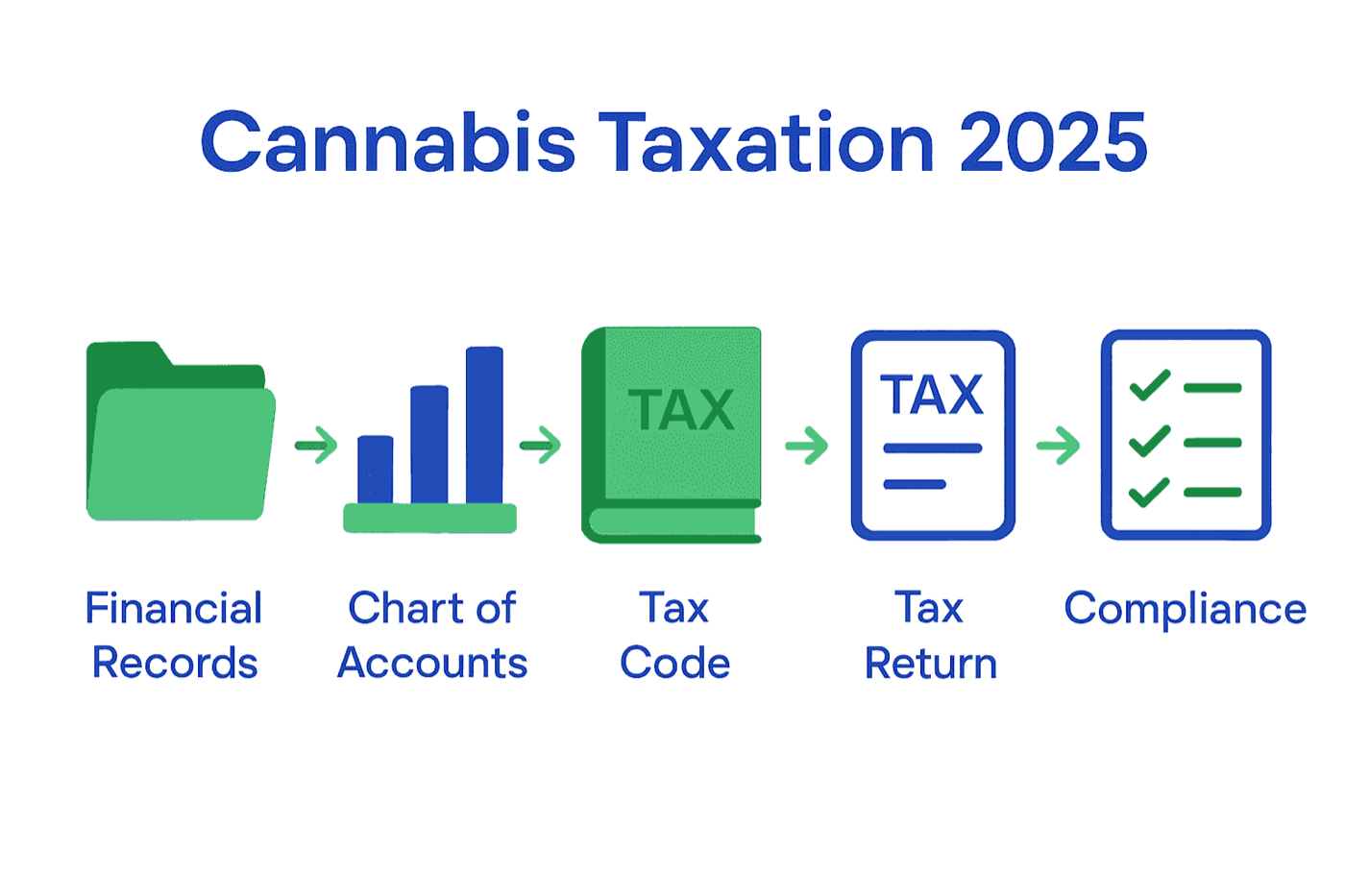
| 1. Organize Financial Records | Gather all essential documents to ensure tax compliance and simplify financial tracking during tax season. |
| 2. Develop a Compliant Chart of Accounts | Design a detailed chart that categorizes assets, liabilities, revenue, and expenses while adhering to IRS regulations. |
| 3. Apply IRC 280E and 471 Correctly | Maximize deductions by carefully calculating cost of goods sold and keeping precise documentation to comply with tax codes. |
| 4. Thoroughly Review Tax Returns | Double-check all income and expenses, ensuring correct classification and compliance with cannabis-specific reporting requirements. |
| 5. Verify Regulatory Compliance Regularly | Conduct ongoing audits and stay updated on state and federal laws to maintain legal compliance for your cannabis business. |
Step 1: Prepare financial records for tax compliance
Preparing accurate financial records is the foundation of successful cannabis tax compliance. This critical step involves organizing your financial documentation systematically to ensure you can demonstrate transparent and precise business transactions to tax authorities.
Start by gathering all essential financial documents including income statements, expense receipts, bank statements, payroll records, and inventory tracking logs. For cannabis businesses, maintaining meticulous records is especially crucial due to complex regulatory requirements. Cannabis Recordkeeping Requirements provides detailed guidance on what specific documentation you need to maintain.
Prioritize digital record management using secure accounting software that allows granular tracking of every financial transaction. Categorize expenses carefully especially distinguishing between cost of goods sold (COGS) and non deductible expenses under IRS Section 280E. Recommended best practices include:
- Create separate digital folders for each tax year
- Scan and digitize all physical receipts immediately
- Use cloud storage with robust backup systems
- Maintain chronological order of financial documents
Consider working with a cannabis industry specific accountant who understands the nuanced tax regulations unique to your business. Their expertise can help you navigate complex compliance requirements and maximize legitimate tax deductions while avoiding potential audit risks.
By investing time in thorough financial record preparation now you will significantly streamline your tax filing process and reduce potential complications during tax season.
Step 2: Implement compliant chart of accounts structure
Implementing a compliant chart of accounts is crucial for cannabis businesses to maintain accurate financial tracking and meet complex regulatory requirements. Your goal is to create a systematic financial classification framework that supports both tax compliance and strategic business insights.
According to OJP, a robust chart of accounts should comprehensively classify financial data into key categories: assets, liabilities, equity, revenue, and expenses. For cannabis businesses, this means creating granular subcategories that specifically address industry unique financial tracking needs.
Design your chart of accounts with careful attention to IRS Section 280E requirements. Create distinct expense categories that clearly separate cost of goods sold (COGS) from non deductible expenses. Recommended strategies include:
- Develop separate expense codes for cultivation, processing, and retail operations
- Create detailed tracking for inventory valuation
- Implement strict documentation protocols for each financial transaction
- Use accounting software designed for cannabis industry compliance
For cannabis specific insights, Understanding Why Use Chart of Accounts Cannabis offers additional guidance on structuring your financial tracking system. Consider consulting with a cannabis industry accountant to ensure your chart of accounts meets both regulatory requirements and your specific business needs.
A well structured chart of accounts will provide transparency for tax authorities and give you valuable insights into your business financial performance.
Step 3: Apply IRC 280E and 471 for cannabis deductions
Applying IRC 280E and 471 correctly is crucial for cannabis businesses to maximize legitimate tax deductions while maintaining full regulatory compliance. This step requires careful navigation of complex tax regulations specific to the cannabis industry.
According to IRS, cannabis businesses must meticulously calculate their cost of goods sold (COGS) and prepare precise Schedule C documentation. PICPA recommends following Generally Accepted Accounting Principles (GAAP) absorption accounting methods to minimize tax liabilities under Section 280E.
To effectively apply these tax codes, implement the following strategic approaches:
- Separate direct production costs from non deductible expenses
- Document all inventory related expenses with extreme precision
- Use absorption costing methods that include both direct and indirect production costs
- Maintain comprehensive records that demonstrate compliance with Section 471 guidelines
For deeper insights into navigating these complex tax regulations, Understanding the 280E Deductible COGS Factsheet provides additional guidance on interpreting and applying these critical tax codes.
Remember that incorrect application of IRC 280E and 471 can result in significant financial penalties. Working with a cannabis tax specialist who understands these intricate regulations can help you optimize your tax strategy while ensuring full compliance.
Step 4: Complete and review cannabis tax returns
Completing and reviewing cannabis tax returns requires meticulous attention to detail and comprehensive understanding of industry specific tax regulations. Your goal is to prepare accurate tax documentation that demonstrates full compliance while minimizing potential audit risks.
Preparing your tax returns involves gathering all necessary financial documentation from your carefully maintained records. Cannabis Business Tax Filings Explained provides essential guidance on navigating the complex reporting requirements unique to cannabis businesses.
Key strategies for successful tax return preparation include:
- Verify all income and expense documentation is complete and accurate
- Double check calculations related to cost of goods sold (COGS)
- Reconcile financial statements with your chart of accounts
- Ensure all IRS forms specific to cannabis businesses are correctly filled
Careful review is critical before submission. Pay special attention to:
- Precise reporting of gross receipts
- Accurate separation of deductible and non deductible expenses
- Comprehensive documentation supporting all financial claims
- Compliance with Section 280E reporting requirements
Consider working with a cannabis specific tax professional who understands the nuanced reporting requirements. Their expertise can help you identify potential red flags and optimize your tax filing strategy.
Submitting a thoroughly reviewed tax return minimizes your risk of audits and potential financial penalties. Approach this final step with the same level of precision you have maintained throughout your financial record keeping process.
Step 5: Verify compliance with state and federal laws
Verifying compliance with state and federal laws is a critical step in maintaining the legal and financial integrity of your cannabis business. This process requires a comprehensive review of your operations against a complex landscape of evolving regulatory requirements.
Cannabis Tax Compliance Guide provides essential insights into navigating the intricate legal requirements specific to cannabis businesses. Your verification process should encompass multiple layers of regulatory scrutiny.
Key areas to focus on during your compliance verification include:
- State level licensing and operational permits
- Federal tax reporting requirements
- Local zoning and business operation regulations
- Inventory tracking and seed to sale documentation
- Employment and payroll compliance standards
- Banking and financial transaction regulations
Establish a systematic approach to compliance verification:
- Conduct quarterly internal compliance audits
- Maintain relationships with legal and regulatory experts
- Subscribe to industry updates and regulatory newsletters
- Document all compliance efforts meticulously
Remember that compliance is an ongoing process. Regulations in the cannabis industry change frequently. Staying proactive and informed is your best defense against potential legal and financial complications.
Consider working with a cannabis specific legal advisor who can provide up to date guidance on both state and federal regulatory landscapes.
 Their expertise can help you navigate the complex legal requirements unique to the cannabis industry.
Frequently Asked Questions
What are the first steps to prepare financial records for cannabis tax compliance?
To prepare your financial records for cannabis tax compliance, start by gathering essential documents like income statements, expense receipts, and bank statements. Organize these documents systematically to demonstrate transparent business transactions during tax filing.
How do I set up a compliant chart of accounts for my cannabis business?
To create a compliant chart of accounts, classify your financial data into categories such as assets, liabilities, equity, revenue, and expenses. Ensure you include distinct subcategories for cost of goods sold and non-deductible expenses to meet IRS Section 280E requirements.
What deductions can cannabis businesses claim under IRC 280E and Section 471?
Cannabis businesses can claim deductions for cost of goods sold (COGS) under IRC 280E, which includes direct production costs. Maintain detailed records and utilize absorption costing methods to optimize your deductions while staying compliant with tax regulations.
What steps should I take to review cannabis tax returns before submission?
Before submitting cannabis tax returns, verify all income and expense documentation for accuracy. Double-check your calculations related to COGS and ensure all IRS forms specific to cannabis businesses are completed correctly to minimize audit risks.
How can I ensure compliance with state and federal regulations for my cannabis business?
To verify compliance, conduct regular internal audits and stay updated on state and federal laws affecting your operations. Establish relationships with legal experts and document all compliance efforts to safeguard your cannabis business against potential legal issues.
Recommended
- Cannabis Tax Compliance Guide: Achieve Full Legal Readiness – Cannabis Business Minds
- Cannabis Tax – Cannabis Business Minds
- Master Cannabis Accounting Best Practices for 2025 Success – Cannabis Business Minds
- Cannabis Accounting – Cannabis Business Minds
This article is general education, not tax, legal or accounting advice. Cannabis rules change quickly; confirm how they apply to you with a qualified cannabis CPA or attorney.