Cannabis Invoice Explained: Compliance and Best Practices

Nearly every american cannabis business must handle invoices that are unlike any other industry’s. With regulations shifting from state to state and strict requirements at every step, even a small error can trigger unexpected consequences. More than 80 percent of cannabis audits uncover compliance issues tied directly to invoicing. Understanding these unique documents is crucial, as this guide breaks down what sets cannabis invoices apart and how proper management protects both profits and operations.
Key Takeaways
| Point | Details |
|---|---|
| Importance of Cannabis Invoices | Cannabis invoices are essential legal documents that track sales and ensure compliance within a complex regulatory framework. |
| Types of Invoices | Different types of cannabis invoices, such as Cultivation Transfer, Wholesale Distribution, and Retail Sales, serve unique regulatory and operational purposes. |
| Legal Compliance Requirements | Cannabis invoices must adhere to stringent state and federal regulations, including comprehensive product tracking and accurate tax reporting. |
| Common Errors to Avoid | Incomplete information and inaccuracies can lead to severe compliance risks, underscoring the need for meticulous documentation and regular audits. |
Defining Cannabis Invoices in the Cannabis Industry
A cannabis invoice represents a critical financial document that tracks the sale, transfer, and monetary transactions specific to cannabis businesses. Unlike standard business invoices, cannabis invoices require meticulous documentation due to the industry’s complex regulatory environment. These specialized documents serve multiple purposes: recording product sales, tracking inventory, ensuring tax compliance, and maintaining transparent financial records for state and federal regulatory oversight.
In the cannabis industry, invoices go far beyond simple transactional records. They function as comprehensive proof of legitimate business operations, detailing critical information such as product type, quantity, potency, cultivation batch numbers, and precise transaction timestamps.
Given the stringent reporting requirements imposed by state cannabis control boards, these invoices become essential legal documents that can protect businesses during audits or regulatory reviews. Cannabis Bookkeeping Best Practices highlight the importance of maintaining accurate, detailed invoicing systems.
Key components of a standard cannabis invoice typically include:
- Detailed seller and buyer information
- Complete product descriptions
- Product weight and quantity
- Unit and total pricing
- Timestamp of transaction
- Unique transaction identifier
- Compliance tracking numbers
- Tax calculations
Understanding these nuanced documentation requirements is crucial for cannabis businesses seeking to maintain financial integrity and regulatory compliance. Accrual Accounting Cannabis Guide provides additional insights into managing these complex financial documentation processes effectively.
Types of Cannabis Invoices and Their Uses
The cannabis industry requires multiple specialized invoice types that serve distinct regulatory and operational purposes. Unlike traditional business transactions, cannabis invoices must meticulously document every stage of product movement, from cultivation to final sale. These documentation requirements stem from the complex legal landscape surrounding cannabis commerce, where precise tracking is not just recommended but legally mandated.
Three primary types of cannabis invoices dominate the industry’s financial documentation:
- Cultivation Transfer Invoices
- Track product movement from grow facilities
- Document plant weight, strain, and batch numbers
- Include cultivation license information
- Record transfer between licensed cannabis producers
- Wholesale Distribution Invoices
- Record transactions between licensed cannabis distributors
- Detail product quantity, quality, and compliance testing results
- Include tax calculations specific to cannabis transactions
- Provide proof of legal product transfer
- Retail Sales Invoices
- Document direct consumer sales
- Include specific product details like THC/CBD percentages
- Record customer identification verification
- Track individual purchase limits and compliance
Understanding these nuanced invoice categories is critical for maintaining regulatory compliance. Cannabis Accounting Tips offer additional insights into managing these complex documentation requirements effectively. Each invoice type serves as a critical checkpoint in the highly regulated cannabis supply chain, ensuring transparency, accountability, and legal adherence throughout the product lifecycle.
Legal and Regulatory Requirements for Invoices
Cannabis invoices represent far more than simple financial documentation. They are critical legal instruments that must comply with a complex web of state and federal regulations. Regulatory compliance in invoice preparation is not optional but a fundamental requirement for cannabis businesses to maintain their operational licenses and avoid potentially devastating legal consequences.
Key legal requirements for cannabis invoices typically include:
-
Comprehensive Product Tracking
-
Detailed documentation of product origin
-
Precise quantity and weight measurements
-
Batch and cultivation tracking numbers
-
Compliance with state track and trace systems
-
Taxation Documentation
-
Accurate tax calculation and reporting
-
Separation of state and local cannabis tax calculations
-
Detailed records for potential audit purposes
-
Transparent financial reporting
-
Licensing Verification
-
Inclusion of valid cannabis business license numbers
-
Proof of legitimate transfer between licensed entities
-
Documentation of regulatory compliance at each transaction stage
The intricate nature of these requirements demands meticulous attention to detail. Cannabis Recordkeeping Requirements emphasize the critical importance of maintaining comprehensive, accurate documentation throughout all cannabis business transactions. Failure to meet these stringent regulatory standards can result in significant penalties, including potential license suspension or revocation, making precise invoice management a fundamental aspect of sustainable cannabis business operations.
Essential Elements and Recordkeeping Best Practices
Effective recordkeeping in cannabis businesses transcends mere administrative task management. It represents a critical strategic function that directly impacts regulatory compliance, financial transparency, and long-term operational sustainability. Cannabis businesses must develop robust documentation systems that capture every nuanced transaction detail while maintaining the highest standards of accuracy and completeness.
Essential elements for comprehensive cannabis invoice recordkeeping include:
- Digital Documentation Management
- Implement secure cloud-based storage systems
- Utilize encrypted document management platforms
- Create redundant backup protocols
- Establish strict access control mechanisms
- Transaction Tracking Protocols
- Capture real time transaction data
- Document complete chain of custody
- Record precise timestamps
- Include detailed product specifications
- Compliance Documentation
- Maintain current business licensing information
- Track regulatory changes systematically
- Document all compliance-related communications
- Create audit-ready historical records
7 Types of Cannabis Dispensary Records highlight the critical importance of maintaining meticulously organized documentation. By implementing these comprehensive recordkeeping strategies, cannabis businesses can protect themselves against potential regulatory scrutiny, minimize financial risks, and create a foundation for sustainable growth in an increasingly complex industry landscape.
Common Errors and Compliance Risks to Avoid
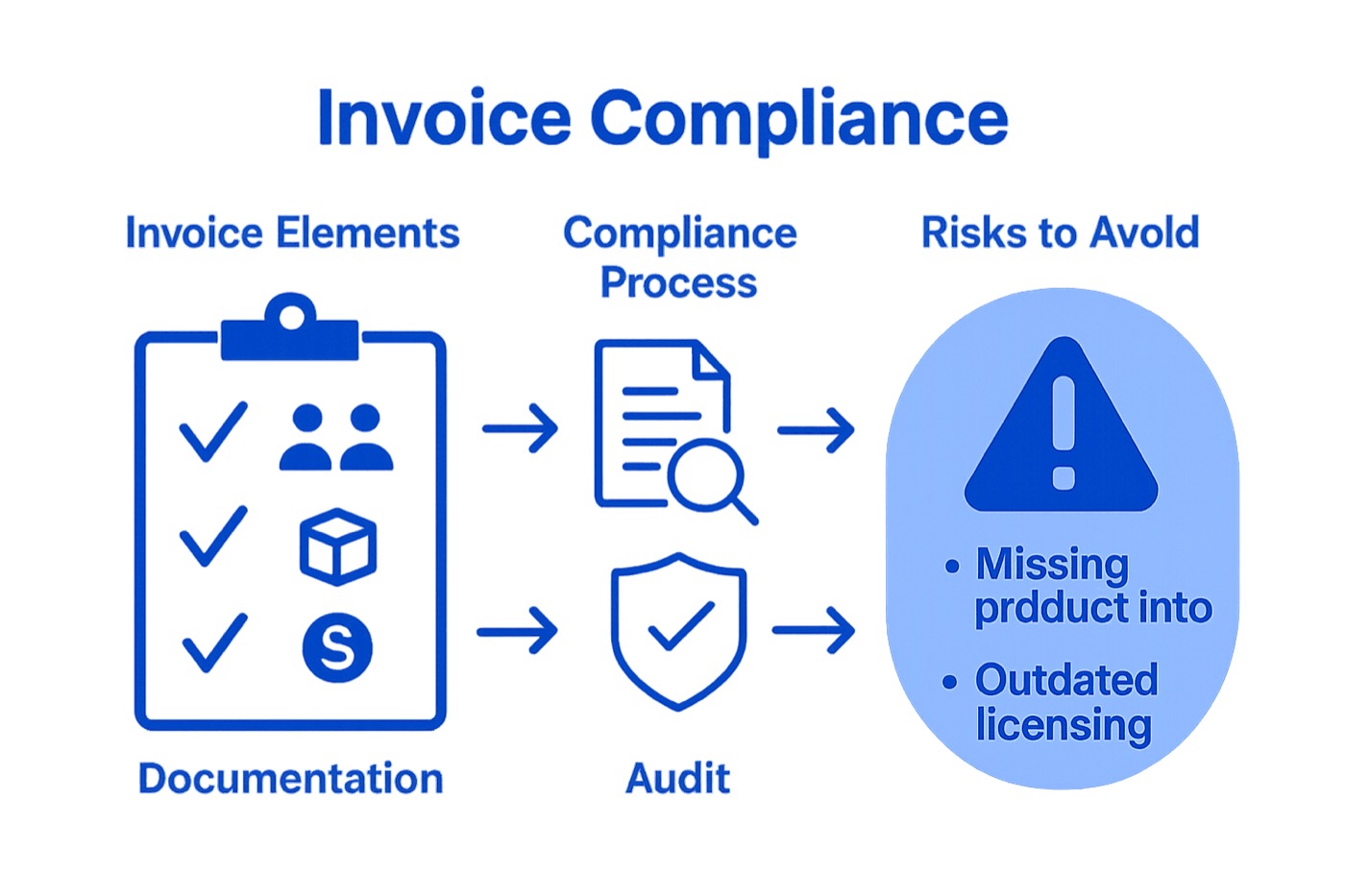
Navigating the complex landscape of cannabis invoice management requires a proactive approach to identifying and mitigating potential compliance vulnerabilities. Cannabis businesses face unique challenges that can quickly transform minor documentation errors into significant legal and financial risks. Understanding these common pitfalls is crucial for maintaining operational integrity and avoiding potentially devastating regulatory consequences.
Most frequent invoice and documentation errors include:
- Incomplete Product Information
- Missing precise product measurements
- Incomplete batch tracking details
- Lack of specific cannabinoid concentration data
- Inconsistent product identification
- Licensing Documentation Mistakes
- Outdated business license information
- Failure to update license renewal status
- Incorrect license number documentation
- Missing cross-references between transactions and licenses
- Tax Reporting Inaccuracies
- Miscalculated cannabis-specific tax rates
- Improper segregation of tax categories
- Incomplete tax documentation
- Inconsistent tax reporting across different invoice types
Cannabis Dispensary Compliance Tips underscore the critical importance of developing robust systems to prevent these common errors. Implementing comprehensive validation protocols, conducting regular internal audits, and maintaining meticulous documentation can significantly reduce the risk of regulatory violations that could jeopardize a cannabis business’s operational status.
Frequently Asked Questions
What is a cannabis invoice?
A cannabis invoice is a specialized financial document that tracks sales and transfers specific to cannabis businesses. It includes detailed information about product types, quantities, compliance, and pricing, ensuring regulatory compliance in a complex industry.
What are the key components of a cannabis invoice?
Key components include seller and buyer information, product descriptions, weight and quantity, pricing, transaction timestamps, compliance tracking numbers, and tax calculations.
What are the different types of cannabis invoices?
The main types of cannabis invoices are cultivation transfer invoices, wholesale distribution invoices, and retail sales invoices, each serving distinct compliance and operational purposes.
What common errors should be avoided in cannabis invoicing?
Common errors include incomplete product information, outdated licensing documentation, and inaccuracies in tax reporting. These errors can lead to significant legal and financial risks for cannabis businesses.
Recommended
- Cannabis Accounting – Cannabis Business Minds
- 7 Essential Cannabis Dispensary Compliance Tips for Success – Cannabis Business Minds
- What Is Inventory Tracking Cannabis? Complete Overview – Cannabis Business Minds
- 7 Steps to a Cannabis Financial Reporting Checklist Success – Cannabis Business Minds
- Insurance Billing Processes Explained: Complete Guide – Digital Insurance Platform | IBSuite Insurance Software | Modern Insurance System
This article is general education, not tax, legal or accounting advice. Cannabis rules change quickly; confirm how they apply to you with a qualified cannabis CPA or attorney.