Cannabis Escrow Accounts Explained for Finance Pros
A cannabis escrow account is a neutral holding arrangement where a licensed third-party agent secures funds or assets until both parties satisfy documented legal and regulatory conditions. This structure is not optional in most cannabis transactions. It is the mechanism that keeps deals from collapsing when licensing timelines stretch, ownership transfers stall, or regulators require verified compliance before funds move. Understanding cannabis escrow accounts explained in operational terms means knowing exactly what triggers a release, who holds the fiduciary duty, and what documentation your bank and escrow agent will demand before a single dollar moves.
Cannabis escrow accounts explained: how the structure works
A cannabis escrow account operates through a neutral escrow agent who holds funds or assets in a segregated trust account, releasing them only when contractual and regulatory milestones are formally documented and verified. The agent owes fiduciary duties to both parties equally. That impartiality is the structural point. Neither buyer nor seller controls the funds during the hold period.

Release triggers in cannabis transactions are more complex than in standard real estate or commercial deals. Typical conditions include state license transfer confirmation, beneficial ownership verification matching KYC records, METRC seed-to-sale reconciliation sign-off, and written regulatory approval of any change of ownership. Each condition must be documented in the escrow agreement before the account opens. Vague language like “upon regulatory approval” without specifying which agency, which license number, and which documentation format creates disputes that delay closings by months.
The escrow agent’s role extends beyond holding funds. In cannabis deals, agents must interpret compliance documents, verify license status through regulator portals, and confirm that ownership records match what the state has on file. Escrow agents without cannabis expertise risk misreading conditional triggers, which can freeze funds indefinitely or expose both parties to regulatory allegations. Vireo Growth escrowed over 90 million shares into Odyssey Trust Company pending regulatory clearance for a Colorado acquisition closing in 2026. That is a real-world example of how escrow structures accommodate extended regulatory timelines in cannabis M&A.
- Segregated trust accounts: Funds are held separately from the escrow agent’s operating accounts, providing FDIC protection and preventing commingling.
- Conditional release triggers: Each release condition must reference a specific, verifiable compliance deliverable, not a general outcome.
- Fiduciary impartiality: The escrow agent cannot favor either party. Instructions must be written, signed, and unambiguous.
- Confidentiality obligations: Escrow agents are bound to protect transaction details from unauthorized disclosure, which matters in cannabis given the public nature of license databases.
Pro Tip: Draft escrow instructions with your compliance counsel and state cannabis attorney in the same session. Misalignment between what the escrow agreement says and what the state requires for license transfer is the most common source of costly delays.
What regulatory compliance challenges do cannabis escrow accounts create?
FinCEN’s 2014 guidance remains the operational baseline for cannabis banking compliance in 2026. Banks serving cannabis-related businesses must verify licenses, monitor transactions continuously, and file Marijuana SARs to satisfy Bank Secrecy Act obligations. This framework applies directly to escrow accounts because the bank holding the escrow funds carries the same compliance burden as any other cannabis deposit relationship.
The documentation banks require before opening or maintaining a cannabis escrow account is specific and non-negotiable. Here is what a compliant file looks like:
- Real-time license verification: Banks access state regulator portals directly to confirm license status, not just accept copies. A license that was valid at deal signing can be suspended by closing.
- Beneficial ownership identification: Every individual with 25% or more ownership interest must be identified, with KYC documentation matching state ownership records exactly.
- Expected activity profiles: Banks require projected monthly transaction volumes, fund sources, and disbursement schedules before the account opens.
- METRC reconciliation records: Seed-to-sale tracking data must align with financial records. Discrepancies between inventory and financial statements are a primary trigger for account closure.
- Ongoing SAR monitoring: Banks file Marijuana SARs at account opening and continue filing at defined intervals regardless of whether suspicious activity exists. This is a compliance formality, not an accusation.
“The fragility of cannabis escrow relationships hinges on the ability to produce clean and ready compliance documentation rapidly to satisfy escrow release conditions and avoid account closures.” — Cannabis banking operational risk insight
Banks do not treat a valid state license as sufficient proof of low risk. Cannabis banking risk is assessed on operational and documentation quality, not license status alone. That distinction matters for escrow accounts because a documentation gap discovered mid-hold can freeze the account at the worst possible moment in a deal. The practical implication is that your compliance file needs to be current, complete, and auditable before the escrow account opens, not assembled reactively when the bank asks.
How do escrow fees and timelines affect cannabis transactions?
Standard escrow timelines for cannabis-related real estate run 30 to 90 days. M&A transactions involving license transfers are a different category entirely. California license transfer timelines can delay deal closings 6 to 24 months, requiring escrow provisions specifically designed for extended fund holding. That duration has direct cost implications.
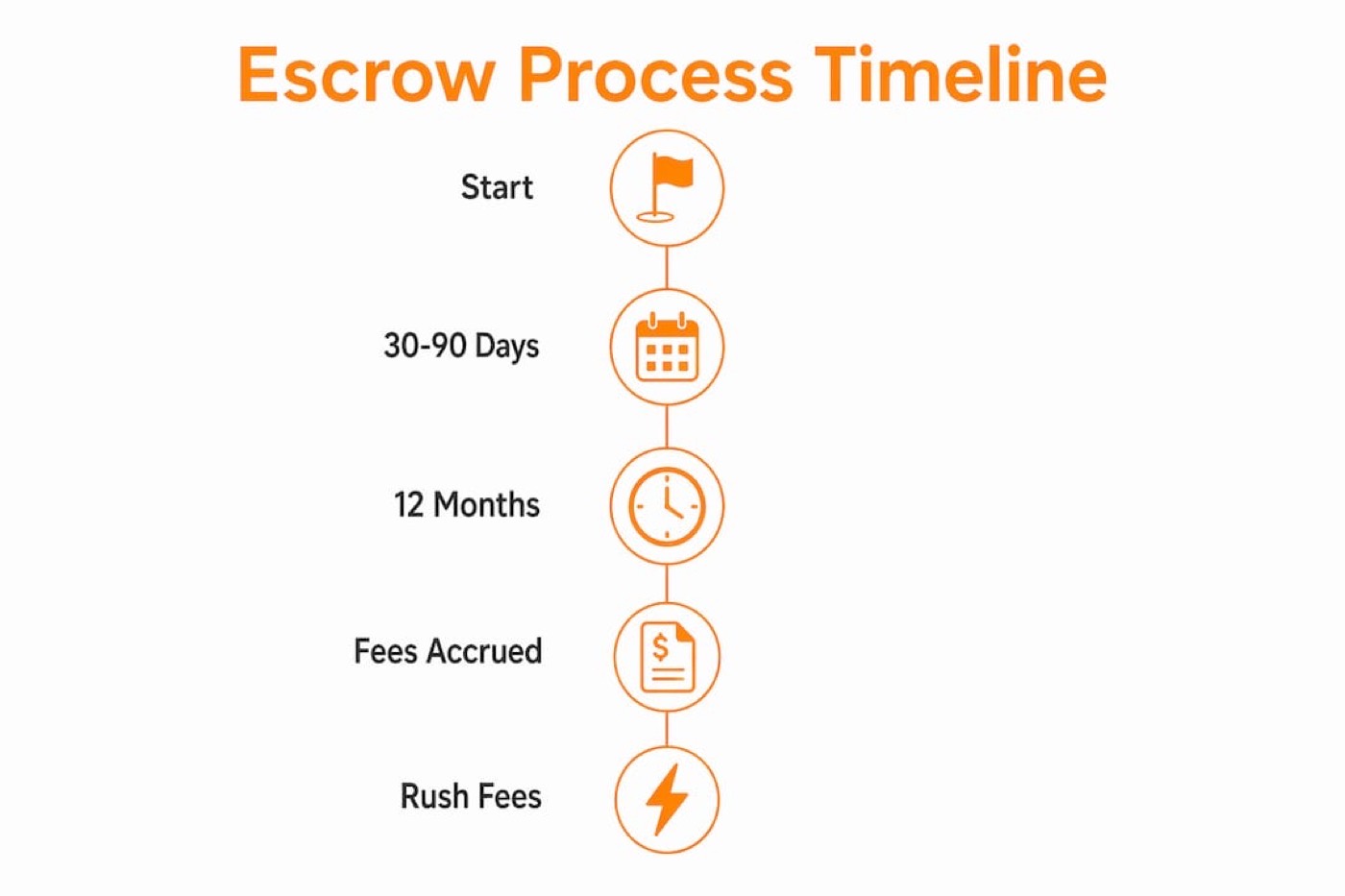
| Transaction type | Typical timeline | Key fee drivers |
|---|---|---|
| Cannabis real estate | 30 to 90 days | Processing fee, title coordination |
| License-involved M&A | 6 to 24 months | Monthly holding fees, extended compliance monitoring |
| Share escrow (regulatory hold) | 12 to 24 months | Custodial fees, regulatory milestone tracking |
| Expedited/rush closing | Under 30 days | Rush fees up to 50% above standard rates |
Monthly holding fees accrue throughout extended regulatory holds. A deal that stalls at month 14 of a California license transfer carries 14 months of holding fees on top of the original processing cost. That is a real budget line item, not a footnote. Finance professionals modeling cannabis acquisitions need to build escrow cost scenarios for both the expected timeline and a worst-case regulatory delay.
Rush fees compound the problem when deals are structured with unrealistic closing assumptions. Expedited closings cost materially more, and in cannabis, the regulatory timeline is rarely within the parties’ control. The cost-benefit calculation for cannabis operators is straightforward: escrow fees are the price of regulatory protection. The alternative, closing without proper escrow structures, creates exposure to unauthorized ownership allegations and deal unwind risk that far exceeds any fee savings.
Pro Tip: Model three escrow cost scenarios in every cannabis M&A deal: base case at 90 days, extended case at 12 months, and worst case at 24 months. Present all three to both parties before signing the purchase agreement. Surprises on escrow costs kill deals that should close.
What should cannabis businesses know before choosing an escrow agent?
Selecting an escrow agent for a cannabis transaction is not the same decision as selecting one for a standard commercial real estate deal. The agent must understand how to interpret state-specific cannabis compliance documents, verify license status through regulator portals, and recognize when a METRC reconciliation discrepancy disqualifies a release condition. Agents without this competence create liability for both parties.
Practical considerations for cannabis businesses and finance professionals evaluating escrow services:
- Verify trust accounting capabilities: The agent must hold funds in segregated trust accounts with proper FDIC coverage. Ask for documentation of their trust accounting structure before signing any engagement.
- Confirm cannabis regulatory competence: Ask directly whether the agent has closed cannabis license transfer escrows in your state. California, Colorado, and Illinois each have distinct regulatory timelines and documentation requirements.
- Tie release conditions to verifiable deliverables: Release triggers tied to operational events rather than concrete compliance documents are the most common source of escrow disputes. Every condition must reference a specific document, portal confirmation, or regulatory filing.
- Address interim control explicitly: Sophisticated cannabis deals use escrow with explicit no-control guardrails to prevent allegations of de facto ownership transfer before license approval. Your escrow instructions must prohibit the buyer from exercising operational control over the licensed entity until the state confirms the transfer.
- Coordinate with legal and compliance teams: Escrow instructions drafted without input from state cannabis counsel and your compliance officer will contain gaps. The cannabis financial compliance requirements that govern escrow releases are state-specific and change with regulatory updates.
- Maintain current inventory reconciliation: Banks and escrow agents both require clean cannabis inventory records to verify compliance at release. A METRC discrepancy discovered at closing can freeze funds and trigger a bank compliance review.
The documentation discipline required for escrow release is the same discipline required for ongoing banking compliance. Operators who maintain clean books and current reconciliations throughout the hold period close faster and with fewer disputes. Those who treat documentation as a closing-day task consistently face delays.
Why escrow is where cannabis deals actually get tested
I have reviewed enough cannabis M&A files to say this plainly: the escrow agreement is where you find out whether a deal was structured by people who understand cannabis regulation or people who copied a standard commercial template and hoped for the best.
The most common failure pattern is escrow instructions that reference “regulatory approval” without specifying the exact agency action, the license number, and the form of written confirmation required. That language sounds complete. It is not. When California’s Department of Cannabis Control takes 18 months to process a license transfer and the escrow instructions say “upon DCC approval,” both parties spend months arguing about what constitutes approval. Careful drafting of escrow instructions and cooperation duties reduce that ambiguity. Most operators skip that step because it adds time and legal fees upfront.
The potential rescheduling of cannabis to Schedule III under federal law has created optimism about banking access, but it has not changed the FinCEN framework or the SAR filing obligations that govern escrow accounts today. Banks are still filing Marijuana SARs. Escrow agents are still requiring the same compliance documentation. Operators who assume the regulatory environment has loosened are getting surprised when their bank requests the same due diligence file they would have needed in 2020.
The escrow account is not a formality. It is the structure that keeps a deal legally clean during the period when neither party has full control and the regulator has not yet acted. Get the instructions right before the account opens. The cost of fixing them after is always higher.
— JN
Go deeper on cannabis finance with Cannabisbusinessminds
Cannabis escrow accounts sit at the intersection of transaction finance, banking compliance, and state regulatory law. Getting the financial mechanics right requires more than understanding escrow. It requires clean inventory records, accurate cost accounting, and a banking workflow built for compliance. Cannabisbusinessminds covers each of these areas in depth. Start with the cannabis inventory costing guide for a precise breakdown of how inventory valuation affects your compliance position and financial reporting. For operators managing cash flow around escrow timelines and regulatory holds, the cannabis budgeting resources provide practical frameworks for modeling the cost uncertainty that comes with extended regulatory delays.
FAQ
What is a cannabis escrow account?
A cannabis escrow account is a neutral holding arrangement managed by a licensed third-party agent who secures funds or assets until both parties fulfill documented legal and regulatory conditions, including license transfers, ownership verification, and METRC reconciliation sign-off.
How long does cannabis escrow typically take?
Standard cannabis real estate escrow runs 30 to 90 days, while M&A transactions involving license transfers can extend 6 to 24 months due to state regulatory review timelines, particularly in California.
What triggers the release of funds from a cannabis escrow account?
Funds release when all conditions written into the escrow agreement are met and verified, typically including confirmed license transfer, KYC-matched beneficial ownership documentation, and clean seed-to-sale inventory reconciliation.
Why do cannabis escrow accounts require so much documentation?
Banks holding escrow funds for cannabis businesses must comply with FinCEN’s 2014 guidance, which requires ongoing license verification, beneficial ownership identification, and Marijuana SAR filings regardless of state licensing status.
What makes a cannabis escrow agent qualified?
A qualified cannabis escrow agent must have trust accounting capabilities, direct experience with state cannabis license transfer processes, and the ability to interpret compliance-specific release conditions tied to regulator portals and METRC data.
Recommended
- Budgeting – Cannabis Business Minds
- Cannabis Inventory Costing: What Finance Pros Must Know – Cannabis Business Minds
- Blog – Cannabis Business Minds
- Why Choose Specialized Cannabis Accounting for Your Business – Cannabis Business Minds
This article is general education, not tax, legal or accounting advice. Cannabis rules change quickly; confirm how they apply to you with a qualified cannabis CPA or attorney.