Cannabis Entity Tax Status: Key U.S. Compliance Factors

2026 update: what rescheduling changed for 280E (reviewed October 2026)
Effective April 22, 2026, a DOJ/DEA final order moved marijuana covered by a qualifying state medical license (and FDA-approved marijuana drugs) to Schedule III. Section 280E only applies to Schedule I and II substances, so state-licensed medical cannabis activity is generally no longer subject to 280E going forward. Adult-use cannabis remains in Schedule I and fully subject to 280E. The DEA proceeding to reschedule all marijuana was temporarily stayed in October 2026, and Treasury/IRS guidance on transition years and mixed medical/adult-use businesses is still pending.
This article was written before the order took effect. Check where your business stands in about a minute.
Over 90% of American cannabis businesses report facing unexpected tax complications each year due to federal rules. Even as many states legalize cannabis, American entrepreneurs quickly realize that tax regulations create serious challenges for their financial health. This guide breaks down how the right entity and tax strategy can make a dramatic difference, helping cannabis operators avoid costly mistakes and meet both state and federal requirements with confidence.
Key Takeaways
| Point | Details |
|---|---|
| Tax Challenges | Cannabis businesses face significant tax complications due to federal classifications and Section 280E, limiting expense deductions. |
| Entity Structures | Choosing the right business entity (C-Corp, S-Corp, LLC) affects tax liability and operational flexibility; seek expert advice for optimal structuring. |
| Compliance Importance | Accurate record-keeping and regulatory compliance are critical; implement robust tracking systems for financial and operational activities. |
| Risk of Penalties | Non-compliance with tax regulations can result in severe penalties; invest in specialized tax expertise to mitigate risks and maximize deductions. |
Defining Cannabis Entity Tax Status in the U.S.
Cannabis businesses in the United States face a complex tax landscape shaped by unique federal and state regulations. Despite state-level legalization, these businesses encounter significant tax challenges due to their federal classification under the Controlled Substances Act. Cannabis businesses face substantial tax law complications that fundamentally alter their financial reporting and tax liability strategies.
The primary complexity stems from Internal Revenue Code Section 280E, which prohibits cannabis businesses from deducting standard business expenses. This means that even legally operating cannabis enterprises must calculate their tax obligations differently from traditional businesses. They are essentially required to pay taxes on gross income rather than net income, significantly increasing their effective tax rate and financial burden.
Federal tax status for cannabis entities typically involves classifying businesses as either C-Corporations, S-Corporations, Partnerships, or Limited Liability Companies (LLCs). Each entity type carries distinct tax implications, with C-Corporations often facing double taxation but providing more comprehensive legal protections. S-Corporations and LLCs offer potential pass-through taxation benefits, allowing business income to be taxed at the individual owner level, which can provide more flexible tax planning strategies.
Pro Tip for Cannabis Tax Compliance: Maintain meticulous, comprehensive financial records that clearly distinguish between cost of goods sold (which can be deducted) and other operating expenses (which cannot). Implementing robust accounting systems designed specifically for cannabis businesses can help minimize tax liability and ensure accurate federal and state tax reporting.
Key Compliance Factors for Cannabis Entities:
- Federal illegality creates unique tax challenges
- Section 280E restricts standard business expense deductions
- Accurate record-keeping is critical for tax compliance
- Different business structures offer varied tax treatment
- State and federal tax regulations often conflict
Successful navigation of cannabis entity tax status requires deep understanding of these intricate regulatory frameworks and proactive financial management.
Types of Cannabis Business Structures and Tax Impact
Navigating the complex world of cannabis business structures requires strategic decision-making that directly impacts tax liability and operational flexibility. Legal considerations for business owners in the cannabis industry are intricate, with each business structure presenting unique advantages and potential challenges. Business entity selection becomes a critical financial and legal strategy that can significantly influence long-term success.
C-Corporations represent one of the most common structures for cannabis businesses, offering robust legal protections but facing double taxation challenges. These entities provide shareholders with limited liability and can more easily attract outside investment. Alternatively, Limited Liability Companies (LLCs) offer more flexible tax treatment, allowing business owners to choose between pass-through taxation or corporate tax status. This flexibility can be particularly advantageous for smaller cannabis enterprises seeking to optimize their tax strategy.
S-Corporations present another compelling option for cannabis businesses, enabling pass-through taxation where business income flows directly to shareholders’ personal tax returns. This structure can help minimize overall tax liability while maintaining corporate-like protections. Partnerships also provide tax flexibility, though they require careful management of ownership percentages and potential tax implications specific to the cannabis industry.
Here’s a comparison of the main cannabis business entities and their tax impacts:
| Entity Type | Taxation Approach | Liability Protection | Typical Use Case |
|---|---|---|---|
| C-Corporation | Double taxation | Strong corporate shield | Large, investment-driven firms |
| S-Corporation | Pass-through to owners | Moderate protection | Medium businesses, fewer owners |
| Partnership | Pass-through to partners | Minimal protection | Joint ventures, co-ownership |
| LLC | Flexible (pass/corp) | Good personal shield | Startups, smaller operations |
Key Tax Structure Considerations:
- Evaluate personal liability protection
- Analyze potential tax efficiency
- Consider investment and growth objectives
- Assess compliance requirements
- Review state-specific regulatory limitations
Pro Tip for Business Structure Selection: Consult with a tax professional who specializes in cannabis businesses to conduct a comprehensive analysis of your specific operational needs and financial goals before finalizing your business entity structure.
Section 280E, IRC 471, and Federal Taxation Rules
Navigating the complex federal taxation landscape for cannabis businesses requires a deep understanding of two critical Internal Revenue Code provisions: Section 280E and IRC 471. Section 280E and the taxation of controlled substances presents unique challenges that fundamentally alter how cannabis enterprises calculate and report their tax obligations. These regulations create a complex financial environment that demands strategic tax planning and meticulous record-keeping.
Section 280E represents a significant obstacle for cannabis businesses by explicitly prohibiting tax deductions for any expenses related to businesses trafficking controlled substances. This means cannabis enterprises cannot deduct typical business expenses like rent, marketing, or administrative costs, effectively forcing them to pay taxes on gross income rather than net income. IRC 471, however, provides a critical lifeline by allowing businesses to adjust their taxable income based on the cost of goods sold (COGS), which enables cannabis companies to reduce their tax burden by carefully documenting and allocating production and inventory-related expenses.
The interplay between Section 280E and IRC 471 creates a nuanced tax strategy where cannabis businesses must meticulously track and categorize their expenses. Cultivation and production costs can be included in COGS, while most operational expenses remain non-deductible. This requires sophisticated accounting practices that distinguish between allowable inventory-related expenses and non-deductible operational costs. Successful navigation of these regulations demands expert knowledge and precise financial documentation.
This table summarizes IRS Section 280E and IRC 471 effects on cannabis business tax deductions:
| Regulation | What It Does | Impact on Cannabis Business |
|---|---|---|
| Section 280E | Bars deduction of standard business expenses for controlled substance sales | Raises taxable income and tax rates |
| IRC 471 | Allows inclusion of certain inventory and production costs as Cost of Goods Sold (COGS) | Reduces taxable income if documented |
| Combined Effect | Forces businesses to distinguish deductible COGS from non-deductible operating expenses, requiring precise accounting systems | Increases compliance complexity |
Key Compliance Considerations:
- Understand the strict limitations of Section 280E
- Maximize allowable Cost of Goods Sold deductions
- Maintain comprehensive, detailed financial records
- Develop strategic expense allocation methods
- Consult tax professionals specializing in cannabis regulations
Pro Tip for Tax Compliance: Work with a certified tax professional who specifically understands cannabis industry tax regulations to develop a comprehensive strategy that maximizes your allowable deductions while maintaining strict compliance with federal tax laws.
Registration, Reporting, and Compliance Obligations
Cannabis businesses face a complex web of registration and reporting requirements that demand meticulous attention to detail and proactive compliance strategies. Marijuana Opportunity Reinvestment and Expungement Act guidelines establish critical federal frameworks for regulatory compliance, requiring businesses to navigate intricate registration processes that vary significantly across different jurisdictions.
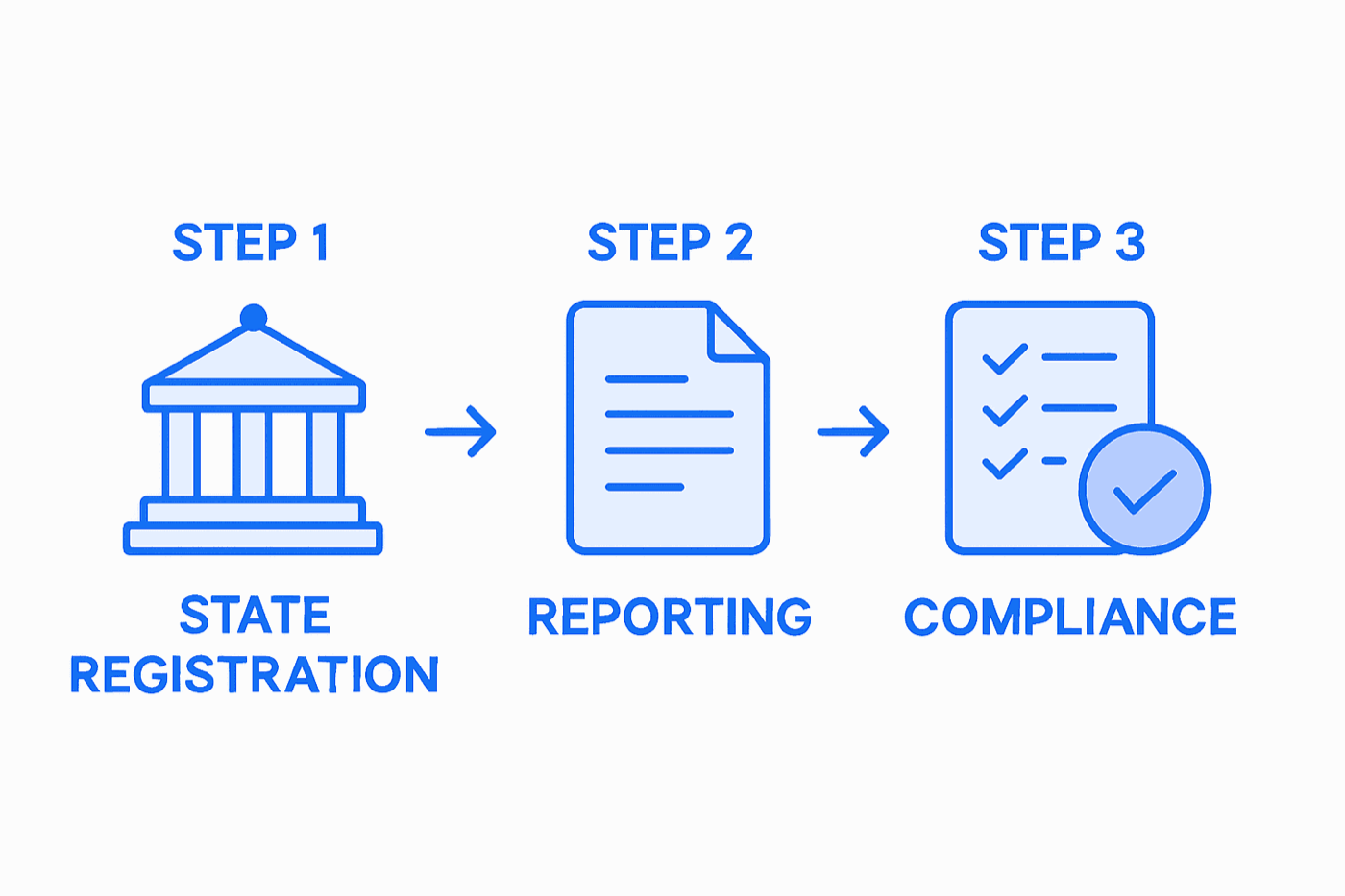
State-Level Registration represents the first critical step for cannabis enterprises, with each state maintaining unique licensing requirements and regulatory frameworks. Businesses must secure multiple permits, including commercial cultivation, manufacturing, distribution, and retail sales licenses. These registrations typically involve extensive background checks, substantial financial documentation, security protocols, and demonstrated compliance with local zoning regulations. The application processes are often competitive and require significant upfront investments in legal and administrative preparation.
Reporting obligations extend far beyond initial registration, demanding quarterly and annual financial disclosures, tax submissions, inventory tracking, and comprehensive compliance documentation. Cannabis businesses must implement robust tracking systems that monitor product movement, sales volumes, tax collections, and detailed financial transactions. These reporting requirements are designed to ensure transparency, prevent diversion, and maintain strict regulatory oversight of the emerging cannabis market.
Key Compliance Considerations:
- Complete all required state and local registrations
- Maintain accurate and comprehensive financial records
- Implement advanced seed-to-sale tracking systems
- Stay current with changing regulatory requirements
- Develop proactive compliance management strategies
Pro Tip for Regulatory Compliance: Create a dedicated compliance management team or hire a specialized cannabis compliance consultant who can continuously monitor regulatory changes and ensure your business remains fully aligned with evolving state and federal requirements.
Tax Risks, Penalties, and Common Compliance Mistakes
Navigating the cannabis industry’s tax landscape requires understanding the significant financial risks and potential penalties associated with non-compliance. Federal tax challenges for marijuana-related businesses present a minefield of potential legal and financial consequences that can devastate unprepared cannabis enterprises.
Taxation Penalties represent one of the most critical risks for cannabis businesses. Non-compliance with Section 280E can trigger severe financial penalties, including substantial back taxes, interest charges, and potential criminal investigations. The Internal Revenue Service (IRS) takes an exceptionally strict approach to cannabis businesses, with penalties that can range from 20% to 75% of unpaid taxes, depending on the nature of the violation. Common mistakes include improper expense categorization, incomplete record-keeping, and failure to distinguish between allowable cost of goods sold and non-deductible operational expenses.
The most frequent compliance errors often stem from misunderstanding the nuanced requirements of federal tax regulations. Many cannabis businesses incorrectly attempt to deduct standard business expenses, failing to recognize the strict limitations imposed by Section 280E. This can result in significant tax assessments, penalties, and potentially lengthy and expensive audits. Businesses must develop sophisticated accounting practices that meticulously track and categorize expenses, ensuring strict adherence to federal guidelines while maximizing allowable deductions.
Key Compliance Risk Areas:
- Improper expense categorization
- Incomplete financial record-keeping
- Misunderstanding Section 280E limitations
- Failing to track cost of goods sold accurately
- Overlooking state and federal tax reporting requirements
Pro Tip for Avoiding Tax Risks: Invest in a specialized cannabis accounting professional who understands the unique tax challenges of the industry and can develop a comprehensive compliance strategy that minimizes potential penalties and maximizes financial efficiency.
Frequently Asked Questions
What is Section 280E and how does it affect cannabis businesses?
Section 280E is an Internal Revenue Code provision that prohibits cannabis businesses from deducting standard business expenses, forcing them to pay taxes on gross income rather than net income, which increases their overall tax burden.
How can cannabis businesses minimize their tax liability under IRC 471?
Cannabis businesses can reduce their tax liability by accurately documenting and allocating their Cost of Goods Sold (COGS), which includes production and inventory-related expenses that can be deducted from taxable income.
What are the different types of business structures available for cannabis entities?
Cannabis businesses can be structured as C-Corporations, S-Corporations, Partnerships, or Limited Liability Companies (LLCs). Each structure has unique tax implications and liability protections, impacting overall tax strategy.
What common compliance mistakes do cannabis businesses make regarding taxes?
Common mistakes include improper expense categorization, incomplete record-keeping, and misunderstanding the limitations of Section 280E, which can lead to significant tax assessments and penalties.
Recommended
- What Is Tax Compliance for Cannabis Businesses – Cannabis Business Minds
- Why Tax Compliance Matters: Complete Cannabis Guide – Cannabis Business Minds
- Role of Tax Strategy in Cannabis Profitability – Cannabis Business Minds
- Cannabis Business Tax Filings Explained: U.S. Compliance Guide – Cannabis Business Minds
This article is general education, not tax, legal or accounting advice. Cannabis rules change quickly; confirm how they apply to you with a qualified cannabis CPA or attorney.