Cannabis Chart Audit: Ensuring Compliance and Accuracy

2026 update: what rescheduling changed for 280E (reviewed October 2026)
Effective April 22, 2026, a DOJ/DEA final order moved marijuana covered by a qualifying state medical license (and FDA-approved marijuana drugs) to Schedule III. Section 280E only applies to Schedule I and II substances, so state-licensed medical cannabis activity is generally no longer subject to 280E going forward. Adult-use cannabis remains in Schedule I and fully subject to 280E. The DEA proceeding to reschedule all marijuana was temporarily stayed in October 2026, and Treasury/IRS guidance on transition years and mixed medical/adult-use businesses is still pending.
This article was written before the order took effect. Check where your business stands in about a minute.
Many American cannabis businesses face intense scrutiny as they navigate some of the strictest compliance standards in any industry. With regulations changing rapidly at both state and federal levels, even a single mistake can put licenses and livelihoods at risk. A cannabis chart audit goes far beyond typical accounting, requiring specialized attention to every detail. This guide explains how smart preparation empowers businesses to safeguard their operations and avoid costly errors.
Key Takeaways
| Point | Details |
|---|---|
| Importance of Compliance | Cannabis businesses must prioritize regulatory compliance to avoid penalties and operational shutdowns. |
| Comprehensive Audit Framework | Utilize multiple types of audits, including compliance, financial, and operational, to create a robust risk management strategy. |
| Documentation Readiness | Maintain organized and accurate records to ensure audit readiness and facilitate compliance with stringent regulations. |
| Financial Strategy Development | Develop a financial resilience strategy that anticipates regulatory changes and minimizes tax liabilities, ensuring operational sustainability. |
Defining a Cannabis Chart Audit Process
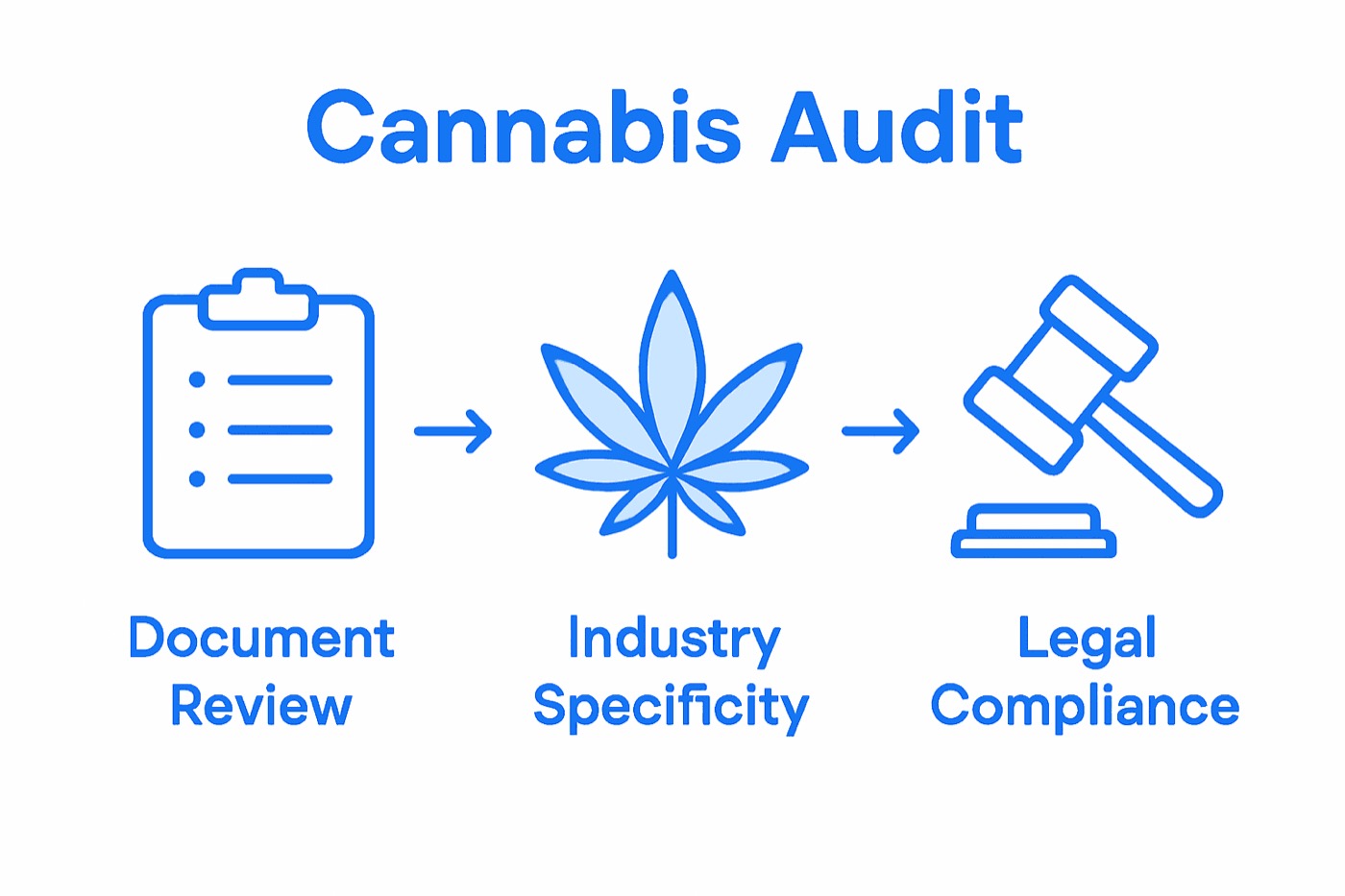
A cannabis chart audit represents a systematic review and verification of financial, operational, and compliance documentation specific to cannabis businesses. This comprehensive process goes beyond traditional accounting practices, requiring specialized knowledge of both financial recordkeeping and cannabis industry regulations.
The audit process typically involves multiple critical components, starting with gathering and organizing all relevant financial records, compliance documentation, and operational logs. Cannabis industry audits utilize specialized frameworks that emphasize safety, regulatory adherence, and operational transparency. These frameworks help businesses identify potential compliance risks, financial discrepancies, and areas requiring operational improvement.
Effective cannabis chart audits generally include several key stages:
- Preliminary document collection and organization
- Comprehensive financial record review
- Cross-verification of compliance documentation
- Detailed transaction traceability assessment
- Identification of potential regulatory vulnerabilities
- Recommendation generation for process improvements
Regulatory compliance remains the central focus of these audits, with particular attention paid to tracking product movement, financial transactions, and adherence to state and federal guidelines. Businesses must maintain meticulous records that can withstand intense scrutiny from regulatory agencies.
Pro Tip: Documentation Readiness: Maintain a dedicated digital filing system with real-time updates and comprehensive backup protocols to ensure your cannabis business is always audit-ready and can quickly produce requested documentation.
Key Documentation Requirements:
- Sales records
- Inventory tracking logs
- Tax documentation
- Compliance certification records
- Product transfer documentation
- Financial statements
The audit process demands precision, with even minor documentation errors potentially resulting in significant regulatory penalties. Cannabis businesses must treat their chart audits as critical risk management strategies that protect operational integrity and financial sustainability.
Types of Chart Audits in Cannabis
Cannabis chart audits represent specialized evaluation processes designed to ensure comprehensive compliance and operational integrity across different business dimensions. Cannabis industry audits encompass multiple specialized frameworks that systematically assess various aspects of organizational performance and regulatory adherence.
The primary types of cannabis chart audits include:
- Compliance Audits
- Focus on verifying adherence to state and federal regulations
- Examine licensing requirements
- Review product tracking and reporting standards
- Assess regulatory documentation accuracy
- Financial Audits
- Analyze transaction records
- Verify accounting accuracy
- Ensure tax reporting precision
- Validate revenue and expense documentation
- Operational Audits
- Evaluate business processes and workflow efficiency
- Review inventory management systems
- Assess quality control procedures
- Examine safety and security protocols
- Safety and Quality Audits
- Inspect product safety standards
- Review cultivation and processing environments
- Validate laboratory testing procedures
- Ensure consumer protection measures
- Performance Audits
- Measure organizational effectiveness
- Analyze key performance indicators
- Compare operational metrics against industry benchmarks
- Identify potential areas of improvement
Each audit type serves a distinct purpose in maintaining the cannabis business’s overall health, with significant overlap in documentation and assessment methodologies. Successful cannabis businesses integrate multiple audit approaches to create comprehensive risk management strategies.
Here’s a comparison of cannabis chart audit types and their primary business benefits:
| Audit Type | Main Objective | Key Business Benefit |
|---|---|---|
| Compliance Audit | Verify regulatory adherence | Reduces risk of fines or shutdown |
| Financial Audit | Ensure financial accuracy | Improves tax reporting reliability |
| Operational Audit | Assess workflow efficiency | Increases productivity and control |
| Safety & Quality Audit | Confirm product and process safety | Enhances consumer trust and safety |
| Performance Audit | Measure organizational outcomes | Supports growth and improvement |
Pro Tip: Audit Integration: Develop a holistic audit strategy that combines multiple audit types, creating a robust framework for continuous improvement and regulatory compliance.
Key Compliance Standards and Legal Codes
Navigating the complex regulatory landscape of the cannabis industry requires understanding critical compliance standards and legal codes that govern business operations. Technical standards developed by ASTM International play a crucial role in establishing industry-wide protocols for quality, safety, and operational consistency.
Key legal and regulatory frameworks essential for cannabis businesses include:
- Federal Regulatory Codes
- Internal Revenue Code Section 280E
- Controlled Substances Act
- Bank Secrecy Act requirements
- Anti-Money Laundering regulations
- State-Level Compliance Standards
- Individual state cannabis licensing regulations
- Product testing requirements
- Tracking and reporting mandates
- Local taxation guidelines
- Industry Technical Standards
- ASTM International Committee D37 guidelines
- Cannabis product labeling standards for consumer safety
- Quality management protocols
- Laboratory testing procedures
- Financial Compliance Requirements
- Seed-to-sale tracking systems
- Comprehensive financial reporting
- Tax documentation standards
- Audit trail maintenance protocols
- Product Safety Regulations
- Cannabinoid content verification
- Contaminant testing protocols
- Packaging and transportation guidelines
- Consumer protection standards
Successful cannabis businesses must develop robust compliance strategies that integrate these multifaceted regulatory requirements, ensuring comprehensive adherence to both federal and state-level guidelines.
This summary table highlights major cannabis compliance codes and why they matter:
| Regulatory Code or Standard | Governed Aspect | Business Importance |
|---|---|---|
| IRS 280E | Federal cannabis taxation | Determines allowable deductions |
| State Licensing Rules | Business operations | Ensures license validity |
| ASTM D37/Labeling Standards | Product safety/labeling | Protects consumers, builds trust |
| Bank Secrecy Act | Financial transactions | Prevents money laundering |
| Seed-to-Sale Tracking | Inventory management | Maintains compliance record |
Pro Tip: Regulatory Preparation: Invest in specialized compliance management software and maintain ongoing relationships with legal and regulatory experts to stay current with evolving cannabis industry standards.
Common Audit Challenges and Misconceptions
Cannabis chart audits present unique challenges that can overwhelm even experienced business professionals. Understanding audit processes in cannabis operations requires dispelling common misconceptions and recognizing the complex regulatory landscape.
Key Audit Challenges:
- Documentation Complexity
- Inconsistent record-keeping
- Fragmented tracking systems
- Incomplete transaction documentation
- Multiple regulatory reporting requirements
- Regulatory Compliance Misconceptions
- Believing state laws override federal regulations
- Underestimating the importance of comprehensive documentation
- Assuming minimal reporting requirements
- Overlooking cross-jurisdictional compliance needs
- Financial Reporting Pitfalls
- Misunderstanding Section 280E tax implications
- Inadequate expense categorization
- Poor financial record integration
- Inconsistent accounting methodologies
- Technological Limitations
- Outdated tracking systems
- Insufficient data management infrastructure
- Limited integration between operational platforms
- Manual record maintenance
- Risk Management Errors
- Incomplete risk assessment protocols
- Inadequate internal control mechanisms
- Insufficient audit trail maintenance
- Lack of proactive compliance strategies
Successful cannabis businesses must develop sophisticated audit strategies that anticipate and address these complex challenges, creating robust systems that demonstrate transparency and regulatory adherence.
Pro Tip: Strategic Preparation: Develop a comprehensive audit readiness checklist that systematically addresses potential documentation gaps and anticipates regulatory scrutiny before an actual audit occurs.
Financial Impact and Risk Mitigation Strategies
Financial sustainability in the cannabis industry requires proactive risk management and strategic planning. Comprehensive financial control strategies are crucial for navigating the complex regulatory landscape and protecting business assets.
Financial Risk Categories:
- Regulatory Compliance Risks
- Penalties for non-compliance
- Potential license revocation
- Substantial financial fines
- Increased operational scrutiny
- Tax Exposure Risks
- Section 280E federal tax restrictions
- Limited tax deduction opportunities
- Complex tax reporting requirements
- Higher effective tax rates
- Operational Financial Risks
- Banking and payment processing challenges
- Limited access to traditional financial services
- Cash management complexities
- Higher transaction costs
- Investment and Capital Risks
- Limited institutional investment options
- Higher capital acquisition costs
- Increased investor due diligence
- Volatile market conditions
- Compliance Cost Management
- Ongoing audit preparation expenses
- Technology infrastructure investments
- Specialized compliance personnel costs
- Continuous training and development requirements
Successful cannabis businesses must develop sophisticated financial strategies that anticipate regulatory changes, minimize tax liabilities, and create robust risk management frameworks.
Pro Tip: Financial Resilience: Maintain a minimum cash reserve of 6-12 months of operational expenses and develop a flexible financial strategy that can quickly adapt to changing regulatory environments.
Frequently Asked Questions
What is a cannabis chart audit?
A cannabis chart audit is a systematic review and verification process that ensures the accuracy of financial, operational, and compliance documentation specific to cannabis businesses, focusing on adherence to industry regulations.
Why are compliance audits essential for cannabis businesses?
Compliance audits are crucial as they verify that a cannabis business adheres to state and federal regulations, reducing the risk of fines, penalties, or shutdowns due to non-compliance.
What documentation is typically required for a cannabis chart audit?
Key documentation for a cannabis chart audit includes sales records, inventory tracking logs, tax documentation, compliance certification records, product transfer documents, and financial statements.
What challenges do cannabis businesses face during audits?
Cannabis businesses often encounter challenges such as documentation complexity, misconceptions about regulatory compliance, financial reporting pitfalls, technological limitations, and insufficient risk management strategies.
Recommended
- Cannabis Audit Trail Explained: Compliance Essentials – Cannabis Business Minds
- Cannabis Financial Reporting Guide for Full Compliance Success – Cannabis Business Minds
- Cannabis Audit Trails: Ensuring Compliance in U.S. Operations – Cannabis Business Minds
- Role of Audits in Cannabis: Complete Industry Guide – Cannabis Business Minds
- 7 Steps to Create an Effective Invasive Plant Checklist
This article is general education, not tax, legal or accounting advice. Cannabis rules change quickly; confirm how they apply to you with a qualified cannabis CPA or attorney.