Master the Cannabis Banking Workflow for Compliance Success
More than 90 percent of American banks shy away from cannabis businesses, leaving many entrepreneurs scrambling for reliable financial services. With changing regulations and increasing oversight, securing compliant banking has become the linchpin of success for any legal cannabis enterprise. This guide breaks down the essential steps that separate thriving companies from those facing costly setbacks, delivering clear direction to help your American business meet every requirement with confidence.
Quick Summary
| Key Insight | Explanation |
|---|---|
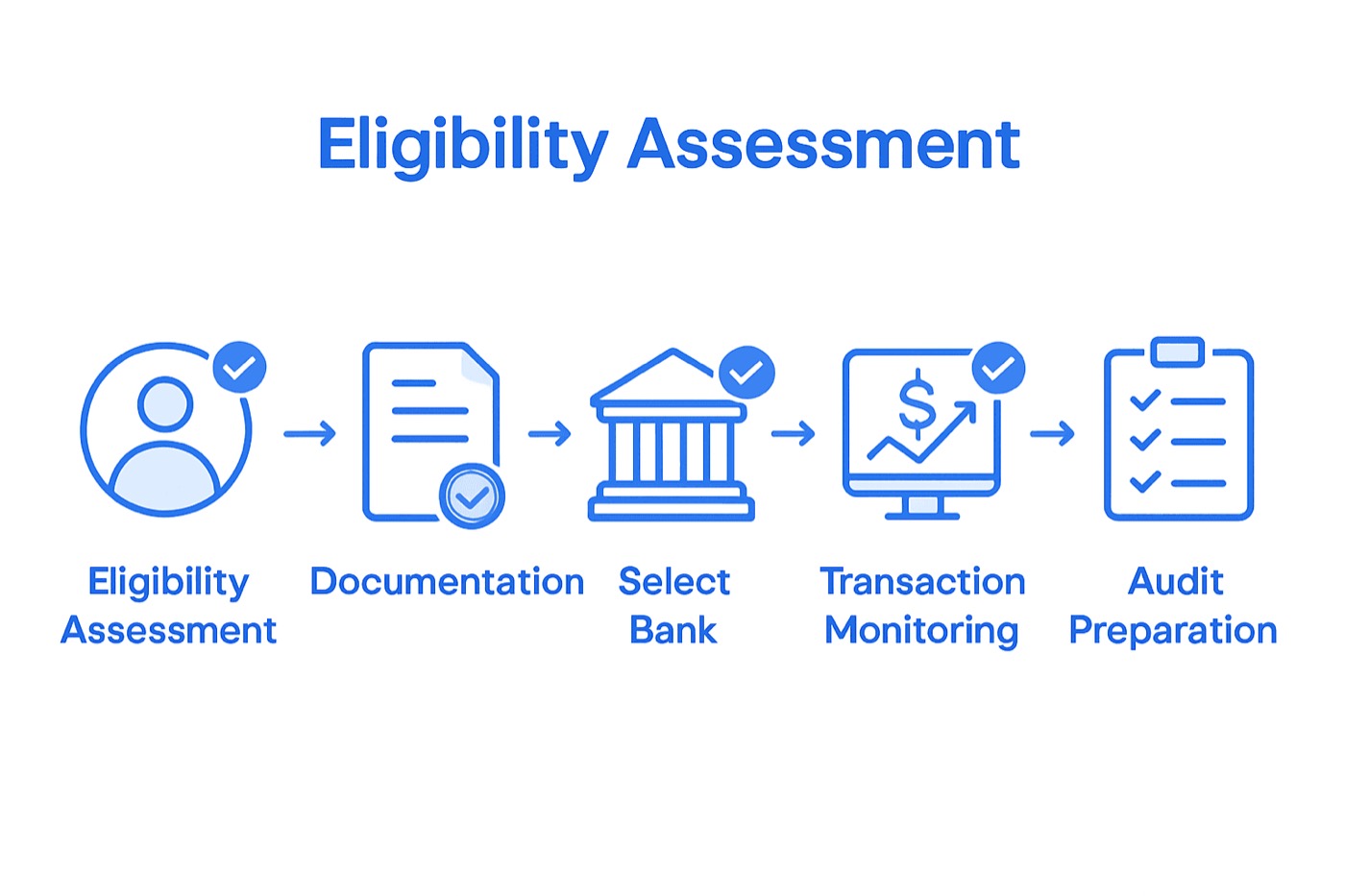
| 1. Assess State Compliance | Confirm your cannabis business meets state legal requirements for banking eligibility. Documentation is key. |
| 2. Maintain Strong Records | Develop an organized documentation system to capture all financial transactions and compliance data effectively. |
| 3. Choose Informed Banking Partners | Select banks experienced with cannabis compliance that understand the unique regulations affecting your business. |
| 4. Implement Monitoring Procedures | Establish a robust transaction monitoring system to ensure ongoing regulatory compliance and quickly identify discrepancies. |
| 5. Prepare for Regulatory Audits | Organize your financial records and create a dedicated compliance team to respond to audits and inquiries efficiently. |
Step 1: Assess Eligibility for Cannabis Banking Services
Successfully navigating cannabis banking services starts with a comprehensive eligibility assessment. Understanding the complex legal landscape will help you determine whether your cannabis business can secure essential financial services.
Begin by thoroughly examining your state level cannabis authorization and compliance status. Financial institutions must carefully evaluate businesses due to the ongoing federal legal complexities. The American Bankers Association highlights critical legal considerations that banks must navigate when serving cannabis related enterprises. This means your business must demonstrate impeccable documentation proving state licensing, operational transparency, and strict adherence to local regulatory requirements.
Next, prepare comprehensive documentation showcasing your business’s financial integrity. Banks will require detailed records including tax returns, business registration documents, ownership verification, and a clear audit trail of your revenue sources. The Congressional Research Service underscores the necessity of comprehensive reporting, noting that financial institutions must file Suspicious Activity Reports and comply with stringent anti money laundering protocols. Your ability to provide clean, transparent financial documentation significantly increases your chances of securing banking services.
Pro tip: Create a dedicated compliance portfolio that includes all required documentation organized chronologically. Having a meticulously prepared file demonstrates professionalism and reduces potential red flags during the banking review process.
Step 2: Establish Robust Documentation and Record-Keeping
Establishing rock solid documentation represents the critical backbone of cannabis business financial compliance. Your goal is creating an ironclad record keeping system that withstands intense regulatory scrutiny and protects your business operations.
The Journal of Cannabis Research emphasizes comprehensive accounting records as fundamental for regulatory compliance. You must develop systematic documentation protocols that capture every financial transaction with meticulous precision. This means creating standardized templates for tracking sales, expenses, inventory movements, tax calculations, and personnel interactions. Focus on developing digital and physical documentation systems that provide multiple layers of verification and traceability.
Prepare for rigorous financial oversight by implementing a multi tiered documentation strategy. The Cannabis Financial Industry Group recommends maintaining comprehensive records that demonstrate complete financial transparency. This includes maintaining detailed ledgers, preserving original transaction receipts, implementing robust digital backup systems, and creating clear audit trails for every financial interaction. Invest in professional accounting software specifically designed for cannabis businesses that can generate compliant financial reports and maintain secure digital records.
Pro tip: Design a consistent document naming convention that includes date, transaction type, and unique identifier. This simple strategy dramatically improves document retrieval and demonstrates organizational excellence during potential financial reviews.
Here is a summary of key documentation types and their business impact for cannabis banking success:
| Documentation Type | Purpose | Business Impact |
|---|---|---|
| State Licensing Records | Proves legal compliance | Enables bank account eligibility |
| Financial Statements | Shows revenue integrity | Builds lender and regulator trust |
| Tax Returns | Confirms tax compliance history | Reduces audit and penalty risks |
| Transaction Receipts | Tracks individual sales and purchases | Aids in tracing all revenue sources |
| Inventory Logs | Verifies product flow | Helps prevent diversion |
Step 3: Select and Onboard Compliant Banking Partners
Choosing the right banking partner represents a critical strategic decision for your cannabis business. Your objective is to identify a financial institution that understands the unique regulatory landscape and can provide robust support for your specialized industry needs.
The Cannabis Financial Industry Group offers comprehensive guidance on selecting appropriate financial institutions. When evaluating potential banking partners, conduct an exhaustive due diligence process that goes beyond traditional selection criteria. Look for financial institutions with demonstrable experience in cannabis related banking, proven compliance infrastructure, and a clear understanding of state and federal regulatory requirements. Request detailed information about their risk management protocols, compliance training programs, and specific cannabis industry banking frameworks.
Prepare a comprehensive evaluation matrix that assesses potential banking partners across multiple dimensions. The ABA Banking Journal highlights the critical importance of thorough onboarding procedures that mitigate potential regulatory risks. This means examining each institution financial capabilities specialized reporting mechanisms secure transaction platforms and their proven track record of supporting cannabis businesses. Request references from other cannabis businesses they currently serve and verify their commitment to maintaining transparent banking relationships.
Pro tip: Schedule in person meetings with potential banking partners compliance officers to directly assess their understanding of cannabis industry specific financial challenges. This personal interaction can reveal nuanced insights that written documentation might not capture.
The following table compares critical factors when choosing a banking partner for a cannabis business:
| Factor | Why It Matters | What To Look For |
|---|---|---|
| Cannabis Experience | Navigates industry-specific laws | Multiple cannabis clients served |
| Compliance Programs | Ensures regulatory requirements met | Robust reporting and protocols |
| Risk Management | Protects against financial penalties | Regular audits and fraud controls |
| Digital Capabilities | Enables transparent, secure banking | Online access and transaction tools |
Step 4: Implement Ongoing Transaction Monitoring Procedures
Transaction monitoring represents the critical defense line for maintaining banking compliance in your cannabis business. Your primary objective is creating a systematic approach that tracks every financial interaction with precision and regulatory alignment.
Advanced technological solutions are transforming how banks monitor cannabis business transactions, enabling unprecedented levels of financial oversight. Develop a comprehensive monitoring framework that includes real time transaction tracking automated reporting mechanisms and comprehensive documentation protocols. This means implementing software systems capable of flagging suspicious activities generating detailed audit trails and providing instant transparency into every financial movement within your business.
Establish multiple layers of transaction verification that go beyond basic financial tracking. Create a robust internal review process where transactions are cross checked against multiple compliance indicators including licensing verification vendor validation and strict adherence to state regulatory requirements. Designate specific team members responsible for daily transaction reviews and implement a structured escalation protocol for any potential anomalies or irregular financial patterns that emerge during monitoring.
Pro tip: Configure automated alert systems that immediately notify your compliance team of any transaction exceeding predefined thresholds or displaying unusual characteristics. This proactive approach can help you address potential issues before they become significant regulatory concerns.
Step 5: Verify Compliance and Prepare for Regulatory Audits
Auditing represents the ultimate test of your cannabis banking workflow and operational integrity. Your mission is to create a bulletproof compliance strategy that demonstrates complete transparency and meticulous financial management.
Congressional hearings highlight the complex challenges facing cannabis businesses during regulatory reviews. Develop a comprehensive audit preparation strategy that goes beyond basic documentation. This means creating a systematic approach that anticipates potential regulatory scrutiny by proactively organizing financial records implementing robust internal control mechanisms and establishing clear audit trails for every financial transaction.
Establish a multi tiered verification process that demonstrates your commitment to regulatory compliance. The cannabis banking landscape in 2024 emphasizes the critical importance of thorough financial documentation. Conduct internal mock audits quarterly to identify potential compliance gaps create comprehensive review protocols and ensure your team is fully trained in responding to potential regulatory inquiries. Develop a centralized compliance dashboard that provides real time insights into your financial operations and maintains a constant state of audit readiness.
Pro tip: Create a dedicated compliance response team with clearly defined roles and a preapproved communication protocol for handling regulatory inquiries. Designate specific team members who can immediately respond to audit requests with confidence and precision.
Frequently Asked Questions
How can I assess my cannabis business’s eligibility for banking services?
To assess your eligibility for cannabis banking services, start by reviewing your state-level cannabis authorization and compliance status. Gather required documentation such as state licensing records and financial statements to demonstrate legal compliance and transparency in operations.
What types of documentation are essential for securing cannabis banking services?
Essential documentation includes state licensing records, financial statements, tax returns, transaction receipts, and inventory logs. Organize these documents systematically to present a clear picture of your financial integrity and compliance status during the banking review process.
What should I consider when selecting a banking partner for my cannabis business?
When choosing a banking partner, look for institutions with proven experience in cannabis banking and robust compliance programs. Evaluate their risk management capabilities and ensure they have a track record of supporting cannabis businesses effectively.
How can I ensure ongoing compliance monitoring for my cannabis transactions?
Implement a comprehensive transaction monitoring framework that tracks every financial interaction and flags suspicious activities. Designate team members to review transactions daily and set up automated alert systems for any discrepancies to maintain compliance with regulations.
What steps should I take to prepare for a regulatory audit in my cannabis business?
To prepare for a regulatory audit, develop a thorough audit preparation strategy that includes organizing financial records and implementing internal control mechanisms. Conduct mock audits regularly to identify compliance gaps and keep your team trained for responding to regulatory inquiries confidently.
Recommended
- How to Streamline Dispensary Bookkeeping for Compliance – Cannabis Business Minds
- 7 Essential Cannabis Dispensary Compliance Tips for Success – Cannabis Business Minds
- Master Cannabis Accounting Best Practices for 2025 Success – Cannabis Business Minds
- Cannabis Financial Reporting Guide for Full Compliance Success – Cannabis Business Minds
This article is general education, not tax, legal or accounting advice. Cannabis rules change quickly; confirm how they apply to you with a qualified cannabis CPA or attorney.