How to Streamline Dispensary Bookkeeping for Compliance

2026 update: what rescheduling changed for 280E (reviewed October 2026)
Effective April 22, 2026, a DOJ/DEA final order moved marijuana covered by a qualifying state medical license (and FDA-approved marijuana drugs) to Schedule III. Section 280E only applies to Schedule I and II substances, so state-licensed medical cannabis activity is generally no longer subject to 280E going forward. Adult-use cannabis remains in Schedule I and fully subject to 280E. The DEA proceeding to reschedule all marijuana was temporarily stayed in October 2026, and Treasury/IRS guidance on transition years and mixed medical/adult-use businesses is still pending.
This article was written before the order took effect. Check where your business stands in about a minute.
Did you know that over 70 percent of cannabis dispensaries face financial penalties due to bookkeeping mistakes? Staying compliant with strict regulations is not just about avoiding fines, it also protects your company’s reputation and growth potential. By reviewing and refining how you handle every transaction, you can prevent costly errors and build a trustworthy financial system right from the start.
Quick Summary
| Key Point | Explanation |
|---|---|
| 1. Review and map workflows | Assess current bookkeeping processes to identify weaknesses and improve financial management accuracy. |
| 2. Implement cannabis-specific systems | Use accounting platforms designed for the cannabis industry to ensure regulatory compliance and effective financial tracking. |
| 3. Establish strict record-keeping protocols | Create comprehensive document retention strategies to organize financial records for easy retrieval and audit readiness. |
| 4. Automate data entry processes | Utilize technology to minimize human error and streamline financial data management, ensuring more accurate records. |
| 5. Conduct regular financial reviews | Monthly reviews of financial statements and inventory help maintain accuracy and prepare for potential audits. |
Step 1: Assess current bookkeeping workflows
Reviewing your dispensary’s current bookkeeping workflows is the crucial first step in creating a compliant financial management system. This process helps you identify potential vulnerabilities and establish a rock-solid foundation for accurate record keeping.
Start by gathering all your existing financial documents including cash transaction logs, point of sale (POS) reports, general ledger entries, and bank statements. According to research from Understanding IRC 471: A Comprehensive Guide, cannabis businesses must pay special attention to how expenses are categorized due to strict IRS regulations like Section 280E.
Take a systematic approach by mapping out your current cash handling procedures. As research indicates, common bookkeeping errors often stem from infrequent cash counts and misapplied accounts receivable. Create a detailed workflow chart that tracks every financial transaction from initial sale to final recording.
Here’s a summary of key bookkeeping workflow components and best practices:
| Component | What to Review | Best Practice Recommendation |
|---|---|---|
| Cash Handling Procedures | Cash counts Transaction logs |
Count cash weekly Reconcile daily |
| Expense Categorization | COGS vs. operating expenses | Separate categories clearly |
| Systems Integration | POS Seed-to-sale Accounting |
Ensure seamless data transfer |
| Record Retention | Documentation storage | Digital + physical backups Access control |
| Reconciliation Schedule | Frequency of audits/reviews | Weekly cash Monthly financial reviews |
Pro Tip: Schedule weekly reconciliation sessions to compare physical cash against digital records. This proactive approach prevents discrepancies from accumulating.
Pay particular attention to how you’re currently separating cost of goods sold (COGS) from operating expenses. The IRS requires precise allocation, and mixing these categories can trigger audits or significant tax penalties. Examine your chart of accounts to ensure clear, distinct categorization of each expense type.
Finally, review how your current systems integrate. Your POS system, seed-to-sale tracking, and accounting software should communicate seamlessly.
Any manual data transfer points represent potential error risks that need immediate attention.
In the next step, you’ll use these workflow insights to design a more streamlined and compliant bookkeeping system.
Step 2: Implement cannabis-specific accounting systems
Implementing a robust accounting system tailored specifically to cannabis businesses is your next critical step in achieving financial compliance. This process goes beyond traditional bookkeeping to address the unique regulatory challenges of the cannabis industry.
Start by selecting an accounting platform that understands the intricacies of cannabis accounting. Your system must be capable of handling complex requirements like precise cost of goods sold (COGS) allocation and tracking inventory through state mandated seed-to-sale platforms.
According to research, states require integration with tracking systems like METRC or BioTrack. This means your accounting software must seamlessly connect with these regulatory platforms to ensure real-time inventory reconciliation and financial transparency.
Pro Tip: Choose an accounting system that provides detailed reporting capabilities specifically designed for cannabis businesses to support potential IRS audits.
Create a comprehensive chart of accounts that specifically separates operational expenses from COGS. This nuanced approach is crucial given the strict IRS Section 280E regulations that limit deductions for cannabis businesses. Your accounting system should allow granular expense categorization to maximize allowable cost allocations.
Ensure your new system can generate reports that demonstrate clear segregation of expenses documentation of inventory costs and precise financial tracking. This level of detail becomes your defensive documentation during potential tax reviews.
In the next step, you will develop strategies to maintain ongoing compliance and financial accuracy.
Step 3: Establish compliant record-keeping protocols
Establishing robust record-keeping protocols is the foundation of financial compliance for your cannabis dispensary. These protocols will protect your business from potential regulatory scrutiny and create a transparent financial infrastructure.
Begin by developing a comprehensive document retention strategy that goes beyond standard business practices. In the cannabis industry, your records are not just financial documents they are your primary defense against potential audits. Every transaction receipt inventory log and financial statement must be meticulously organized and easily retrievable.
Create a standardized digital filing system with clear naming conventions and folder structures. Each document should be scanned and saved in multiple secure locations a physical backup and at least two digital backups. Dispensary Accounting Made Easy recommends maintaining digital copies with multiple layers of encryption and access controls.
Pro Tip: Implement a quarterly document audit process where you review and validate the completeness and accuracy of your record-keeping system.
Establish strict protocols for how financial documents are handled tracked and stored. This means creating clear guidelines for staff about document management including who can access financial records how long records are kept and the exact process for logging and filing each type of document.
Develop a consistent reconciliation schedule that matches your business needs. This might include daily cash reconciliation weekly inventory verification and monthly comprehensive financial reviews. Consistency is key in creating an audit-ready documentation system.
In the next step, you will learn how to train your team to maintain these rigorous record-keeping standards.
Step 4: Integrate automated data entry solutions
Automating your data entry processes transforms how your cannabis dispensary manages financial information reducing human error and creating a more reliable record-keeping system. By leveraging technology you can dramatically improve the accuracy and efficiency of your financial tracking.
Begin by evaluating your current point of sale (POS) systems and seed-to-sale tracking platforms. According to research, systems like Flowhub and Greenbits can seamlessly integrate with accounting software to ensure consistent sales and financial records. Your goal is to create a unified digital ecosystem that communicates automatically.
Select accounting software that offers direct integration capabilities with your existing cannabis industry platforms. Cannabis Accounting requires specialized solutions that understand the unique regulatory landscape of cannabis financial management.
Pro Tip: Choose solutions that provide daily reconciliation features to catch financial discrepancies immediately.
Implement automated templates specifically designed for cannabis businesses. These tools can generate 280E worksheets cash flow statements and inventory reconciliation reports with minimal manual intervention. Automated systems reduce the risk of human error and create a more reliable audit trail.
Ensure your team is trained on these new automated systems. While technology streamlines processes human oversight remains critical. Schedule regular check-ins to verify the accuracy of automated data transfers and address any integration challenges.
In the next step, you will learn how to develop ongoing compliance monitoring strategies to maintain your financial integrity.
Step 5: Verify accuracy and audit readiness
Verifying the accuracy of your financial records and maintaining comprehensive audit readiness is the critical final step in streamlining your dispensary’s bookkeeping processes. This stage transforms your financial documentation from mere record keeping to a strategic defense mechanism against potential regulatory scrutiny.
Begin by conducting monthly comprehensive financial reviews. According to research, these reviews should include detailed profit and loss statements, balance sheets, cash flow reports, and comprehensive inventory tracking documentation. Cannabis Tax experts recommend creating a systematic approach to financial documentation that goes beyond basic compliance.
Implement a rigorous internal control system specifically designed for cash-intensive cannabis businesses. This means establishing clear protocols for cash handling reconciliation and tracking that create multiple layers of verification and accountability.
Pro Tip: Maintain digital and physical copies of all financial records with redundant backup systems to ensure nothing gets lost during potential audit processes.
Prepare documentation that specifically addresses IRS requirements for cannabis businesses. This includes meticulously structured cost of goods sold (COGS) allocation worksheets detailed labor allocation records and comprehensive tax payment documentation. Your goal is to create financial records so organized and transparent that they become your strongest asset during any regulatory review.
Consider utilizing cloud-based financial tools that provide robust tracking and reporting capabilities. These platforms offer additional layers of security and make it easier to generate the precise financial statements required for licensing investor reporting and potential business expansion.
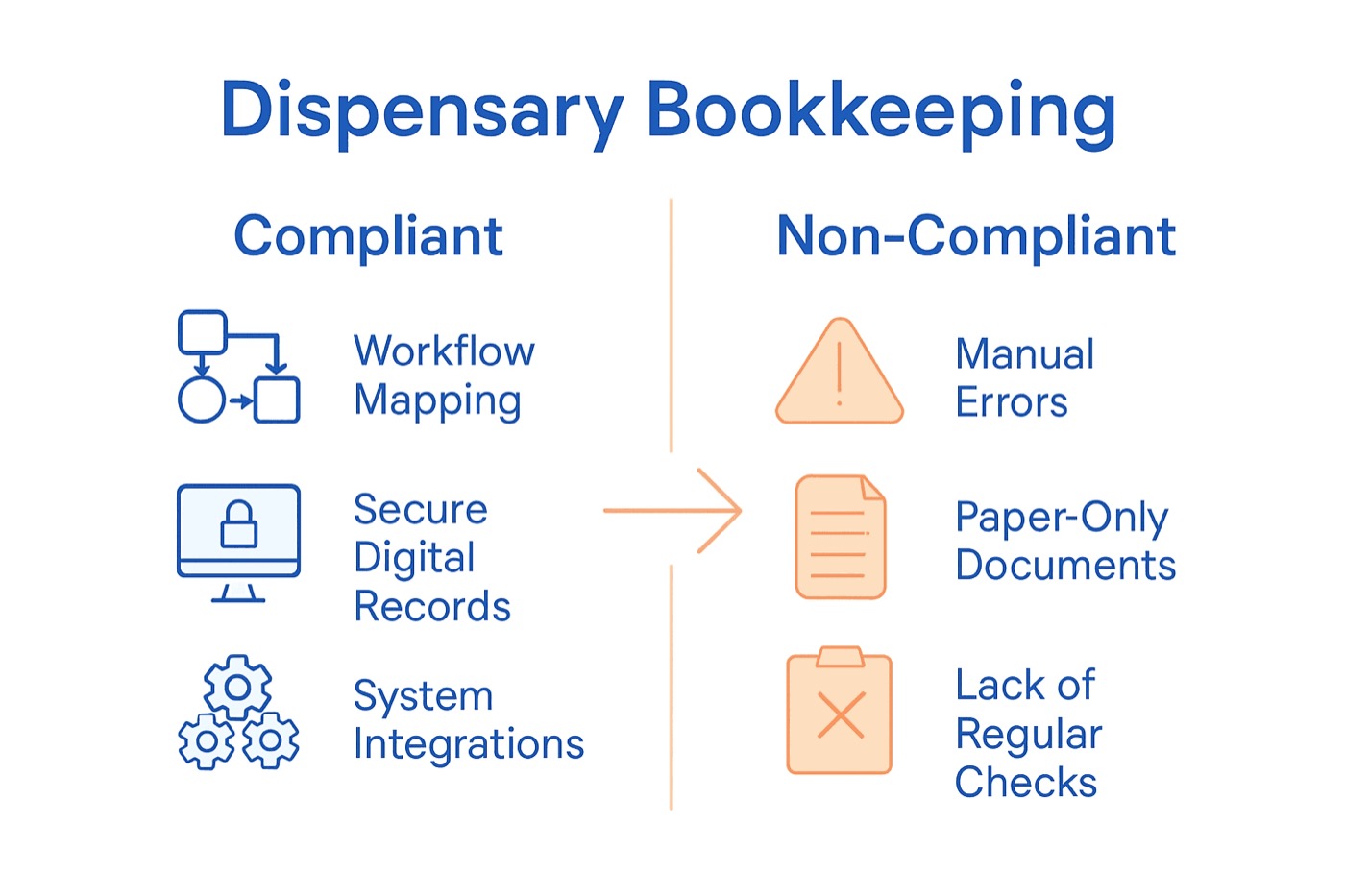
In the final step you will learn how to continuously refine and improve your bookkeeping approach to stay ahead of changing regulatory landscapes.
Frequently Asked Questions
How can I assess my dispensary’s current bookkeeping workflows?
To assess your dispensary’s current bookkeeping workflows, gather all financial documents such as cash transaction logs, POS reports, and bank statements. Create a workflow chart that details every transaction, and ensure you categorize expenses correctly, especially regarding COGS and operating expenses.
What accounting systems should I implement for cannabis-specific bookkeeping?
Implement an accounting system designed for cannabis businesses that tracks COGS and integrates with seed-to-sale tracking platforms. Select a system that allows for precise expense categorization to comply with IRS regulations and generate detailed financial reports.
How do I establish compliant record-keeping protocols for my dispensary?
Establish compliant record-keeping protocols by developing a digital filing system with clear naming conventions and multiple backup methods. Ensure all financial documents are organized, easily accessible, and subject to regular audits for completeness and accuracy.
What steps can I take to automate data entry in my dispensary’s bookkeeping?
To automate data entry, integrate your point of sale systems with your accounting software, reducing manual input and errors. Utilize automated templates to generate essential documents like cash flow statements and inventory reports, and regularly verify the accuracy of these automated processes.
How often should I conduct financial reviews to ensure audit readiness?
Conduct monthly comprehensive financial reviews to ensure your dispensary is audit-ready. Include detailed profit and loss statements and cash flow reports during these reviews to maintain accuracy and transparency in your records.
What internal controls should I implement for cash handling in my dispensary?
Implement internal controls for cash handling by creating detailed protocols for cash counts, reconciliations, and tracking. Establish multiple layers of verification to safeguard against discrepancies and ensure accountability in your cash management processes.
Recommended
- Dispensary Accounting Made Easy
- Blog – Cannabis Business Minds
- In-Store Operations: Challenges and Solutions – Omnichannel payments at the Point Of Sale | Sensepass
- Transform42 New
This article is general education, not tax, legal or accounting advice. Cannabis rules change quickly; confirm how they apply to you with a qualified cannabis CPA or attorney.