How to Budget for Dispensaries: Step-by-Step Success

2026 update: what rescheduling changed for 280E (reviewed October 2026)
Effective April 22, 2026, a DOJ/DEA final order moved marijuana covered by a qualifying state medical license (and FDA-approved marijuana drugs) to Schedule III. Section 280E only applies to Schedule I and II substances, so state-licensed medical cannabis activity is generally no longer subject to 280E going forward. Adult-use cannabis remains in Schedule I and fully subject to 280E. The DEA proceeding to reschedule all marijuana was temporarily stayed in October 2026, and Treasury/IRS guidance on transition years and mixed medical/adult-use businesses is still pending.
This article was written before the order took effect. Check where your business stands in about a minute.
Did you know that cannabis retailers often spend up to 60 percent of their revenue just on the cost of goods sold? Careful budgeting is more important than ever in an industry where compliance mistakes can put your license at risk and tight margins threaten long term stability. When you understand how to set practical financial goals and address strict legal requirements, you build the foundation for a dispensary that can survive and grow even in a rapidly changing market.
Quick Summary
| Key Point | Explanation |
|---|---|
| 1. Define clear budgeting goals | Establish specific financial objectives aligned with compliance needs for cannabis operations. |
| 2. Categorize essential expenses | Organize costs into strategic categories like compliance, security, and inventory for easier management. |
| 3. Monitor financial performance regularly | Conduct frequent analyses of budget versus actual spending to adapt to changing conditions and trends. |
| 4. Diversify revenue streams | Identify various income sources to enhance financial stability within the cannabis industry. |
| 5. Create a flexible budget | View your budget as a living document that can adjust in response to regulatory and market changes. |
Step 1: Define budgeting Goals and Compliance Needs
Budgeting for a cannabis dispensary isn’t just about numbers. It’s about creating a strategic financial roadmap that keeps your business legally compliant and financially healthy. In this crucial first step, you’ll learn how to establish clear financial goals while navigating the complex regulatory landscape of cannabis retail.
Start by breaking down your core financial categories. According to Cannabis Business Times, cannabis retailers must carefully evaluate several key expense areas:
- Cost of goods sold (typically representing 50-60% of total revenue)
- Payroll expenses (including employer taxes and onboarding costs)
- Utility and build out infrastructure costs
- Security system investments
- State specific excise taxes
- Annual license renewal expenses
Specifically for operations like those in New York, your budgeting must go deeper. As Green Growth CPAs recommends, you need to account for additional compliance related expenses such as:
- Initial application fees
- Annual licensing costs
- Security infrastructure (surveillance systems, secure vaults)
- Seed to sale tracking systems
- Working capital for ongoing operations
- Professional compliance and accounting services
Pro Tip: Think of your budget as a living document. Cannabis regulations change frequently, so build flexibility into your financial planning.
By meticulously defining these goals and understanding compliance requirements, you create a solid foundation for your dispensary’s financial success.
The next step involves translating these insights into a comprehensive financial strategy that protects your business while positioning it for growth.
Here’s a summary comparing key expense categories for cannabis dispensary budgeting:
| Expense Category | Required for Compliance | Typical Examples |
|---|---|---|
| Cost of Goods Sold | No | Product inventory Vendor payments |
| Payroll Expenses | No | Wages Employer taxes Onboarding |
| Utilities & Infrastructure | No | Electricity Renovations Store design |
| Security Systems | Yes | Surveillance Vaults Alarm systems |
| State/Local Taxes & Licensing | Yes | Excise taxes License fees Renewals |
| Compliance Tracking & Services | Yes | Seed-to-sale software Accounting support |
| Marketing & Branding | No | Advertising Signage Promotions |
| Professional Services | Yes | Legal counsel Compliance consultants |
Ready to dive deeper into financial planning? Let’s move forward and transform these goals into actionable budgeting strategies.
Step 2: Assess Revenue Streams and Funding Sources
Your dispensary’s financial health depends on understanding and maximizing your revenue potential while navigating the complex funding landscape of the cannabis industry. This step will help you identify diverse income sources and innovative financing strategies that can support your business growth.
The cannabis industry presents unique challenges when it comes to revenue generation and financial support. Traditional banking has historically been reluctant to work with cannabis businesses. According to research on the SAFE Banking Act, the industry has been pushing for legislative changes to make funding more accessible.
Let’s break down potential revenue streams for your dispensary:
- Retail product sales (flower, edibles, concentrates, topicals)
- Customer loyalty programs
- Bulk wholesale opportunities
- Potential ancillary services (education classes, consultation)
- Online ordering and delivery services
For funding sources, consider these options:
- Private equity investors specializing in cannabis
- Angel investors with cannabis industry experience
- Cannabis focused venture capital firms
- State sponsored small business grants
- Crowdfunding platforms targeting cannabis entrepreneurs
Pro Tip: Document every revenue stream meticulously. Cannabis businesses face strict reporting requirements that demand transparent financial tracking.
Your funding strategy should balance multiple sources to create financial resilience.
Some investors might be hesitant due to federal regulations but remain open to well structured business proposals.
As cannabis banking regulations continue evolving, stay informed about new financing opportunities. Your ability to adapt and identify creative funding solutions will be key to your dispensary’s long term success.
Ready to dig into the nuts and bolts of financial planning? Our next step will help you create a robust financial model that turns these revenue streams into a sustainable business strategy.
Step 3: Identify and Categorize Dispensary Expenses
Understanding your dispensary’s expenses is like creating a financial blueprint that guides every business decision. In this critical step, you’ll learn how to meticulously break down and organize the costs that will impact your cannabis retail operation’s financial sustainability.
According to Cann Strategy, cannabis dispensaries face a complex landscape of expenses that go far beyond simple retail operations. These comprehensive expense categories require careful planning and strategic allocation.
Let’s explore the major expense categories you’ll need to consider:
-
Licensing and Application Costs
Initial regulatory expenses that establish your legal right to operate -
Real Estate and Build Out Expenses
Includes lease costs, renovation, store design, and physical infrastructure -
Security and Compliance Systems
Mandatory vault systems, surveillance equipment, and secure storage solutions -
Technology Investments
Point of sale systems specialized for cannabis retail
Compliance tracking software
Inventory management platforms -
Initial Product Inventory
Your first cannabis product purchases across different product categories -
Staffing and Training
Employee wages, benefits, ongoing education, and compliance training programs -
Marketing and Branding
Strategies to differentiate your dispensary in a competitive market -
Professional Services
Legal counsel, accounting support, compliance consultants
Pro Tip: Create a detailed spreadsheet tracking each expense category. Regularly update and review to maintain financial accuracy.
By systematically categorizing these expenses, you transform financial management from a challenge into a strategic advantage.
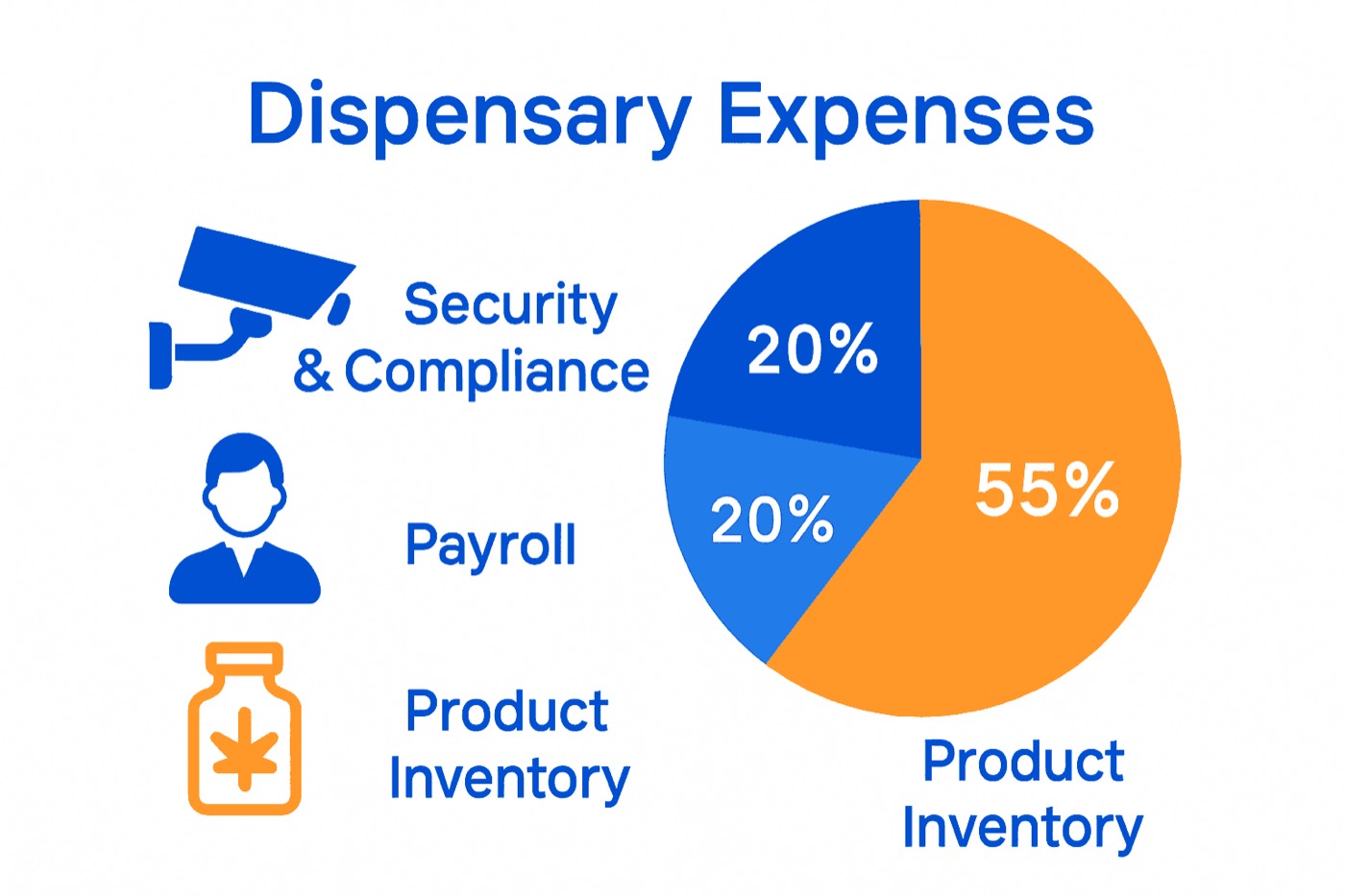 Your goal is not just tracking costs but understanding how each dollar contributes to your dispensary’s overall success.
Ready to dig deeper? Our next step will help you develop a robust financial model that turns these expense insights into a powerful business strategy.
Step 4: Allocate Funds Using Industry Best Practices
Fund allocation is the heartbeat of your dispensary’s financial strategy. In this crucial step, you’ll learn how to strategically distribute your resources to maximize profitability while maintaining compliance and operational efficiency.
According to Cannabis Business Times, successful cannabis operators approach budgeting with precision. You’ll want to obtain multiple quotes for services, build conservative buffers into your budget, and conduct regular reviews comparing actual spending against your financial plan.
The cannabis industry operates on razor thin margins. Cannabis Marketing Agency research reveals that dispensaries typically work with profit margins around 40%. This means every dollar counts.
Key allocation strategies include:
-
Limit total operating expenses to 25 30% of total revenue
-
Target a net margin between 10 15%
-
Carefully control expenditure categories
Prioritize spending on:
Core operational expenses
Compliance infrastructure
Staff training
Marketing with measurable ROI -
Evaluate cost structures thoroughly
Analyze:
Cost of goods sold
Payroll overhead
Training and onboarding expenses
Potential regulatory compliance costs
Pro Tip: Create quarterly budget review sessions. Track every expense meticulously and be prepared to make swift adjustments.
Your goal is creating a financial model that balances regulatory requirements with business growth. Think of your budget as a living document that adapts to market changes and your dispensary’s evolving needs.
By implementing these strategic allocation practices, you transform financial management from a challenge into a competitive advantage. Precise resource distribution will be your roadmap to sustainable success.
Ready to take your financial planning to the next level? Our upcoming section will help you develop robust financial projections that turn these strategies into actionable results.
Step 5: Monitor Outcomes and Adjust Your Budget
Budget management is not a one time event but an ongoing process of tracking, analyzing, and adapting. In this final step, you’ll learn how to transform your financial data into actionable insights that keep your dispensary agile and responsive to market changes.
According to Cannabis Business Times, successful cannabis businesses recommend conducting budget versus actual analyses either weekly or monthly. This frequent review allows you to catch financial variances early and make strategic adjustments.
Key monitoring strategies include:
-
Tracking critical financial variables
Seasonal price fluctuations
Inflation driven cost changes
Employee turnover related expenses
Unexpected regulatory compliance costs -
Developing a robust financial review process
Compare actual spending against projected budget
Identify significant deviations
Understand root causes of financial variations
Develop corrective action plans -
Implementing technology for real time tracking
Integrated accounting software
Point of sale system financial reports
Compliance tracking platforms
Automated expense monitoring tools
Pro Tip: Create a financial dashboard that provides visual snapshots of your key performance indicators. This makes complex financial data immediately digestible.
Your goal is creating a dynamic financial management approach that turns data into strategic decision making. Think of your budget as a living document that breathes and adapts with your business.
By consistently monitoring and adjusting your financial strategy, you build resilience and create a competitive advantage in the complex cannabis marketplace. Your ability to remain financially nimble will determine your long term success.
Now you have a comprehensive roadmap for building a rock solid financial strategy for your dispensary. Your next step is implementing these insights and watching your business thrive.
Frequently Asked Questions
How do I define clear budgeting goals for my dispensary?
Start by identifying key financial categories such as cost of goods sold, payroll expenses, and compliance-related costs. Create specific, measurable goals within each category to guide your budgeting process.
What are the essential expense categories I need to include in my dispensary budget?
You should include categories like licensing and application costs, inventory, security systems, and payroll. Categorizing these expenses will help ensure compliance and facilitate better financial planning.
How can I maximize revenue streams for my dispensary?
Identify diverse income sources such as retail product sales, customer loyalty programs, and ancillary services. Document each potential revenue stream to optimize your income and track performance.
What best practices should I follow for fund allocation in my dispensary?
Limit your total operating expenses to 25-30% of total revenue and prioritize core operational costs. Evaluate your spending regularly to ensure you allocate funds effectively and make adjustments as necessary.
How do I monitor budget performance and make adjustments?
Conduct regular budget versus actual analyses—weekly or monthly— to track financial variances. Use this data to understand deviations and develop corrective action plans to keep your budget on track.
What tools can help enhance my dispensary’s budgeting and financial tracking?
Implement integrated accounting software and point of sale systems for real-time financial tracking. These tools will help you visualize key financial metrics and stay on top of your budget performance.
This article is general education, not tax, legal or accounting advice. Cannabis rules change quickly; confirm how they apply to you with a qualified cannabis CPA or attorney.