Cannabis Audit Preparation Workflow for Dispensaries

2026 update: what rescheduling changed for 280E (reviewed October 2026)
Effective April 22, 2026, a DOJ/DEA final order moved marijuana covered by a qualifying state medical license (and FDA-approved marijuana drugs) to Schedule III. Section 280E only applies to Schedule I and II substances, so state-licensed medical cannabis activity is generally no longer subject to 280E going forward. Adult-use cannabis remains in Schedule I and fully subject to 280E. The DEA proceeding to reschedule all marijuana was temporarily stayed in October 2026, and Treasury/IRS guidance on transition years and mixed medical/adult-use businesses is still pending.
This article was written before the order took effect. Check where your business stands in about a minute.
Most American cannabis dispensary owners discover that surviving an IRS audit means much more than filing on time. With federal penalties for noncompliance reaching over 25 percent of assessed taxes, one overlooked record can cripple your California business. Managing rigorous Section 280E rules alongside state regulations can quickly overwhelm even seasoned operators. This guide breaks down the precise workflow for gathering documents, organizing transactions, and validating compliance so your dispensary stands up to official scrutiny with confidence.
Quick Summary
| Key Point | Explanation |
|---|---|
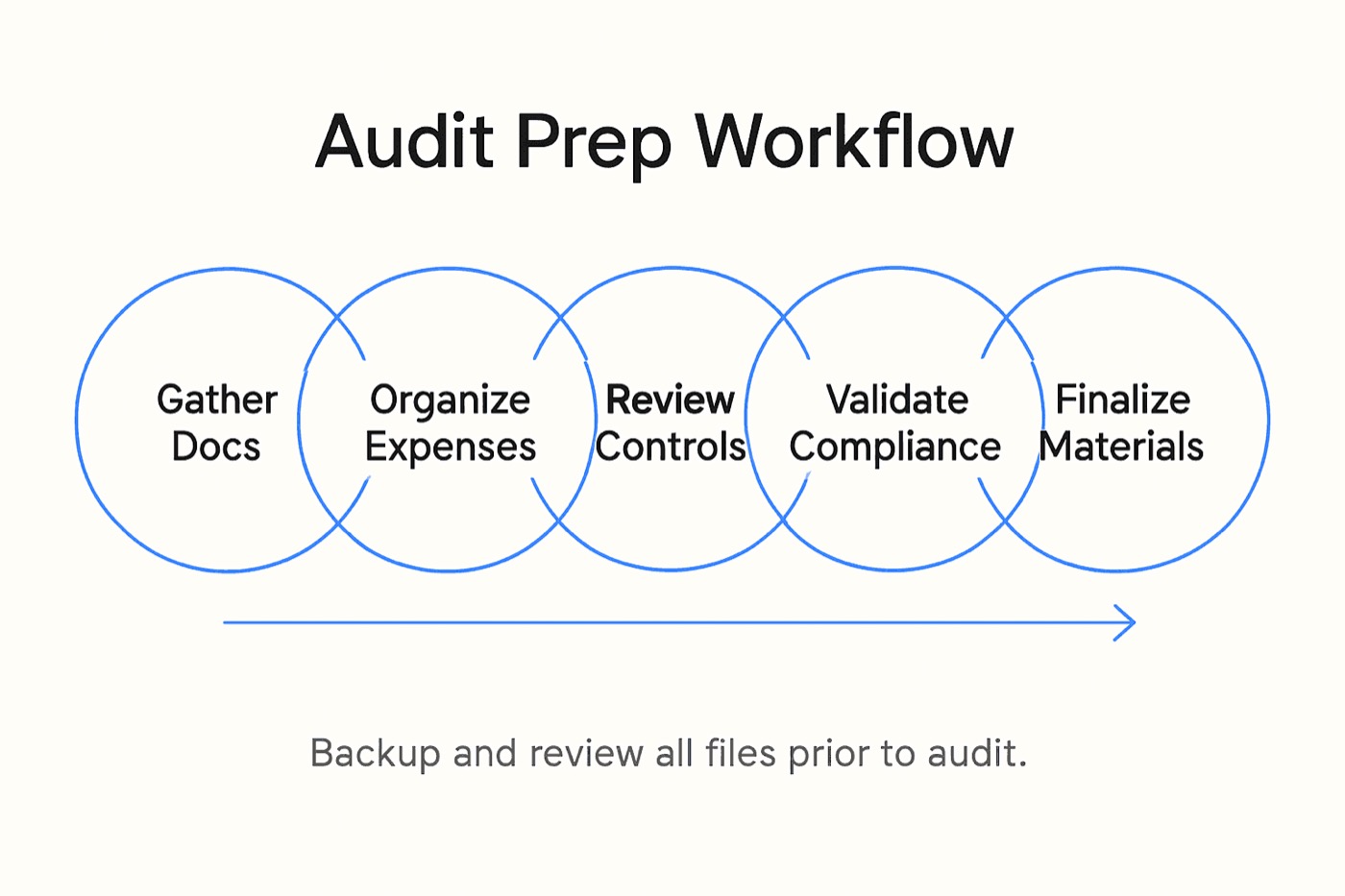
| 1. Gather Essential Financial Documents | Compile tax returns, bank statements, sales records, and compliance documents to ensure financial transparency and regulatory adherence. |
| 2. Organize Transactions Under Section 280E | Distinguish between deductible costs of goods sold and non-deductible expenses to minimize tax liabilities while maintaining compliance. |
| 3. Review Internal Controls and Accounting | Establish robust internal controls by segregating duties and standardizing documentation to enhance financial oversight and compliance. |
| 4. Validate Compliance with Regulations | Cross-check your operational practices against state and federal laws to ensure compliance and minimize audit risks. |
| 5. Finalize Audit Materials for Review | Create a comprehensive, organized package of documentation to demonstrate compliance and streamline the audit process. |
Step 1: Gather financial documents and compliance records
Preparing for a cannabis dispensary audit requires meticulous document collection that demonstrates your financial transparency and regulatory adherence. You will need to compile a comprehensive set of records that showcase your business’s financial history and compliance with state cannabis regulations.
Start by gathering key financial documents including tax returns, profit and loss statements, bank statements, sales records, and expense logs. The state cannabis policy database recommends tracking documents specific to your state’s unique regulatory requirements. These might include detailed inventory tracking reports, excise tax documentation, licensing paperwork, and transaction logs that prove your compliance with Section 280E restrictions. Organize these documents chronologically and ensure digital and physical copies are securely maintained.
Each financial record should be clear, complete, and demonstrably accurate. Cross reference sales reports with inventory management systems, verify cash transaction logs, and ensure all financial statements reconcile perfectly. Systematically categorize documents by type and year to streamline potential audit processes.
Pro Tip: Digitize all physical documents and maintain encrypted backup copies in at least two separate secure locations to protect against potential loss or damage.
Step 2: Organize transactions under Section 280E rules
Managing financial transactions for a cannabis dispensary requires strategic organization to comply with the strict requirements of Section 280E of the Internal Revenue Code. Your goal is to carefully categorize and document every financial transaction to minimize tax liabilities while maintaining full regulatory compliance.
Carefully separate your transactions into two primary categories based on key business expense guidelines: Cost of Goods Sold (COGS) and non deductible expenses. Under Section 280E, you can only deduct expenses directly related to product acquisition and production. This means meticulously tracking inventory costs, direct purchasing expenses, and shipping charges associated with your cannabis products. Operating expenses like marketing, rent, and administrative salaries are typically nondeductible and must be clearly distinguished from COGS.
Create a robust financial tracking system that provides clear documentation for each transaction. Use detailed accounting software that allows granular expense categorization, and maintain comprehensive records that demonstrate how each expense relates to your cannabis business operations. Regularly reconcile your financial records to ensure accuracy and prepare documentation that can withstand potential IRS scrutiny.
Here is a summary of deductible vs. nondeductible expenses under Section 280E:
| Expense Type | Deductible Under 280E | Common Examples |
|---|---|---|
| Cost of Goods Sold (COGS) | Yes | Inventory purchases, shipping |
| Operating Expenses | No | Rent, marketing, salaries |
| Compliance Costs | No | Licensing, legal fees |
| Banking Fees | No | Transaction charges |
Pro Tip: Consult with a tax professional specializing in cannabis businesses to develop a precise transaction classification strategy that maximizes your allowable deductions while maintaining strict compliance with Section 280E.
Step 3: Review internal controls and accounting practices
Reviewing your dispensary’s internal controls and accounting practices is a critical step in preparing for a comprehensive audit. The goal is to establish a robust financial management system that demonstrates transparency, accuracy, and regulatory compliance.

Implement a systematic approach to internal control processes that provides comprehensive oversight of your financial operations. This involves creating clear segregation of duties, establishing strict cash handling protocols, and developing detailed documentation procedures. Your internal controls should include multiple checkpoints that verify the accuracy of financial transactions, inventory tracking, and compliance reporting. Focus on developing a transparent audit trail that shows exactly how funds are received, tracked, and allocated within your cannabis business.
Conduct a thorough review of your current accounting practices, looking for potential vulnerabilities or inconsistencies. This means examining your financial recording systems, reconciliation processes, and internal reporting mechanisms. Pay special attention to areas that are particularly scrutinized in cannabis businesses, such as cash management, inventory valuation, and expense categorization. Create standardized review checklists that ensure every financial transaction is properly documented, verified, and aligned with both state and federal regulatory requirements.
The table below outlines practical steps to strengthen your dispensary’s internal controls and their positive outcomes:
| Internal Control Measure | Practical Application | Business Impact |
|---|---|---|
| Segregation of Duties | Assign separate cash handlers | Reduces risk of fraud |
| Inventory Reconciliation | Regular physical and digital counts | Ensures inventory accuracy |
| Standardized Documentation | Uniform templates for all records | Streamlines audit preparation |
| Multi-level Approvals | Manager sign-off for expenditures | Improves expense oversight |
Pro Tip: Schedule quarterly comprehensive internal audits to proactively identify and address potential accounting or compliance issues before an official external audit occurs.
Step 4: Validate compliance with state and federal regulations
Validating compliance represents the most critical step in your cannabis dispensary audit preparation workflow. Your objective is to thoroughly review and confirm that your business operations align with both state and federal regulatory requirements.
Begin by consulting the comprehensive state cannabis policy database to verify your current operational practices against the most recent legal standards. This involves carefully cross referencing your dispensary’s licensing, reporting, and operational procedures with current state regulations. Pay special attention to nuanced requirements specific to your state, such as tracking and reporting mandates, product handling protocols, and financial documentation standards.
Recognize the complex landscape of cannabis regulations by understanding the potential discrepancies between state and federal laws. Carefully document how your dispensary manages these regulatory differences, particularly regarding banking, taxation, and interstate commerce restrictions. Develop a comprehensive compliance checklist that addresses both jurisdictional requirements, ensuring your documentation demonstrates a proactive approach to regulatory adherence. This includes maintaining detailed records that show your commitment to operating within the legal framework, even when federal and state regulations appear contradictory.
Pro Tip: Engage a cannabis compliance specialist annually to conduct an independent review of your regulatory alignment and identify potential areas of improvement before they become audit vulnerabilities.
Step 5: Finalize audit materials for external review
Finishing your audit preparation requires meticulous organization and comprehensive documentation that demonstrates your dispensary’s commitment to regulatory compliance. Your goal is to create a clear, comprehensive package of materials that will withstand thorough external scrutiny.
Begin by compiling a comprehensive set of validated scientific documentation that supports your operational practices. This includes detailed product testing records, inventory tracking logs, financial statements, compliance documentation, and comprehensive reports that validate your business practices. Organize these materials chronologically and create a master index that allows auditors to quickly navigate your documentation. Ensure each document is clear, legible, and demonstrates a systematic approach to tracking and reporting.
Conduct a final comprehensive review of all materials before submission. This means carefully cross checking each document for accuracy, completeness, and consistency. Verify that all financial records align with your internal accounting practices, product tracking logs match inventory records, and compliance documentation reflects current state and federal regulations. Remove any redundant or unnecessary documents to create a streamlined audit package that communicates professionalism and attention to detail.
Pro Tip: Create digital and physical backup copies of all audit materials stored in secure encrypted locations to protect against potential document loss or technical failures.
Frequently Asked Questions
What financial documents do I need to gather for a cannabis dispensary audit?
You need to collect key financial documents such as tax returns, profit and loss statements, bank statements, and sales records. Begin by creating a checklist of these documents and ensure that you have both digital and physical copies organized chronologically.
How should I categorize expenses for compliance with Section 280E?
Categorize your expenses into Cost of Goods Sold (COGS) and non-deductible expenses. Track inventory costs and direct purchasing expenses carefully to minimize tax liabilities, and regularly review your transaction records to ensure accuracy.
What internal controls should I implement for my dispensary’s accounting practices?
Implement strong internal controls, including segregation of duties and strict cash handling protocols. Create standardized documentation procedures to enhance oversight, which will help reduce the risk of fraud and inaccuracies in your financial reporting.
How can I validate my compliance with state and federal regulations before an audit?
Conduct a thorough review of your dispensary’s practices against current state and federal regulations. Make a compliance checklist that addresses all operational standards, ensuring that your documentation clearly reflects your adherence to all relevant laws.
What steps should I take to finalize audit materials for external review?
Compile all necessary documents into a comprehensive audit package, ensuring clarity and organization. Conduct a final review to verify accuracy and completeness, and create a master index that allows quick navigation for auditors.
Recommended
- How to Streamline Dispensary Bookkeeping for Compliance – Cannabis Business Minds
- Step by Step Dispensary Accounting: Master Financial Management – Cannabis Business Minds
- 7 Essential Cannabis Dispensary Compliance Tips for Success – Cannabis Business Minds
- Budgeting – Cannabis Business Minds
This article is general education, not tax, legal or accounting advice. Cannabis rules change quickly; confirm how they apply to you with a qualified cannabis CPA or attorney.