Top 3 Sources for Best Practices in Cannabis Accounting 2026
2026 update: what rescheduling changed for 280E (reviewed October 2026)
Effective April 22, 2026, a DOJ/DEA final order moved marijuana covered by a qualifying state medical license (and FDA-approved marijuana drugs) to Schedule III. Section 280E only applies to Schedule I and II substances, so state-licensed medical cannabis activity is generally no longer subject to 280E going forward. Adult-use cannabis remains in Schedule I and fully subject to 280E. The DEA proceeding to reschedule all marijuana was temporarily stayed in October 2026, and Treasury/IRS guidance on transition years and mixed medical/adult-use businesses is still pending.
Check where your business stands in about a minute.
Finding reliable cannabis accounting education that combines regulatory updates, audit controls, and tax strategy is still fragmented in 2026. Most sources focus only on generic compliance templates or gate industry updates behind expensive memberships and conference paywalls. This comparison lays out cost structure, curriculum depth, and compliance coverage across three cannabis accounting education sources so you can pick the right fit for your team’s current challenges.
Table of Contents
- Cannabis Business Minds
- National Association of Cannabis Accounting and Tax Professionals (NACAT Pros)
- DOPE CFO
- Comparison of alternatives
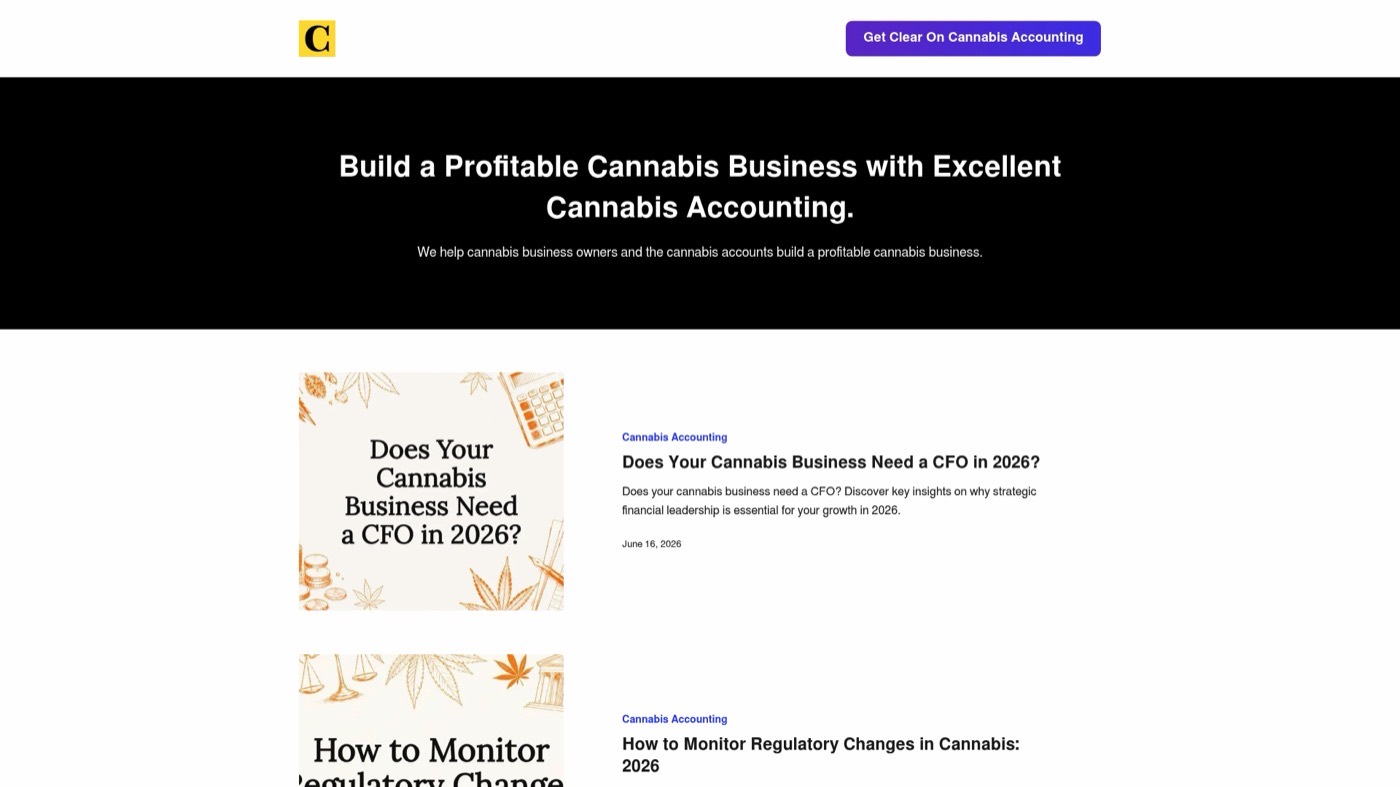
Cannabis Business Minds
At a Glance
Includes seed to sale reconciliation tied to IRC Section 280E management and audit workflows. The platform blends regulatory change mapping with tax planning support targeted to cannabis operators. It also offers CFO level services and compliance monitoring focused on state and federal rules.
Core Features
- Regulatory change source mapping and monitoring that tracks rule updates and maintains a change log for SOP updates.
- Automated compliance alerting tools using Visualping, Changeflow, and AI platforms to surface rule changes and enforcement actions.
- Cannabis specific financial modeling and reporting guides for cost accounting, margin analysis, and investor-ready financials.
- Audit response workflows with documentation templates, evidence checklists, and process maps to accelerate audit preparation.
- Tax credit planning and documentation support for credits such as Section 41 and WOTC to capture federal benefits where allowed.
Key Differentiator
Industry specific integrated workflows that combine regulatory monitoring, audit preparedness, and tax optimization for cannabis regulation complexities. That integration links regulatory signals to ready-made audit packages and financial models. The result is a single reference system for compliance and tax planning rather than separate point tools.
Pros
- Focused on cannabis accounting and compliance. The content and tools reflect cannabis specific tax rules and operational realities rather than generic accounting templates.
- Keeps audit work tactical and documented. The audit workflows reduce guesswork about what evidence and processes auditors will request.
- Supports both operations and finance teams. Resources cover seed to sale reconciliation, cost accounting, and reporting for CFO level decision making.
- Built to monitor regulatory change across jurisdictions. The change mapping helps you update SOPs and licensing responses faster.
- Includes tax credit planning guidance. The materials explain documentation you need to support credits such as Section 41 and WOTC.
Cons
- Best suited to operators with dedicated finance or compliance staff; smaller or casual operators may find implementation and ongoing management resource intensive.
Who It’s For
Cannabis business operators, compliance officers, financial managers, and CFOs who need tailored compliance, reporting, and tax strategies. Teams preparing for audits, pursuing expansion or capital raises will get the most value. Smaller single location shops without finance support may find the overhead high.
Unique Value Proposition
Regulatory change source mapping tied directly to audit and reporting templates. That link lets your finance team convert a rule change into an updated SOP and an evidence set you can present to auditors. The economic effect is lower audit friction and clearer documentation for investors or lenders when you pursue growth.
Real World Use Case
A mid sized cultivator uses the monitoring tools to track licensing changes across states and update SOPs. The team then runs the audit response workflow to assemble documentation before an inspection. That workflow prevented a fines escalation and smoothed a subsequent lender review during an expansion round.
Pricing
Pricing is not listed publicly and likely varies by engagement. Expect subscription access for monitoring and digital guides, with higher fees for bespoke CFO level services and onsite audit support. Contact the vendor for a proposal aligned to your compliance scope and company size.
Website: https://cannabisbusinessminds.com
National Association of Cannabis Accounting and Tax Professionals (NACAT Pros)

At a Glance
It maintains a directory of certified cannabis accountants and publishes SOPs and webinars for members. The organization pairs training with marketing exposure that can send client leads. Membership bundles training, certification, and a community forum for accountants working with cannabis operators.
Core Features
- Cannabis-specific accounting training and education. Structured modules cover compliance, reporting, and tax treatment unique to cannabis operations.
- Certification programs for cannabis accountants. A formal credential appears in the member directory and on member profiles.
- Webinars and training modules. Live and recorded sessions target regulatory changes, federal tax topics, and state compliance updates.
- Directory of certified cannabis accountants. Firms and CPAs can list profiles to attract cannabis retail and cultivation clients.
- Networking and community support. Members access peer forums, SOP templates, and referral opportunities.
Key Differentiator
The association pairs a formal certification with a curated member directory. That combination helps accountants signal niche expertise and get visible to cannabis businesses. The community focus concentrates resources on tax issues like Section 280E compliance and industry accounting conventions rather than general practice topics.
Pros
- Provides training that targets cannabis accounting needs. The curriculum focuses on compliance and tax mechanics specific to cannabis operations.
- Offers a recognizable credential that can differentiate a CPA in marketplace searches. The certification pairs with directory placement for client visibility.
- Grants access to SOPs, recorded webinars, and peer forums. Those materials reduce research time when applying state rules to accounting workflows.
- Membership includes marketing exposure and client lead possibilities. Firms can leverage listings to reach dispensaries and cultivators.
- Builds a focused network of accountants and advisers. That network accelerates referrals and practical problem solving for cannabis engagements.
Cons
- The directory lists professionals but recommends thorough due diligence because credentials are not independently verified. Members may vary in actual experience and scope.
- Focus on cannabis accounting narrows the curriculum. Professionals seeking broader practice topics will find less crossover value.
- Membership and training costs can be a barrier for solo practitioners or very small firms. Cost may outweigh benefits for accountants with few cannabis clients.
When It May Not Fit
If your firm serves a broad mix of industries, this association may not return equivalent value. Firms that need general audit, tax, or corporate accounting training outside cannabis will find limited content. Small practices with minimal cannabis revenue should compare expected lead flow against membership and training expenses.
Who It’s For
CPAs, tax specialists, and accounting firms pursuing a focused cannabis book of business will benefit most. Professionals who want a credential to signal niche competence and who plan to market to dispensaries or cultivators fit the profile. Firms that value peer referrals and industry templates will find practical use.
Real World Use Case
A CPA completes the association certification and uploads a profile to the directory. They use webinar recordings and SOPs to shape a cannabis engagement letter and pricing model. The directory listing produces an inbound inquiry from a dispensary, which converts to a retainer for monthly reporting and tax planning.
Website: https://nacatpros.org
DOPE CFO

At a Glance
Over 100 workpapers, templates, and charts of accounts target cannabis and CBD operations. The curriculum covers GAAP and cost accounting with materials mapped to industry tax questions. The program pairs training with an active community of peers and webinars. Franchise options let accounting firms adopt a branded path to serve cannabis clients.
Core Features
- Specialized training in cannabis and hemp accounting and tax. Classroom and reference materials focus on GAAP treatment and cost accounting for plant inventories.
- More than 100 workpapers and templates. Ready-to-use charts of accounts and client workpapers reduce setup time for new cannabis engagements.
- Community support and webinars. Regular sessions and a peer network provide case discussion and problem solving.
- Guidance on legal and regulatory compliance, including navigating 280E questions and state variance.
Key Differentiator
The offering packages practical tools with peer access and a franchise path for accountants. That mix targets professionals who want both templates and a business model to grow a niche practice. Training emphasizes the accounting mechanics behind cannabis cost accounting and taxable income issues. The program aims to move a generalist accountant toward specialized CFO advisory work for cannabis clients.
Pros
-
Shortens time to billable cannabis work by supplying ready client workpapers and a chart of accounts. That reduces repetitive setup tasks.
-
Builds a peer network for regulation changes and technical Q and A. Practitioners share state-specific experiences in webinars.
-
Recognized in franchise rankings, which may help firms that want an established brand when approaching dispensary customers.
-
Teaches GAAP-aligned cost accounting relevant to inventory valuation and margin analysis for cultivators and processors.
-
Helpful for firms wanting a clear playbook to market CFO advisory services to cannabis clients.
Cons
-
The program requires prior accounting or CPA experience to get full value. Entry level bookkeepers will need supplemental training.
-
Franchise and program fees are not published. Prospective buyers must apply for pricing details.
-
State regulatory differences mean materials need local adaptation. Ongoing learning remains necessary for compliance.
When It May Not Fit
DOPE CFO focuses on U.S. cannabis and hemp markets. International firms will find limited applicability. Small solo bookkeepers without accounting background will struggle to use the franchise model. Firms that need turnkey payroll or banking solutions should look elsewhere.
Who It’s For
Accounting professionals such as CPAs, EAs, and experienced bookkeepers ready to specialize in cannabis or hemp advisory. Firms that want a branded franchise route and a library of templates will gain the most. Professionals who already understand basic GAAP and tax work will extract the highest value.
Real World Use Case
An accountant enrolls, adopts the provided chart of accounts, and uses the workpapers for a startup cultivator engagement. They attend webinars to resolve a state specific 280E question. The templates speed up month end and let the accountant offer CFO reporting to the client quickly.
Pricing
Pricing is not specified in public materials. Franchise and program details are provided by application and discussion with the vendor. Interested firms must contact DOPE CFO for current fee schedules and franchise terms.
Website: https://dopecfo.com
Comparison of alternatives
When evaluating resources for mastering cannabis accounting practices, three standout providers present distinct strengths and value propositions to cannabis professionals.
Integrated compliance tools and training
Cannabis Business Minds excels in integrating regulatory compliance tools with accounting workflows. It provides features such as automated tools for monitoring changes in cannabis regulations, directly linking updates to procedural templates and audit documents. These capabilities make it a vital asset for businesses operating across multiple jurisdictions, where legal landscapes can shift rapidly. Operators benefit from workflows that tie updated standard operating procedures (SOPs) to supporting evidence for audits, streamlining regulatory adherence and transparency across departments.
Certification and professional networking
The National Association of Cannabis Accounting and Tax Professionals (NACAT Pros) prioritizes education and professional connections within the cannabis industry. Their unique value lies in providing accountants with a certification program and supporting visibility through a member directory. This certification signifies expertise to potential clients, while the directory facilitates connections between certified professionals and cannabis businesses. Additionally, their webinars and forums help accountants stay updated on evolving cannabis-specific accounting issues. This makes NACAT Pros an choice for those focusing on professional development and networking opportunities within niche markets.
Standardized tools and franchise opportunities
DOPE CFO provides accounting professionals with an extensive toolkit of pre-designed templates and workpapers tailored to the cannabis industry. These resources expedite the setup of compliant accounting systems, reducing time spent on foundational structures. Paired with franchise opportunities, DOPE CFO empowers professionals to establish or expand practices focused on cannabis clients effectively. This is particularly beneficial for bookkeeping firms and accountants seeking operational support alongside growth pathways.
Best fit
- Cannabis Business Minds best serves organizations prioritizing multi-jurisdictional compliance and integrating tax planning with scalable audit preparation workflows.
- NACAT Pros is ideal for individual accountants and smaller firms seeking industry certification and client visibility through networking and credentialing opportunities.
- DOPE CFO benefits accounting firms needing structured templates for cannabis engagements and flexible franchise growth options.
Our pick
Cannabis Business Minds emerges as the premier choice for well-established cannabis operators navigating complex regulatory environments. The platform offers integration of compliance tracking with procedural and reporting tools, significantly reducing audit and operational challenges. However, firms prioritizing personal certification or predefined templates at scalable costs might find NACAT Pros and DOPE CFO more suitable, respectively.
Cannabis accounting tools and programs vary in focus, features, and the users they best serve. Below, we examine leading platforms tailored to the cannabis industry:
| Platform | Key Differentiator | Best For | Pricing | Notable Limitation |
|---|---|---|---|---|
| Cannabisbusinessminds | Integrated workflows for cannabis compliance support | Cannabis operators with finance needs | Not disclosed | Best suited to those with dedicated finance teams |
| NACAT Pros | Certification and visibility for cannabis accountants | Accountants seeking cannabis-specific certifications | Membership-based | Experience levels across membership vary |
| DOPE CFO | Templates and training for cannabis accountancy | Experienced accountants specializing in cannabis | Not disclosed | Entry-level accountants may require supplemental training |
Master Best Practices in Cannabis Accounting with Cannabisbusinessminds
The biggest challenge in cannabis accounting is handling complex regulatory compliance while optimizing tax strategies under rules like IRC Section 280E. You need actionable insights that connect regulatory updates directly to audit preparation and financial reporting. Cannabisbusinessminds focuses exclusively on these pain points with tailored resources that reduce guesswork and keep your accounting aligned with evolving state and federal law.
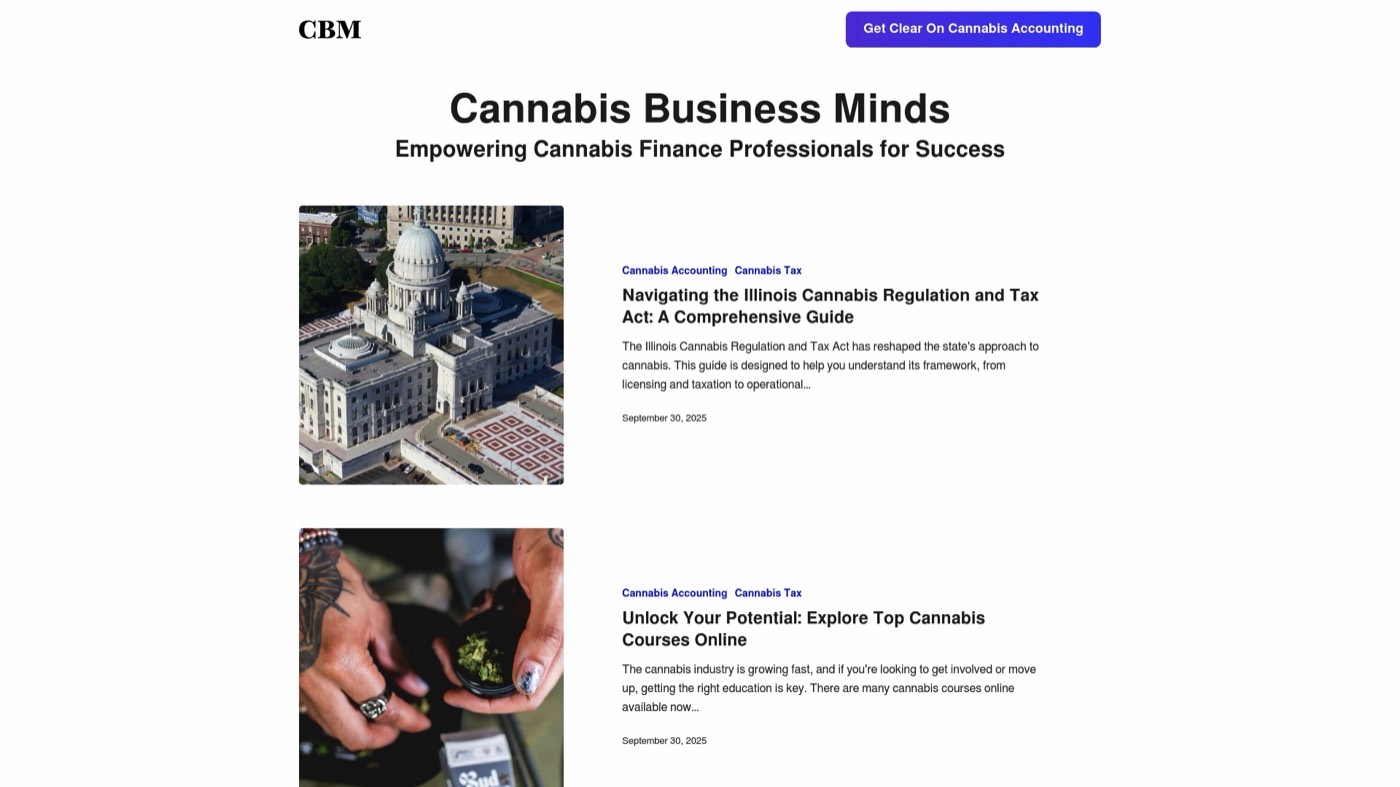
Explore our detailed guides on Cannabis Accounting and Cannabis Tax to sharpen your financial controls and compliance workflows. Don’t let audit hurdles or tax complexities stall your cannabis business. Visit https://cannabisbusinessminds.com and access practical tools to update SOPs, streamline seed to sale reconciliation, and support CFO decision making. Book a strategy call to get a customized compliance roadmap today.
FAQ
How does Cannabisbusinessminds support cannabis accounting education?
Cannabisbusinessminds provides tailored resources focused on cannabis accounting complexities. Their platform features cannabis-specific financial modeling and reporting guides essential for cost accounting and tax strategies. Engaging with Cannabisbusinessminds will enhance your team’s understanding of industry-specific tax rules and financial practices.
What is the difference between Cannabisbusinessminds and the National Association of Cannabis Accounting and Tax Professionals?
The National Association of Cannabis Accounting and Tax Professionals offers certification programs that enhance visibility and credibility for accountants. In contrast, Cannabisbusinessminds excels in integrating regulatory monitoring with audit readiness and tax planning specific to cannabis businesses. Choose Cannabisbusinessminds for a comprehensive approach that combines compliance and financial management.
Which platform provides automated compliance alerting tools?
Cannabisbusinessminds features automated compliance alerting tools that use AI platforms to track regulatory changes in the cannabis sector. This ensures your operations stay compliant with evolving state and federal regulations. Implementing these tools will help maintain your business’s alertness to compliance issues across jurisdictions.
Can I use Cannabisbusinessminds without a dedicated finance team?
While Cannabisbusinessminds offers robust solutions for cannabis accounting, it is best suited for operators with dedicated finance or compliance staff. Smaller operators may find the implementation and ongoing management resource-intensive compared to larger organizations. Assess your team’s capacity before integrating Cannabisbusinessminds into your accounting practices.
What unique value does Cannabisbusinessminds provide for auditing processes?
Cannabisbusinessminds streamlines audit response workflows by providing documentation templates and evidence checklists specific to cannabis regulations. This enhances your preparation and reduces the friction often encountered during audits. Utilize these resources to ensure a smoother auditing process and clearer documentation for stakeholders.
Recommended
- 7 Key Cannabis Accounting Trends for 2025 – Cannabis Business Minds
- Cannabis Accounting – Cannabis Business Minds
- Master Cannabis Accounting Best Practices for 2025 Success – Cannabis Business Minds
- Cannabis Tax Compliance Guide: Achieve Full Legal Readiness – Cannabis Business Minds
This article is general education, not tax, legal or accounting advice. Cannabis rules change quickly; confirm how they apply to you with a qualified cannabis CPA or attorney.